
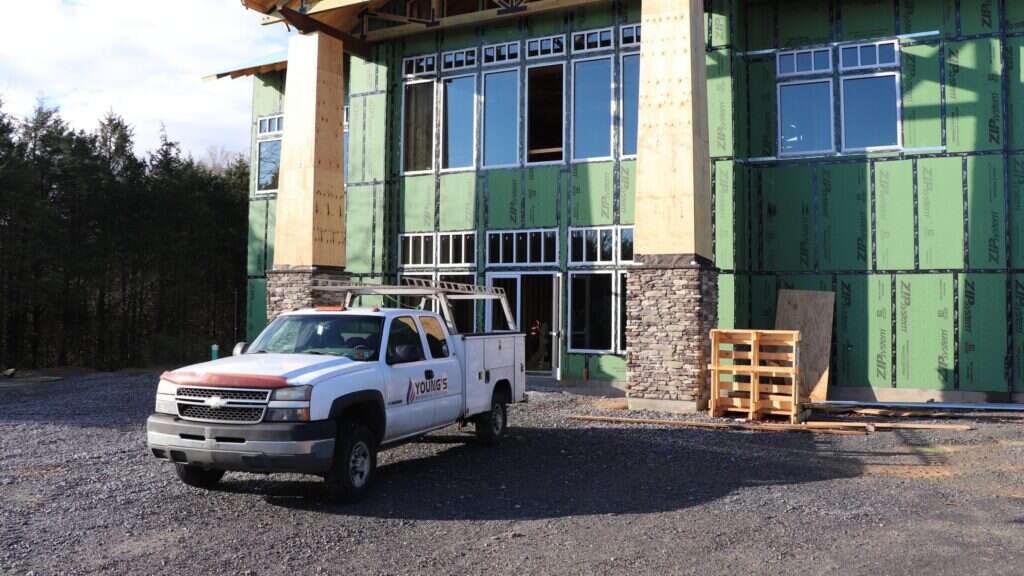
Cold weather does not stop commercial construction in the Shenandoah Valley, but it does punish projects that were not planned for it. Concrete cures slower, deliveries slip, daylight shrinks, and every trade feels the pressure of a schedule that has to hold through the hardest months of the year. For general contractors and owners carrying a build into winter, how the mechanical scope is delivered can make or break the timeline.
This is where the design-build mechanical contractor model earns its keep. Engaging a mechanical partner early, before the drawings are frozen and the weather turns, changes what is possible once the cold arrives. Here is why design-build tends to win on winter commercial construction.
Winter Construction Punishes Poor Coordination
Warm-weather projects can absorb some inefficiency. Winter projects cannot. Shorter days mean fewer productive field hours. Cold slows labor and material handling. And any rework caused by a clash or a late design decision costs more when the calendar is tight and conditions are working against you.
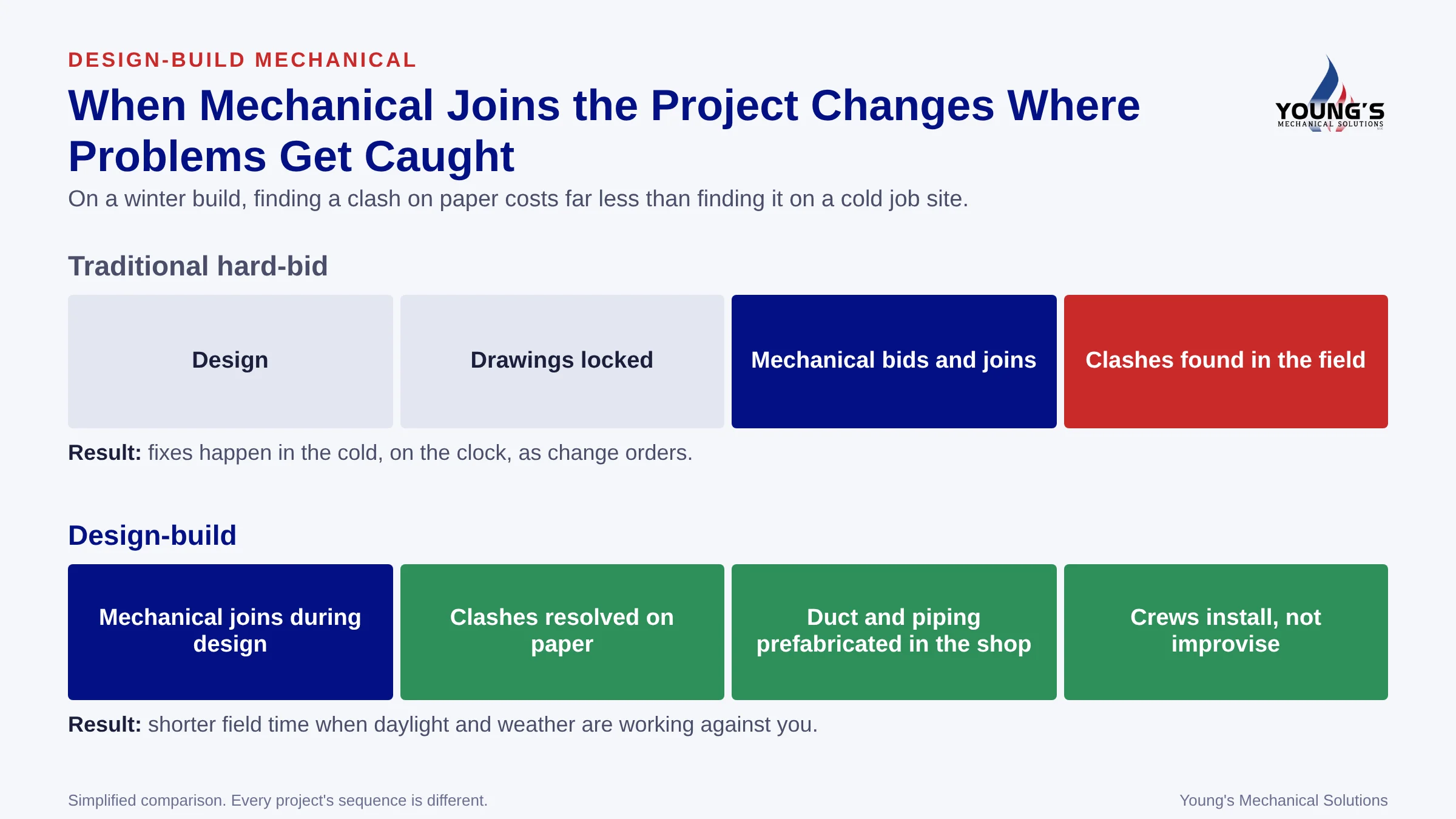
Under a traditional hard-bid approach, the mechanical contractor arrives after the design is complete and the schedule is set, then works around whatever was drawn. When conflicts surface in the field (a duct main fighting a beam, a piping route that never accounted for the structure), the fix happens in the cold, on the clock, at the worst possible time.
How Design-Build Changes the Math
Design-build brings the mechanical contractor into the project during design, not after it. That early seat at the table pays off through every phase of a winter build.
Fewer field surprises
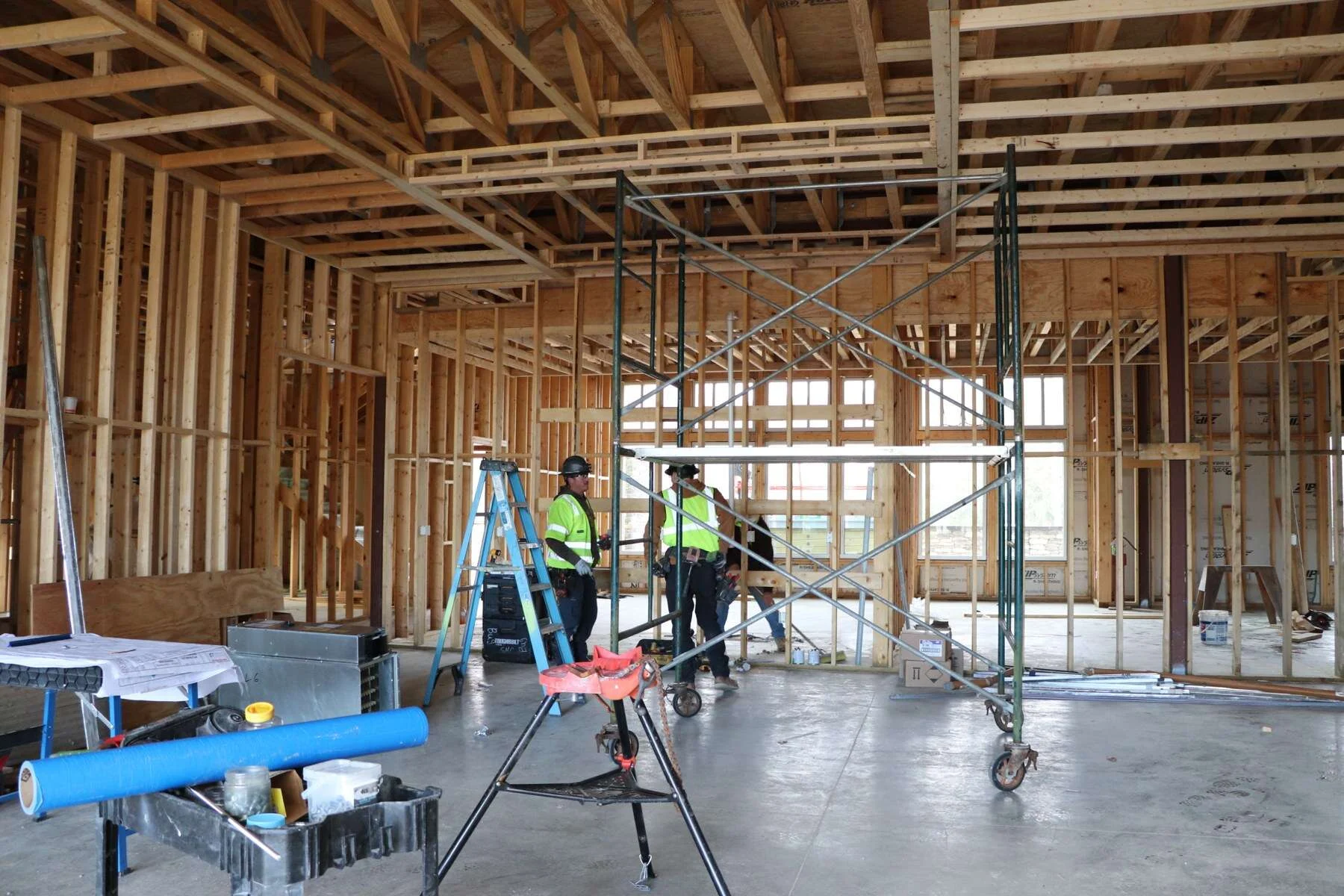
When mechanical is coordinated against structure and the other trades before the drawings lock, clashes get resolved on paper instead of on a frozen job site. That is fewer change orders and less standing around when field hours are precious.
Prefabrication that beats the weather
Design-build lets more work move into the shop. Ductwork and piping assemblies built indoors, in controlled conditions, arrive ready to hang, so a crew spends its short winter days installing instead of fabricating in the cold. It is one of the most reliable ways to protect a heating-season schedule.
Smarter sequencing for cold-weather dry-in
Getting a building enclosed and heated changes everything for the interior trades. A mechanical partner engaged early can help sequence temporary heat, prioritize the systems that enable dry-in, and keep the critical path moving toward a weather-tight envelope.
Responsive change management
Owners refine scope right up to the wire, especially on fast-moving commercial work. A design-build partner already embedded in the project turns those changes around faster than a contractor seeing the job for the first time.
One In-House Mechanical Partner, Not a Dispatch Chain
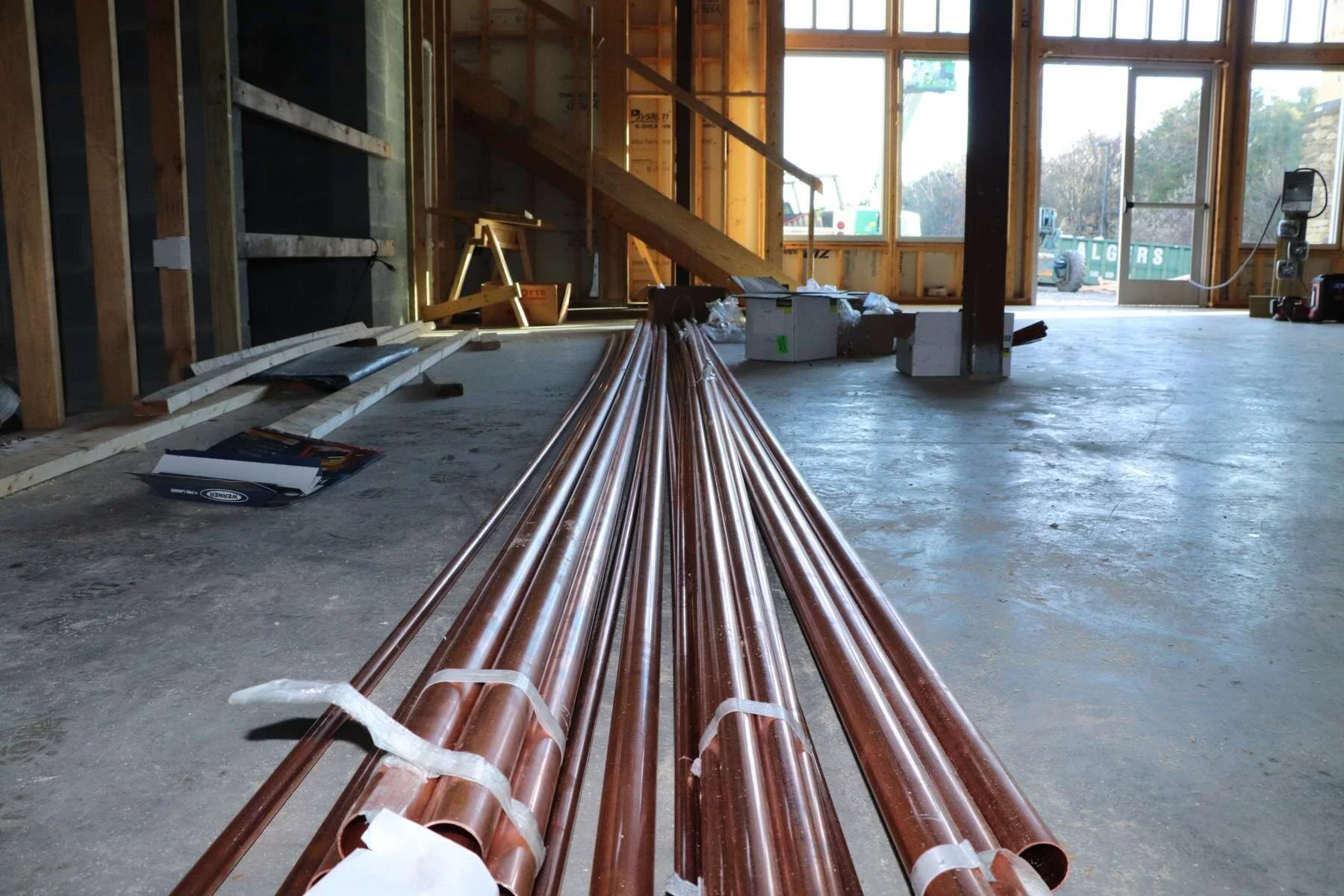
Young’s Mechanical Solutions runs in-house crews for sheet metal, mechanical piping, plumbing, and controls, plus our own ductwork fabrication shop in Harrisonburg. For a general contractor pushing a build through a Valley winter, that means one accountable mechanical partner instead of a string of subs pointing at each other when the weather turns.
Our in-house fabrication is a real schedule advantage in cold months. We can build assemblies ahead in the shop and stage them for install, so a tight winter timeline does not hinge on outside vendors or field fabrication in the cold. And because we engage as a design-build partner, not just a bidder on finished plans, we help GCs and owners head off the coordination problems that derail cold-weather projects before they start.
Planning a Winter Build? Start With These Questions
If you are carrying a commercial project into the cold season, pressure-test the mechanical plan:
- Is the mechanical scope coordinated against structure and other trades before drawings lock?
- How much ductwork and piping can be prefabricated to reduce field time in the cold?
- What does the mechanical sequence look like for dry-in and temporary heat?
- Is the mechanical contractor in-house across trades, or a chain of subcontractors?
- How quickly can the partner turn around a change order in the field?
The earlier those questions get answered, the more control you keep once winter sets in.
Young’s Mechanical Solutions
Build Through Winter With a Design-Build Mechanical Partner
Cold-weather construction rewards planning and punishes improvisation. Bring Young’s in early on your next commercial project: in-house crews, our own fabrication shop in Harrisonburg, and licensed in Virginia and West Virginia.