
When the weather turns cold, commercial buildings ask more of their hot-water systems than at any other time of year. Incoming municipal water is colder, so heaters work harder to reach setpoint. Occupants use more hot water. And restaurants, healthcare facilities, schools, and manufacturers that depend on reliable hot water have the least tolerance for an outage. Fall is the window to get ahead of it.
A commercial water heater failure in January is not just an inconvenience. It can shut down a kitchen, halt a process, or force a facility to close. The good news is that most winter hot-water failures show warning signs months ahead. Here is how to read them and get your domestic hot water system ready before peak demand hits.
Why Winter Is Hard on Commercial Hot-Water Systems
Domestic hot water is easy to take for granted until it stops. Through the warmer months, incoming water is relatively mild and demand is steady, so an aging or marginal system can keep up without complaint. Cold weather removes that margin.
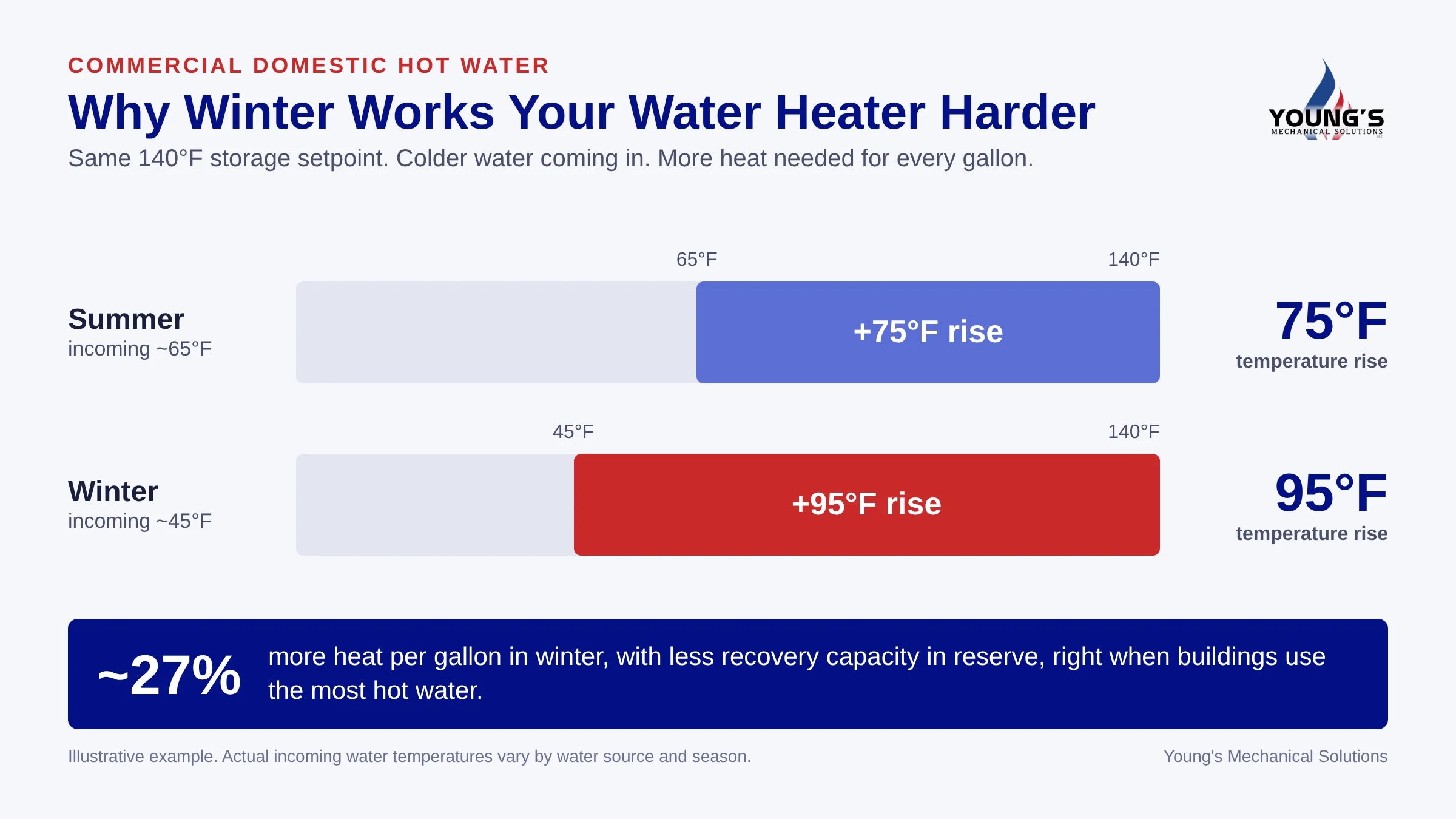
As groundwater temperature drops, a water heater has to raise each gallon through a much bigger temperature swing to hit the same setpoint. That means longer run times, more stress on burners and elements, and less recovery capacity in reserve. A system that was quietly undersized or overdue for service all summer can fall behind exactly when the building needs it most.
Warning signs worth acting on now
- Slow recovery: Hot water running out during peak periods and taking longer to come back suggests the system is already near its limit.
- Sediment and scale: Rumbling or popping tanks, or reduced output, often point to sediment buildup that hurts efficiency and shortens equipment life.
- Temperature swings: Inconsistent delivery temperatures can signal failing controls, mixing valves, or heating elements.
- Age: Commercial water heaters near the end of their expected service life are far more likely to fail under winter load.
Getting Domestic Hot Water Ready for the Cold
A focused fall review of the commercial hot-water system catches the problems that turn into winter emergencies. A thorough check covers the equipment and the distribution around it.
Service the heaters
Flush sediment, inspect burners or elements, test controls and safety devices, and confirm the units are recovering at their rated capacity. Small maintenance items handled in the fall prevent the failures that strand a facility in January.
Confirm capacity matches demand
If a building’s use has grown (added tenants, a busier kitchen, more occupants), the hot-water system may no longer be sized for peak winter demand. Better to find that out in the fall than during a cold snap.
Check recirculation and distribution
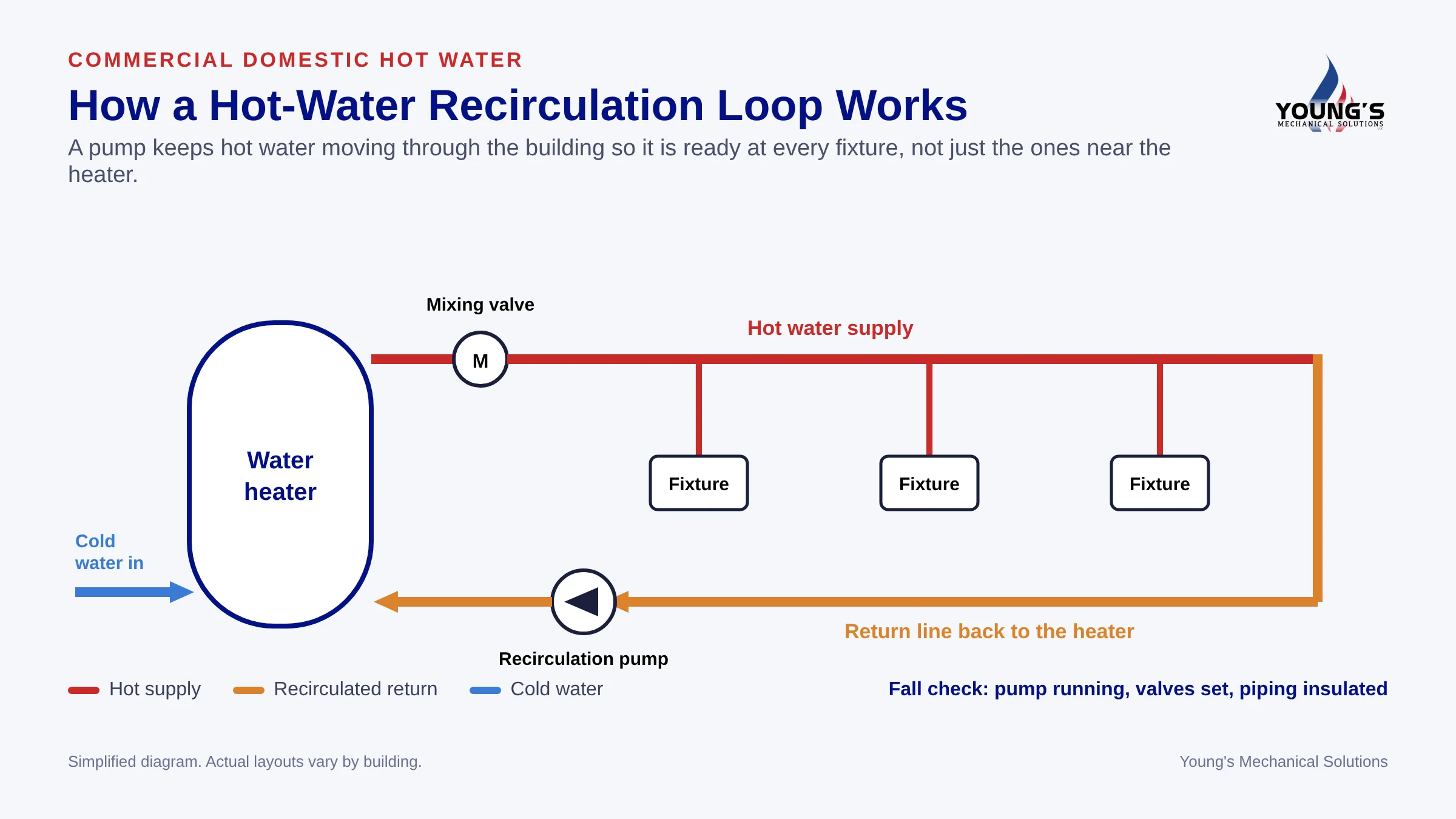
Hot-water recirculation pumps, mixing valves, and insulated piping all affect how quickly and reliably hot water reaches fixtures. Poor recirculation shows up as long waits and wasted water, and it gets worse as pipes run through colder spaces.
Protect vulnerable piping
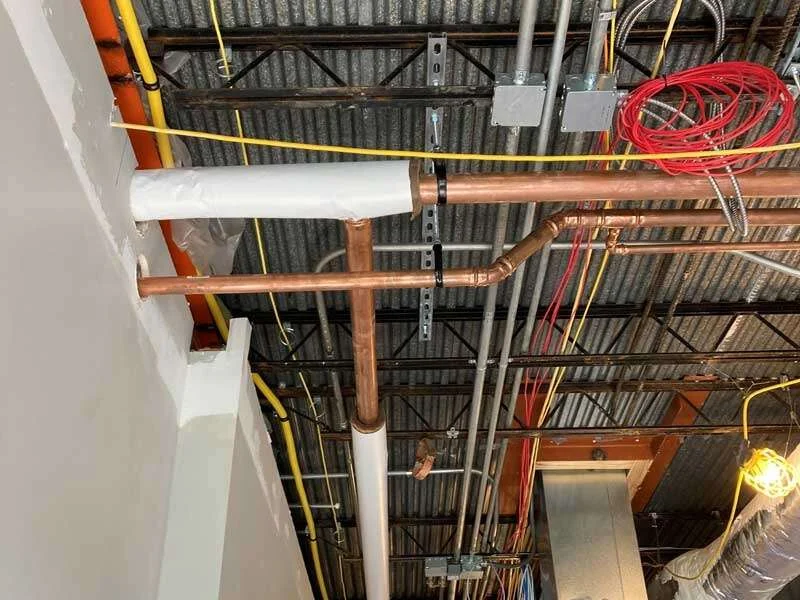
Hot-water lines running through unconditioned areas deserve a look for insulation and freeze exposure before temperatures drop.
Commercial Plumbing Expertise, Not Guesswork
Commercial domestic hot water is a different animal: bigger loads, tighter tolerances, and far higher stakes when something fails. Young’s Mechanical Solutions is a commercial plumbing and mechanical contractor, so our crews understand commercial water heaters, recirculation systems, and the distribution that ties them together.
We serve facilities within about an hour of Harrisonburg, across the Shenandoah Valley, and our tech-driven service dispatch keeps a history of your building’s equipment. That continuity means a fall hot-water check builds on what we already know about your system, and if a problem does emerge midwinter, our team responds with context, not a cold start. We are licensed in both Virginia and West Virginia.
Your Pre-Winter Hot-Water Checklist
- Service and flush commercial water heaters before peak demand
- Test controls, mixing valves, and safety devices
- Confirm recovery capacity still matches the building’s use
- Inspect recirculation pumps and distribution for reliable delivery
- Insulate and protect hot-water piping in unconditioned areas
- Plan for replacement if equipment is near end of life, before it fails
A morning of preventative work in the fall is far cheaper than an emergency call, lost operating hours, and scrambling for equipment in the middle of winter.
Young’s Mechanical Solutions
Get Ahead of Winter Hot-Water Demand
Reliable hot water keeps commercial kitchens, healthcare facilities, and busy buildings running through the coldest months. A focused fall check of your water heaters and distribution is the most cost-effective way to protect it. Ask about a service agreement for your building.