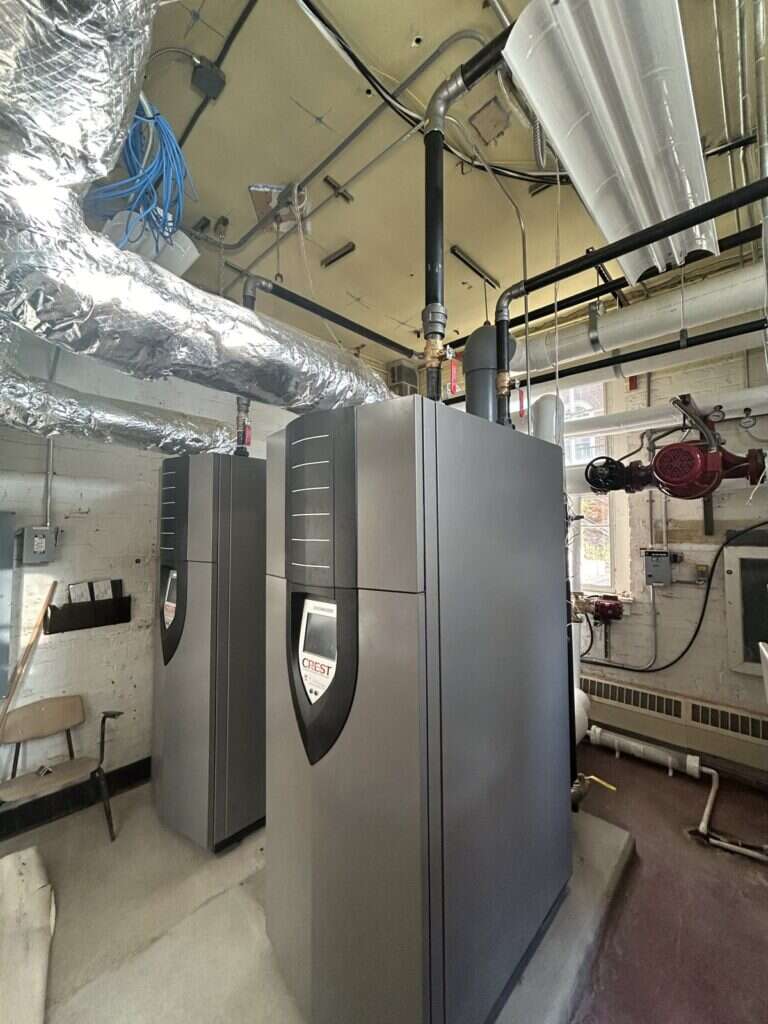
There is a quiet difference between a boiler that runs and a boiler that has been commissioned for the season. The first one fires when the thermostat calls; the second one has been checked, tested, and dialed in so it carries a full building through the coldest weeks without a mid-winter surprise. As the Shenandoah Valley moves from cooling season into fall, a proper commercial boiler startup is the single best way to protect facility uptime before the first hard freeze.
Why commercial boiler startup matters before heating season
Most commercial hydronic and boiler systems in our region have been idle or lightly used all summer. Seals dry out, water chemistry drifts, controls fall out of calibration, and small issues that went unnoticed in July become no-heat calls in January. A planned startup catches those problems while the building is still comfortable and the service schedule is open.
Waiting until the first cold snap is the expensive path. That is exactly when every facility in the Valley is calling at once, parts lead times stretch, and a failed heat exchanger or circulator pump turns into an emergency-rate repair instead of a scheduled visit.
What a thorough hydronic commissioning should cover
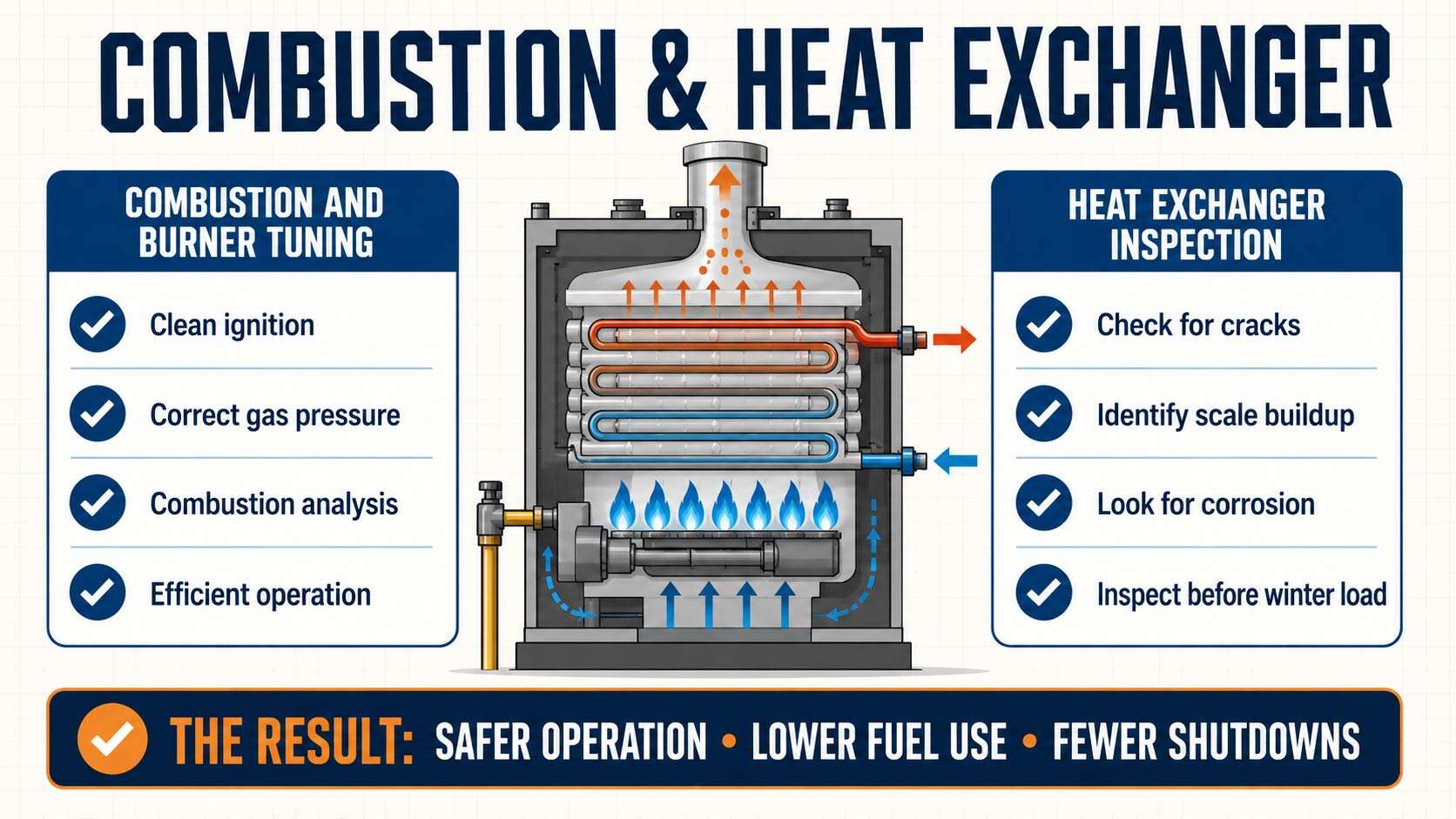
Commissioning a commercial heating system is about more than flipping it into heat mode and confirming it lights. For boilers and hydronic systems heading into the season, our technicians focus on the items most likely to cause downtime or drive up operating cost:
- Combustion and burner tuning — verifying clean ignition, correct gas pressure, and a proper combustion analysis so the unit runs safely and efficiently.
- Heat exchanger inspection — checking for cracks, scale, and corrosion before the system runs under load all winter.
- Circulator pumps and motors — confirming flow, checking seals and bearings, and catching summer wear before a pump fails on a cold morning.
- Water chemistry and system pressure — testing and treating boiler water, purging air, and confirming expansion tank and relief valve function.
- Controls, sensors, and setpoints — calibrating aquastats, outdoor-reset curves, and building controls to match occupied and unoccupied schedules.
- Safety devices — testing low-water cutoffs, high-limit controls, and gas train safeties so the system fails safe, not silent.
Every one of those checks ties back to a business outcome: fewer emergency calls, lower fuel use, and a building that stays warm when the temperature drops.
Hydronic systems reward early attention
Hydronic heating — boilers moving hot water to air handlers, unit heaters, radiant loops, or fan coils — is reliable when it is maintained and unforgiving when it is neglected. Air in the loop, a fouled heat exchanger, or a drifting outdoor-reset control quietly wastes fuel for months before anyone connects the rising utility bill to the cause. A startup visit is where those inefficiencies get found and corrected before the building pays for them all winter.
For facility managers running multiple buildings, that predictability matters. Our tech-driven service dispatch tracks repair history for each system, so you have visibility into what has been done and what is coming due across your portfolio.
One commercial mechanical partner for the whole system
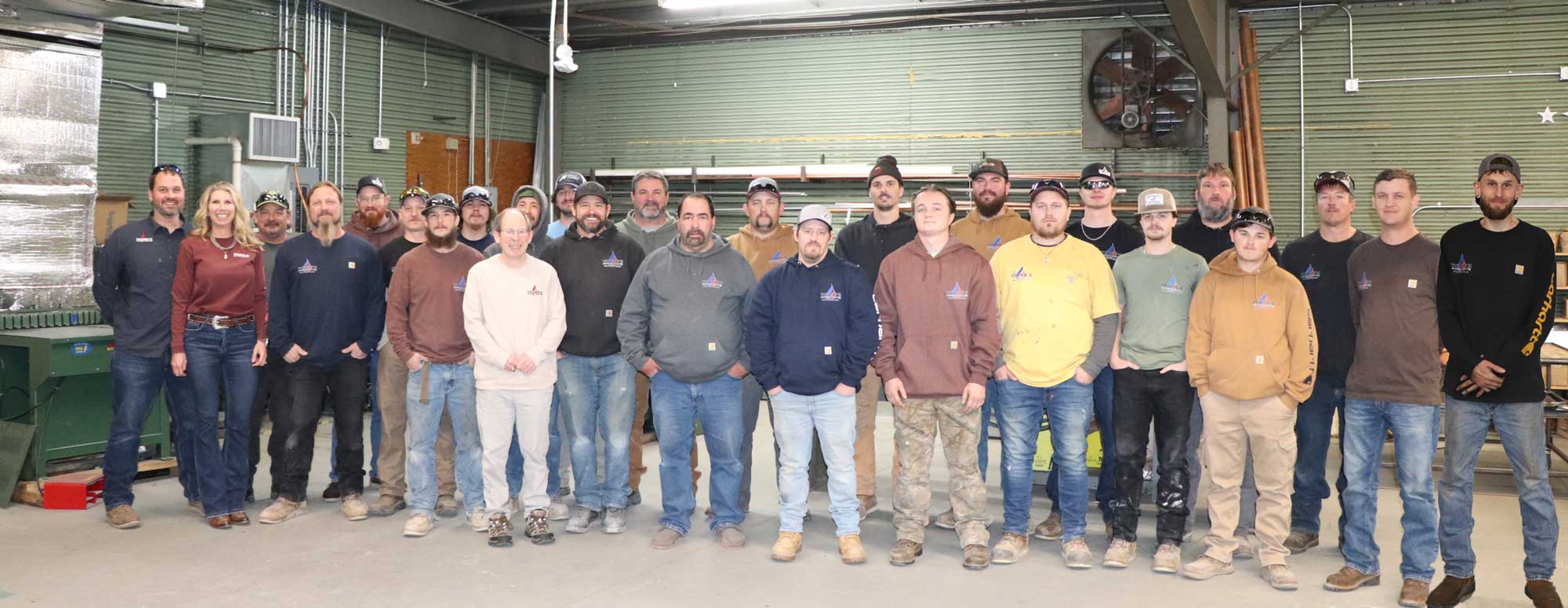
Because Young’s Mechanical is a commercial-only contractor with a full set of in-house crews — mechanical piping, controls and startup, sheet metal, and ductwork fabrication out of our Harrisonburg shop — we can handle whatever a startup uncovers without waiting on an outside vendor. If a boiler needs a piping repair, a control replaced, or a part fabricated, our own team does it.
We are licensed in both Virginia and West Virginia and serve roughly a one-hour radius of Harrisonburg, so facility managers across the Shenandoah Valley can rely on one mechanical partner for heating startup, seasonal changeover, and fast response through the winter.
A pre-heating-season checklist for facility managers
Before the season turns, it is worth confirming a few things for each building you manage:
- Has each boiler and hydronic system had a documented startup or commissioning this year?
- When were the combustion analysis and water chemistry last checked?
- Are safety controls — low-water cutoff, high limit, relief valve — verified and current?
- Is heating handled reactively, or through a preventative service agreement that schedules startup every fall?
If any of those answers give you pause, now is the time to act — while the schedule is open and the weather is still on your side.
Schedule your commercial boiler startup now
A planned commercial boiler startup and hydronic commissioning replaces an unpredictable no-heat emergency with a scheduled, budgeted visit — and gives you a clear picture of what your heating equipment needs before it becomes urgent. Reach out to discuss a service agreement for your building, or contact our service team at 540-214-2745 to schedule a consultation to walk your facility.