
In most commercial buildings, an hour without heat is uncomfortable. In a healthcare facility, it can be a patient-safety and compliance problem. Medical offices, outpatient clinics, surgery centers, and senior-care buildings hold tighter tolerances on temperature, humidity, ventilation, and pressure than almost any other commercial space, and the heating season is when those systems are tested hardest. For facility teams, fall is the time to confirm the mechanical systems are ready.
Getting commercial HVAC for healthcare facilities ready for winter is not the same as flipping a rooftop unit into heat mode. It means verifying that the whole system will hold the conditions patients, staff, and regulators expect, even during the coldest stretches and the busiest respiratory-illness weeks of the year. Here is what heating-season reliability really requires.
Why Healthcare Facilities Can’t Treat Heating Season Casually
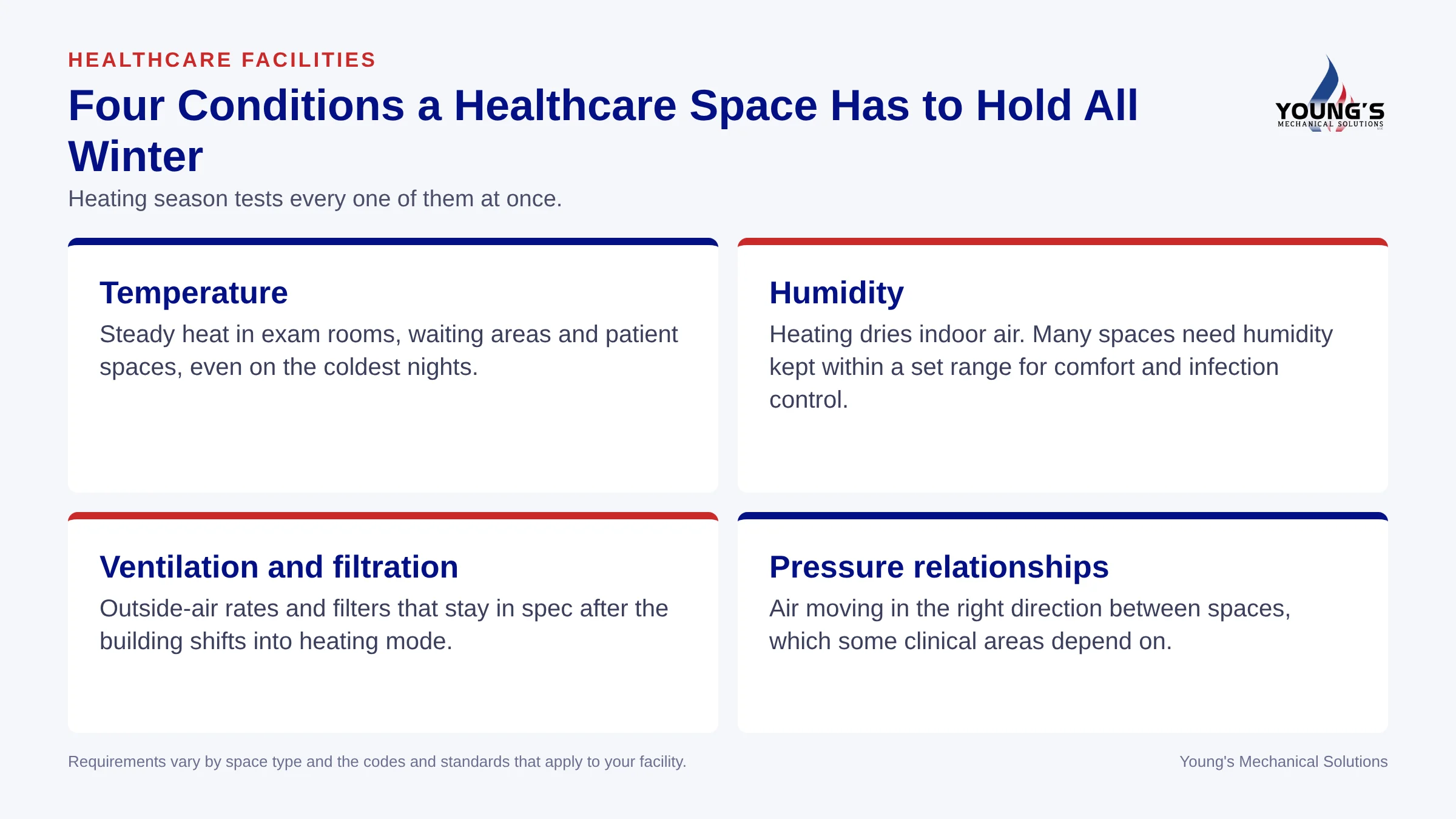
Healthcare environments run on their mechanical systems in ways an ordinary office never does. Ventilation and filtration protect patients and staff from airborne contaminants. Temperature and humidity have to stay in range for comfort, infection control, and sometimes for the equipment and medications in the building. Certain spaces depend on pressure relationships that keep air moving in the right direction.
Winter stresses all of it. Longer heating cycles, colder outside air, and heavier occupancy during respiratory-illness season leave little room for a marginal system. A failure is not just a comfort complaint. It can disrupt care, trigger compliance issues, or force a space out of use.
What tends to go wrong in the cold
- Heating capacity shortfalls: Units that were never stressed in summer reveal weak heat exchangers, failing igniters, or worn controls on the first hard cold snap.
- Ventilation and filtration drift: Outside-air and filtration settings that slip out of spec compromise the air quality these buildings depend on.
- Humidity out of range: Dry heating-season air can push spaces below the humidity levels required for comfort and infection control.
- Lost pressure relationships: Airflow imbalances can undermine the pressurization certain clinical spaces rely on.
What Heating-Season Readiness Looks Like
Reliability in a healthcare facility comes from verifying the whole mechanical picture before winter load arrives, not from waiting for a call.
Prove out the heating equipment
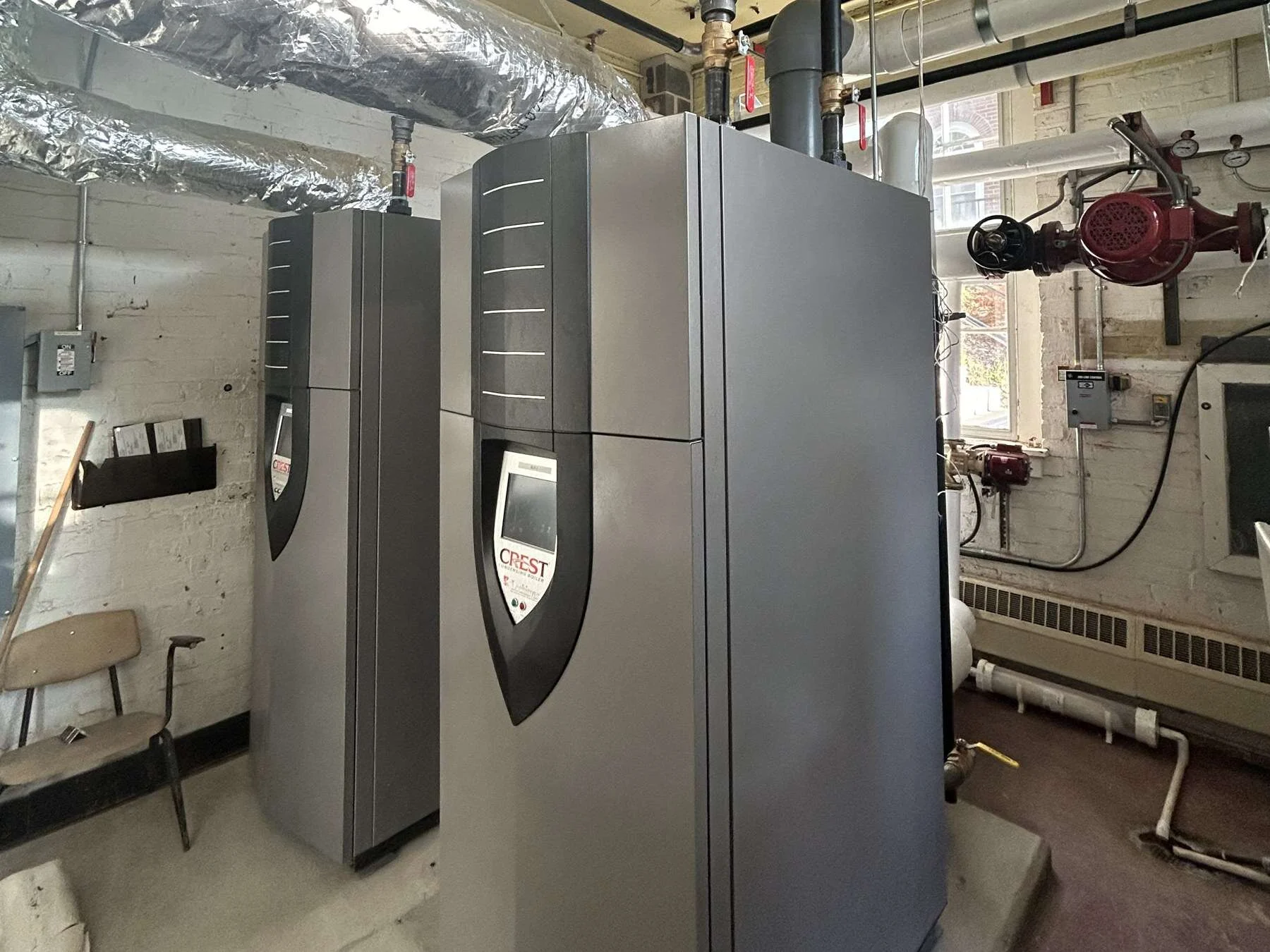
Inspect and test heating components before they are needed (heat exchangers, burners, igniters, controls, and safeties) so a cold-weather startup does not become a cold-weather failure.
Verify ventilation, filtration, and humidity
Confirm outside-air rates, filtration, and humidity control are performing to the facility’s requirements as the building shifts into heating mode and seals up for the season.
Confirm controls and monitoring
Make sure the building automation system is staging equipment correctly and that alarms and sensors will actually flag a problem before it affects a patient-care space.
Have a response plan ready
Even a well-maintained system can have a bad night. Knowing who responds, how fast, and with what history of the equipment is part of readiness, not an afterthought once something breaks.
Reliable Response Backed by Your Building’s History
When a critical facility loses heat or ventilation, the clock matters. Young’s Mechanical Solutions provides commercial mechanical service with tech-driven dispatch and repair-history tracking, so when our team responds, they arrive with context on your building’s equipment rather than starting from zero. That continuity shortens diagnosis and gets a healthcare facility back in range faster.
Because we are a commercial-only mechanical contractor serving the Harrisonburg area and the wider Shenandoah Valley, our technicians work in the kind of environments where uptime is not negotiable. A service agreement puts preventative work on a schedule and gives your facility a known partner to call before the first hard freeze, and during it. We are licensed in Virginia and West Virginia.
Heating-Season Readiness Checklist for Healthcare Facilities
- Inspect and test heating equipment before cold weather load
- Verify outside-air, filtration, and humidity performance to facility requirements
- Confirm pressure relationships in spaces that depend on them
- Check building automation staging, alarms, and sensors
- Confirm an emergency response plan and after-hours coverage are in place
- Put preventative maintenance on a schedule through a service agreement
Handled in the fall, heating-season reliability becomes a plan rather than a gamble.
Young’s Mechanical Solutions
Keep Your Healthcare Facility Ready for Winter
In healthcare, mechanical reliability is patient care. Our team can confirm your heating, ventilation, humidity, and controls are ready for the cold, and put a service agreement behind them.