
A closer look at how experienced mechanical contractors keep complex projects moving
Introduction
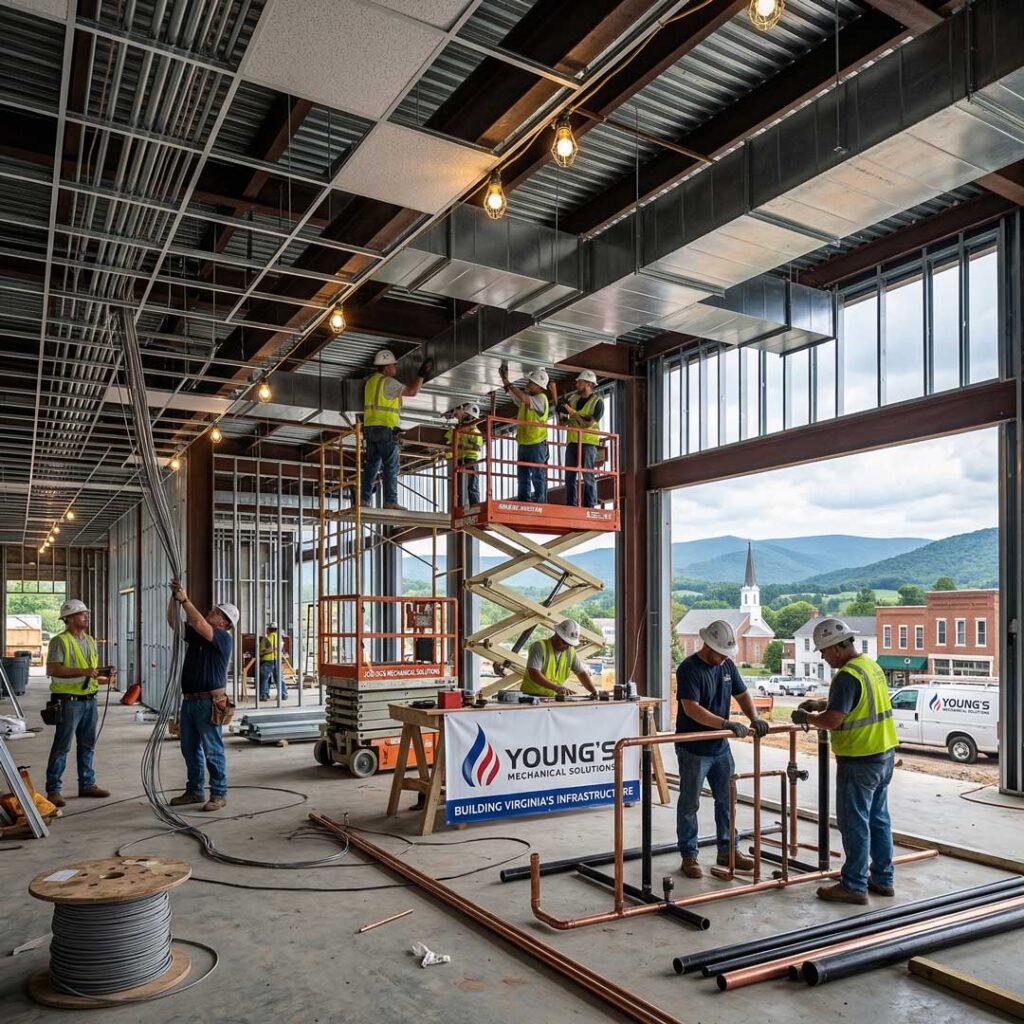
On any commercial construction project, the mechanical scope rarely happens in isolation. Ductwork shares ceiling space with electrical conduit and fire protection piping. Plumbing rough-in has to be coordinated around structural framing and concrete pours. Controls wiring needs to be in place before ceiling grids close.
For general contractors managing complex builds, the mechanical contractor’s ability to coordinate with other trades isn’t a nice-to-have — it’s a project-critical capability. A mechanical sub that installs quality work but can’t flex around the realities of a shared job site creates bottlenecks that ripple through the entire schedule.
Here’s how Young’s Mechanical Solutions approaches multi-trade coordination on commercial projects across the Shenandoah Valley.
Pre-Construction: Setting the Stage
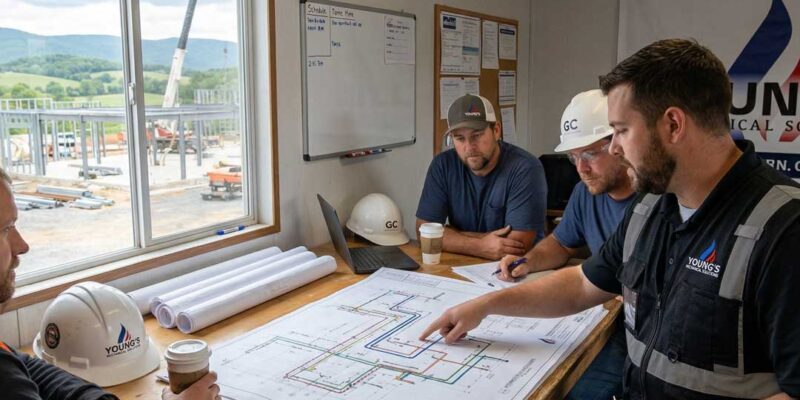
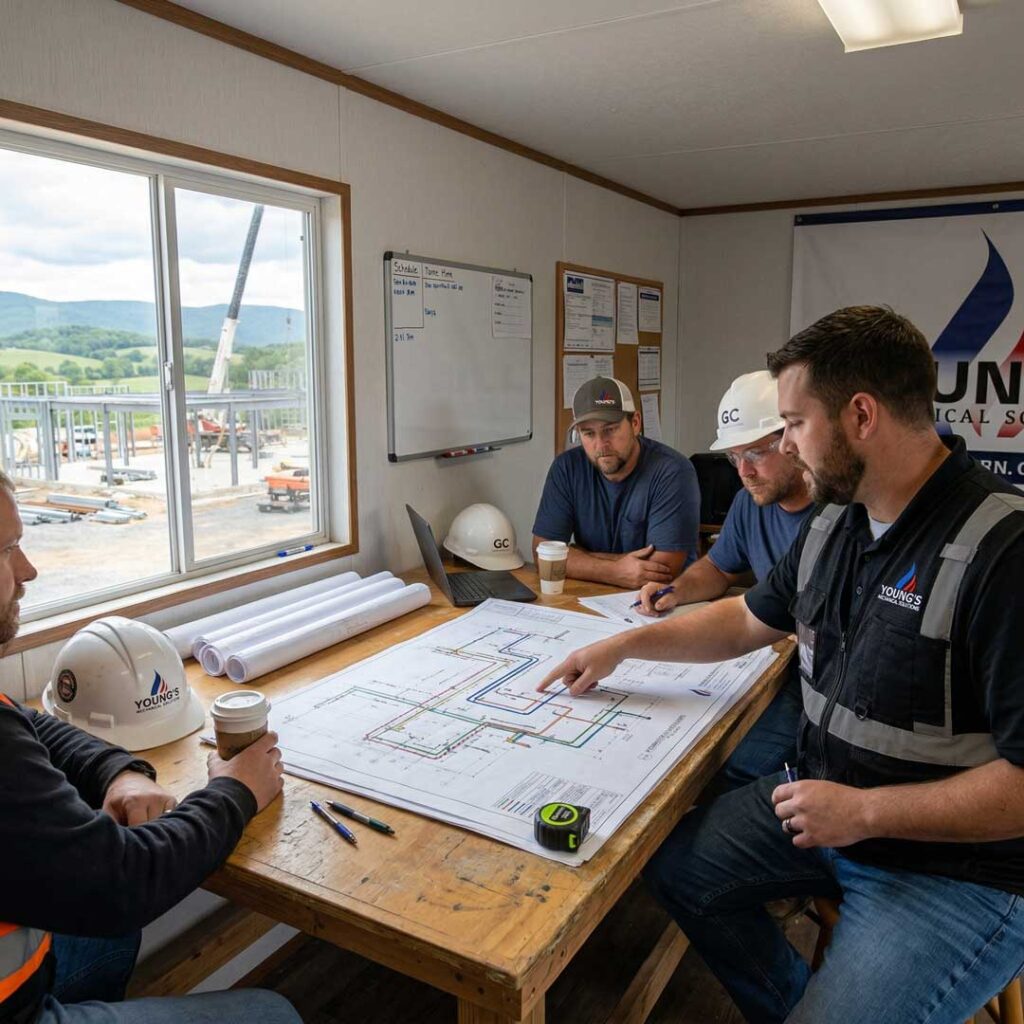
Effective trade coordination starts long before the first truck arrives on site. During pre-construction, our project management team reviews mechanical drawings alongside the other trades’ scopes to identify potential conflicts and sequencing challenges.
This is where ceiling space gets allocated, routing conflicts get resolved on paper instead of in the field, and installation sequences get mapped to the GC’s overall project schedule. We work through these details in coordination meetings with the GC, electrical contractor, fire protection sub, and controls partners before mobilization.
The investment in this upfront planning phase pays dividends throughout the project. Problems that would take days to solve in the field can be resolved in hours at the drawing table.
Sequencing Around Critical Milestones
Every commercial project has hard milestones that drive the overall schedule — concrete pours, steel erection, ceiling closures, inspections. The mechanical scope has to work around and between these milestones, not against them.
On a typical commercial build, this means underground plumbing rough-in happens before slab pours. Overhead ductwork and piping get installed after steel is in place but before the ceiling grid goes up. Controls wiring and startup happen after the mechanical systems are installed but before the building’s final inspection sequence begins.
Young’s project managers build detailed installation sequences that mesh with the GC’s master schedule. When a concrete pour date shifts by a week, our team adjusts crew assignments and material deliveries to keep our scope on track without holding up the trades behind us.
Sharing the Ceiling: Coordinating with Electrical and Fire Protection
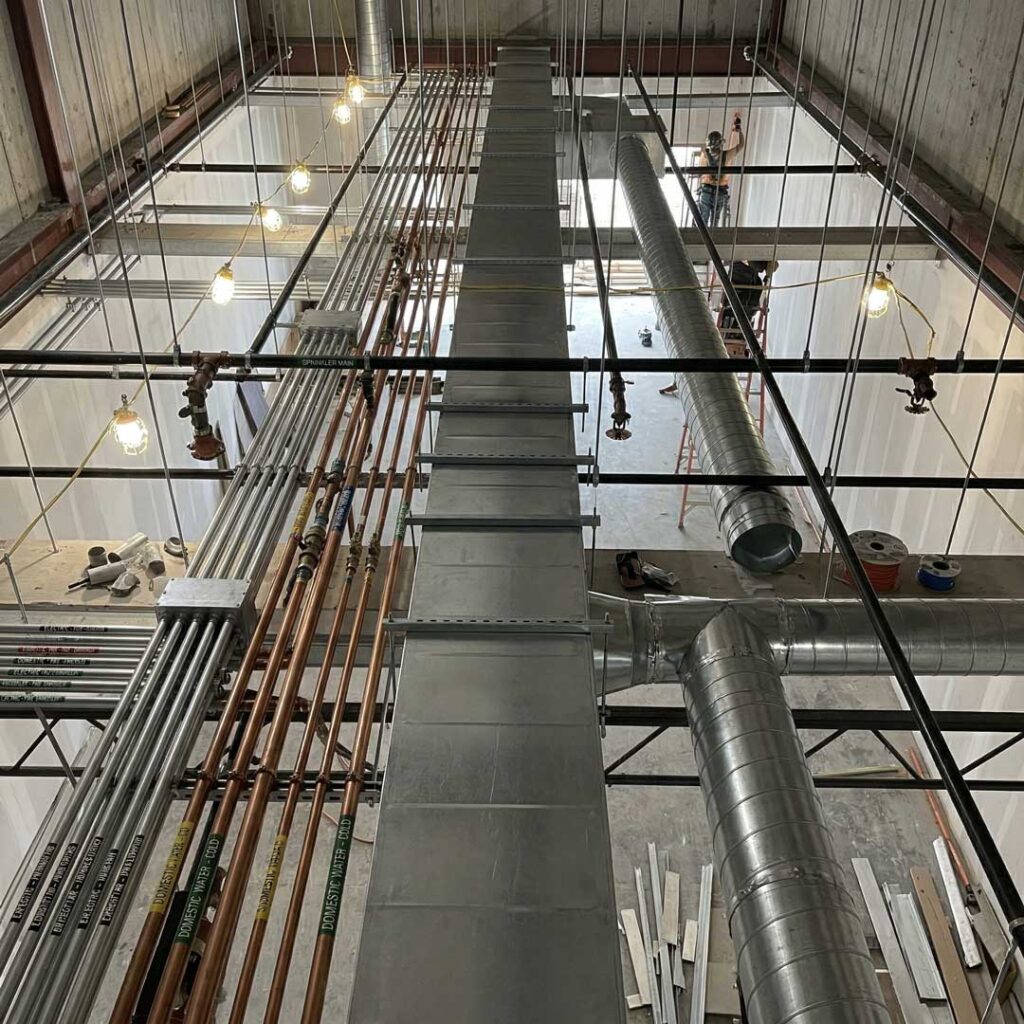
The above-ceiling space in a commercial building is shared real estate. Ductwork, piping, electrical conduit, cable tray, and fire protection sprinkler mains all compete for the same space — and they all need to maintain code-required clearances.
This is where having experienced field foremen makes a measurable difference. Young’s sheet metal and piping foremen have spent years working alongside electrical and sprinkler crews on job sites across Virginia. They know how to route duct runs and piping to leave room for the trades that follow, how to stage installations so crews aren’t stacked on top of each other, and how to communicate changes in real time when field conditions don’t match the drawings.
Working with Controls and Commissioning Partners
The controls phase is where the mechanical installation comes to life. Thermostats, sensors, actuators, and building automation controllers need to be installed, wired, programmed, and tested — and this work has to be sequenced carefully with the mechanical equipment it connects to.
Young’s Mechanical coordinates closely with controls partners throughout the project. Our team ensures that control points are accessible, equipment is powered and ready for startup, and our technicians are available to support testing and commissioning alongside the controls technicians.
This isn’t just about being available — it’s about understanding the systems well enough to troubleshoot issues during commissioning before they become punch list items that delay occupancy.
What GCs Should Look For
When general contractors evaluate mechanical subcontractors, price is always a factor. But the contractors who consistently deliver projects on time and on budget share a few traits that go beyond the numbers:
- They show up to coordination meetings prepared, with updated drawings and a clear installation plan
- They communicate schedule changes proactively, not after the fact
- They maintain in-house crews across multiple disciplines (sheet metal, piping, plumbing) so the GC deals with one sub instead of three
- They own the commissioning relationship, working side-by-side with controls partners to deliver a functioning system — not just installed equipment
These are the qualities that turn a mechanical subcontractor into a project partner. And for general contractors building in the Shenandoah Valley, that kind of partnership is what Young’s Mechanical Solutions brings to every project.
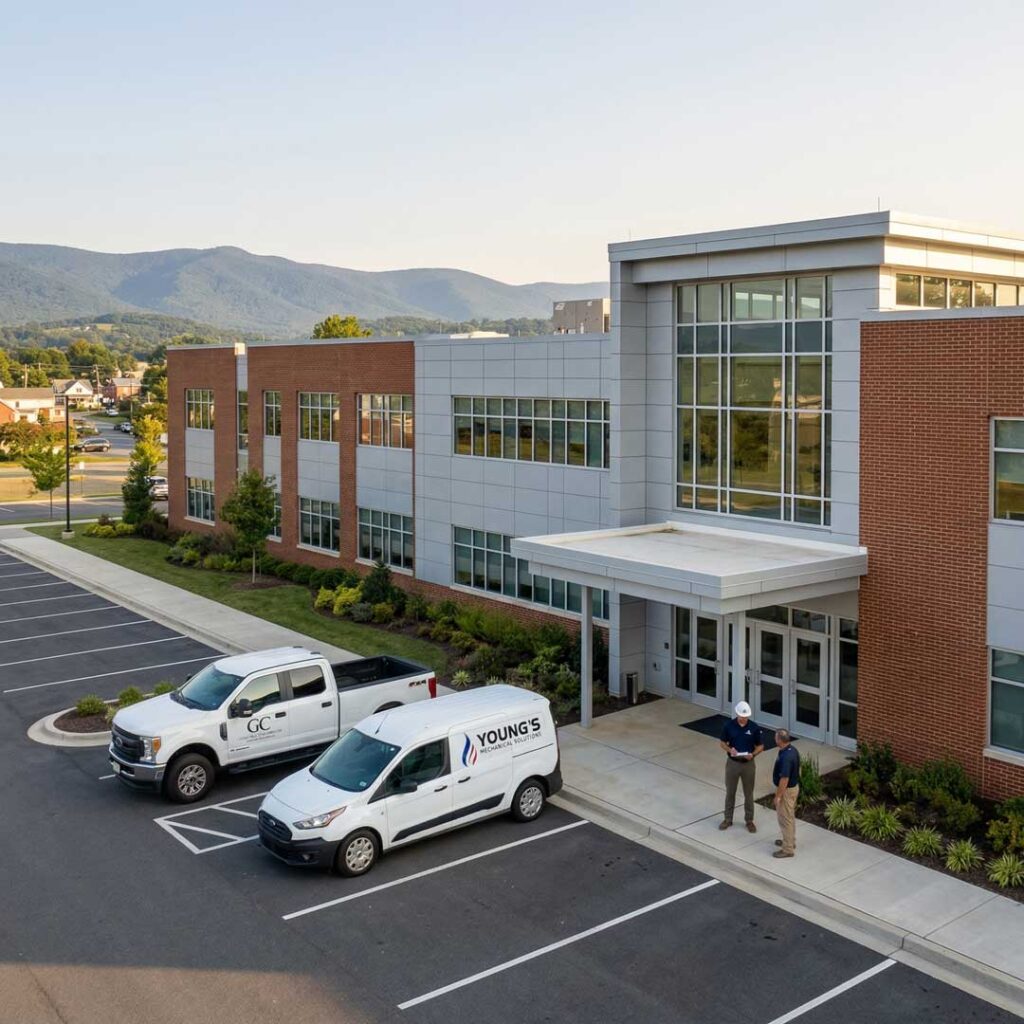
Built for Coordination
Young’s Mechanical Solutions is a full-scope commercial mechanical contractor with in-house sheet metal crews, mechanical piping crews, plumbing crews, and controls/startup technicians — all working under one project management team. We serve general contractors and building owners across the Shenandoah Valley, from hard-bid public work to design-build partnerships.
When your project depends on a mechanical contractor who can coordinate, communicate, and deliver — we’re your partner of choice.
Ready to Talk?
Contact Young’s Mechanical Solutions to schedule a consultation or request a proposal.
Phone: 540-214-2745
Email: info@youngsmechanicalsolutions.com