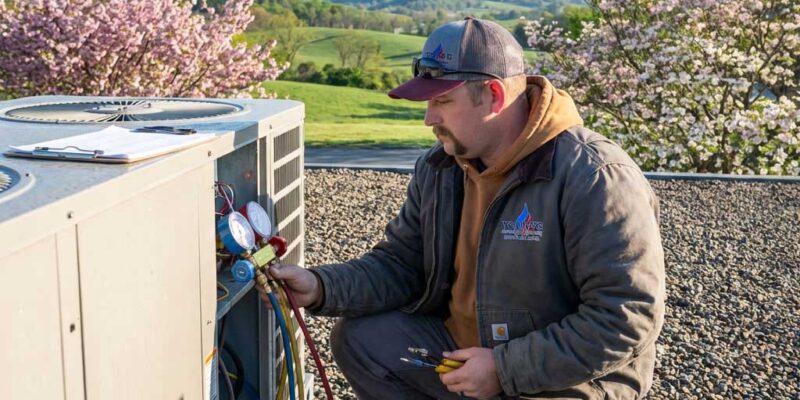
Practical steps facility managers should take now to prepare for summer demand
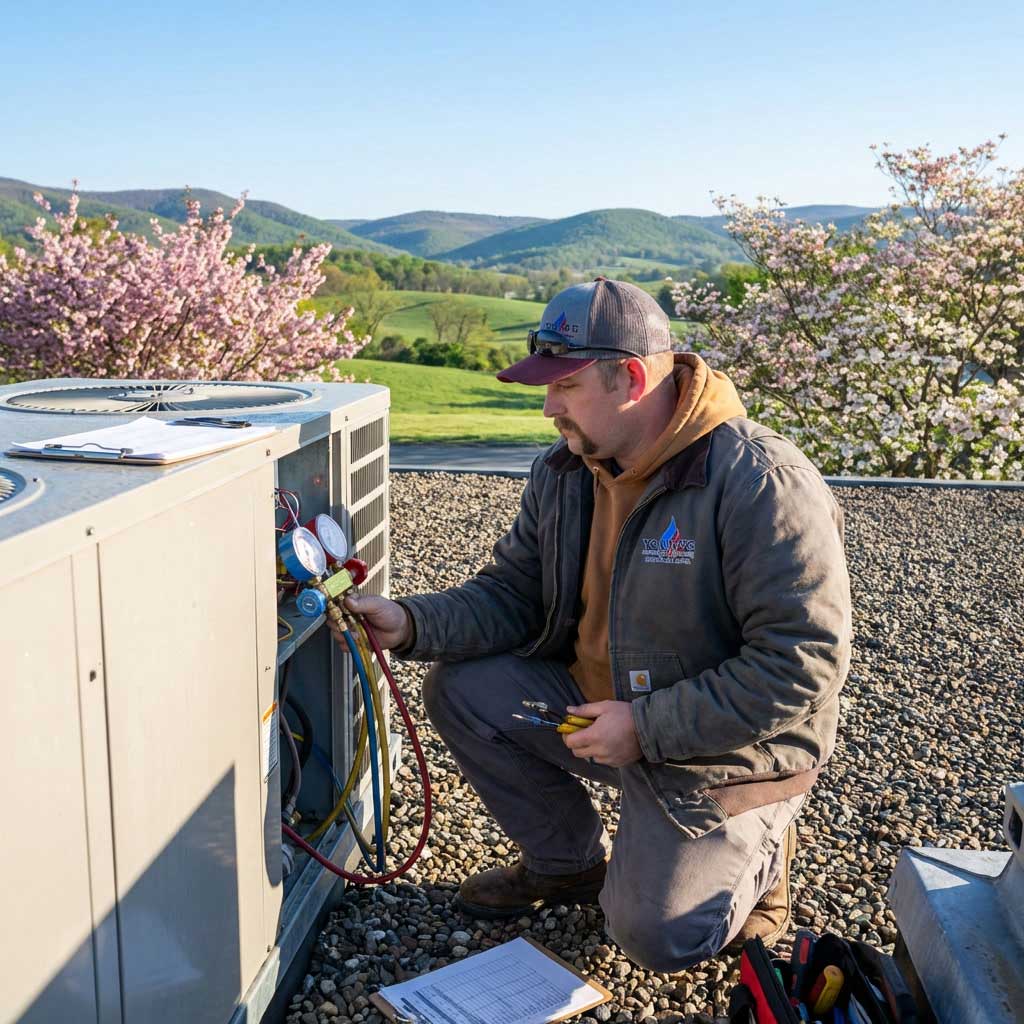
Introduction
Every spring, commercial HVAC systems across the Shenandoah Valley face the same transition: shifting from heating mode to cooling mode as temperatures climb. For facility managers, this changeover window is one of the most important maintenance touchpoints of the year.
Getting it right means your tenants, employees, and building occupants stay comfortable through the summer without unexpected breakdowns or inflated energy bills. Getting it wrong — or skipping it entirely — often means emergency service calls during the first heat wave, when every mechanical contractor in the region is already booked.
Here’s a practical checklist for transitioning your commercial HVAC systems from heating to cooling season.
1. Inspect and Replace Air Filters
This is the simplest and most impactful step. Filters that ran all winter are loaded with dust, debris, and particulates. Dirty filters restrict airflow, force equipment to work harder, and degrade indoor air quality — all of which translate to higher operating costs and more wear on your system.
Replace all filters before switching to cooling mode. If your building uses higher-efficiency filtration (MERV 13 or above), verify that replacement stock is on hand — supply chain delays on specialty filters can stretch into weeks.
2. Clean and Inspect Condenser and Evaporator Coils
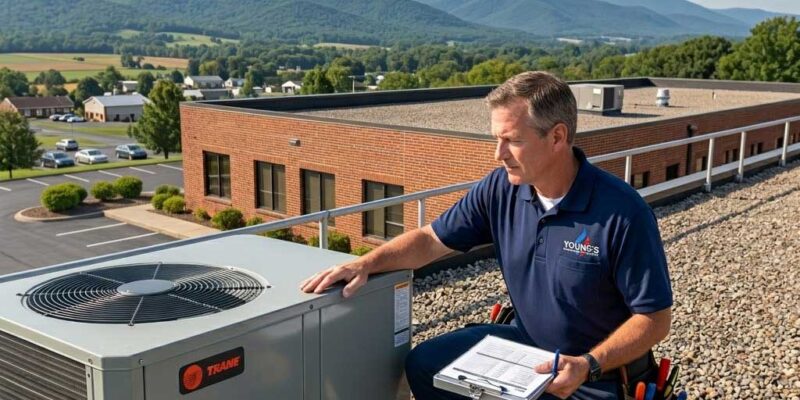
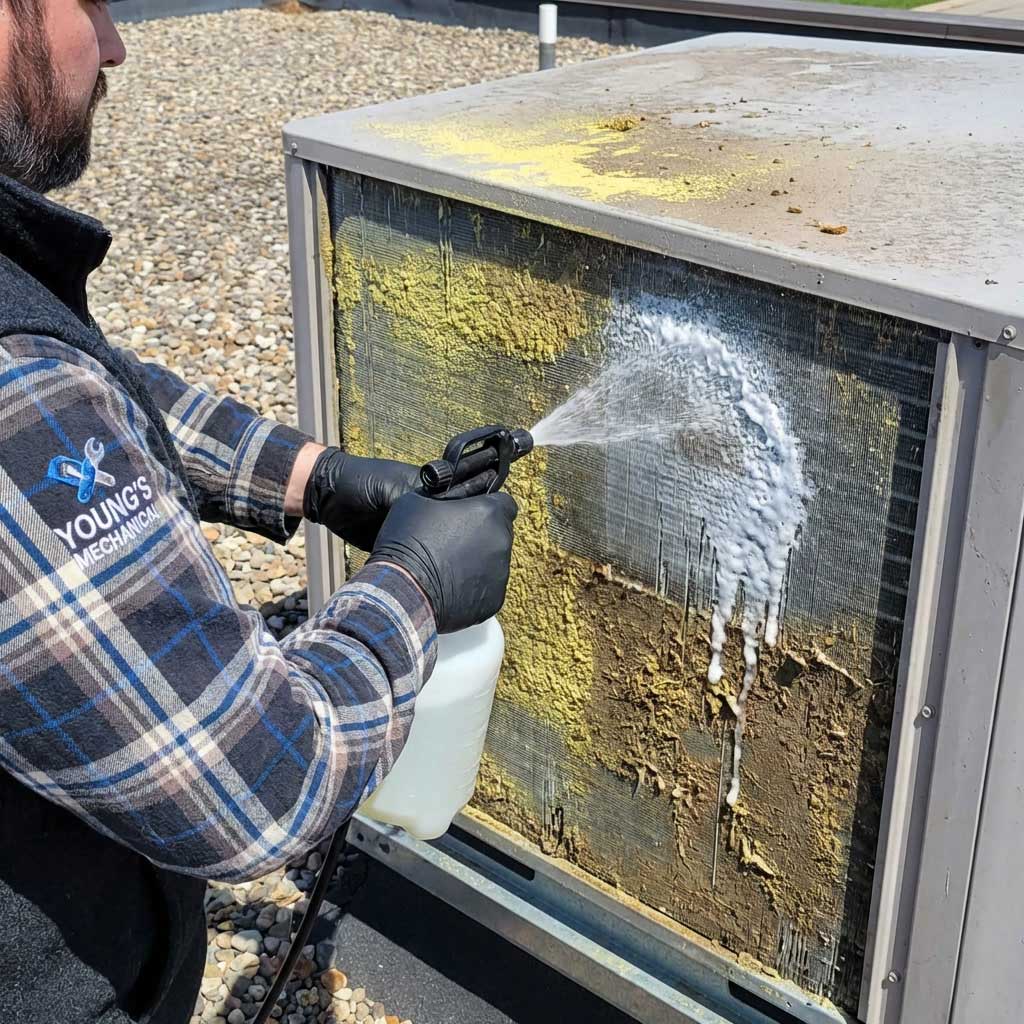
Outdoor condenser coils collect dirt, pollen, leaves, and debris over the winter and early spring. Even a thin layer of buildup reduces heat transfer efficiency, meaning your system uses more energy to achieve the same cooling output.
Indoor evaporator coils should also be inspected for cleanliness and checked for any signs of corrosion or refrigerant leaks. A dirty or damaged coil doesn’t just reduce efficiency — it can lead to frozen coils and compressor damage during peak cooling demand.
3. Check Refrigerant Levels and Inspect for Leaks
Low refrigerant is one of the most common causes of poor cooling performance in commercial systems. A refrigerant check during spring startup catches slow leaks that developed over the winter before they become a midsummer crisis.
Your technician should verify refrigerant charge levels, inspect line sets for signs of oil staining (an indicator of leaks), and ensure all service valves are properly sealed.
4. Test and Calibrate Controls
Building automation and thermostat controls that were set for heating season need to be reviewed and adjusted for cooling. This includes verifying setpoint schedules, confirming that occupied and unoccupied modes are programmed correctly, and testing changeover logic for heat pump or dual-mode systems.
In buildings with multiple zones, this step is especially critical. A controls setting that worked fine for heating can cause simultaneous heating and cooling in adjacent zones — wasting energy and creating comfort complaints.
5. Clear Condensate Drains
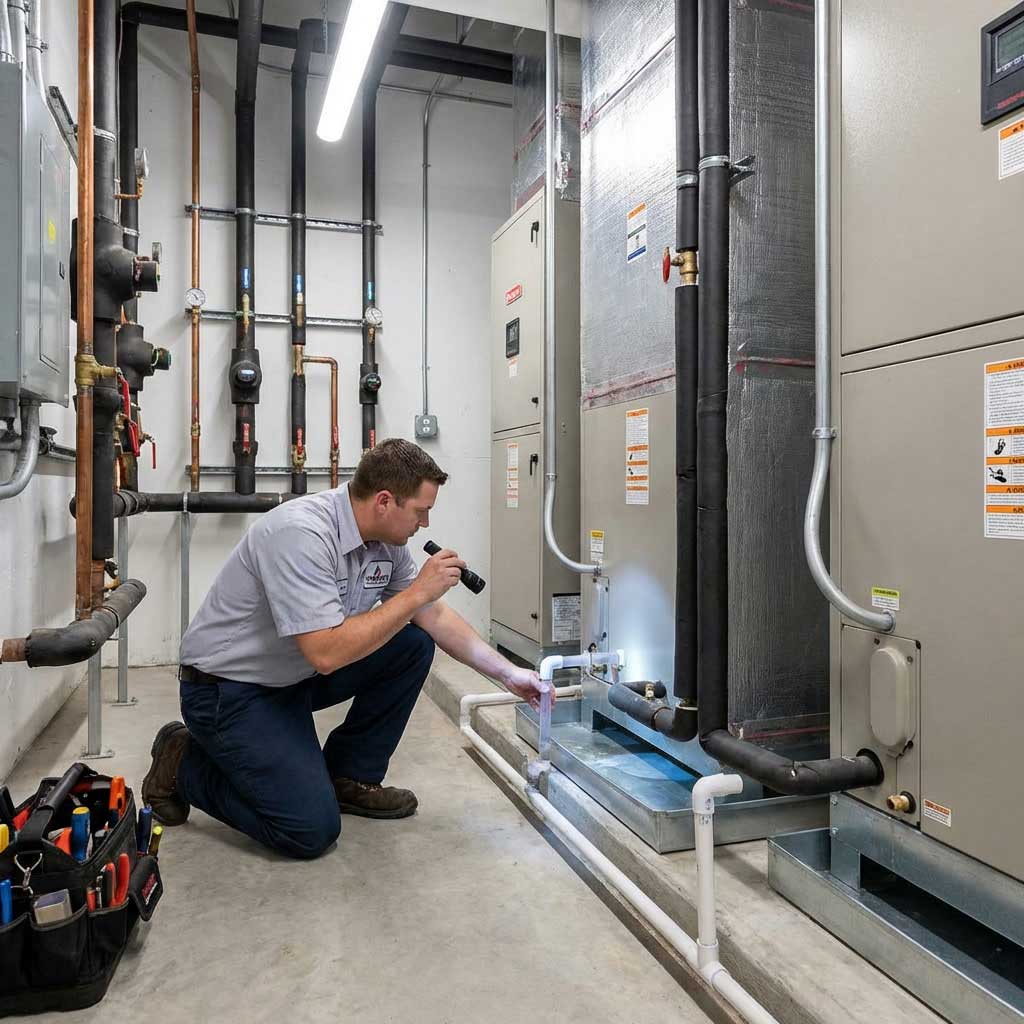
Condensate drain lines that sat dormant during heating season can develop algae growth, sediment blockages, or trap seal failures. Once cooling starts and condensate begins flowing, a blocked drain can cause water damage, mold growth, and equipment shutdowns.
Flushing drain lines and verifying trap seals during spring startup is a low-cost step that prevents expensive water damage claims later in the summer.
6. Inspect Belts, Bearings, and Moving Components
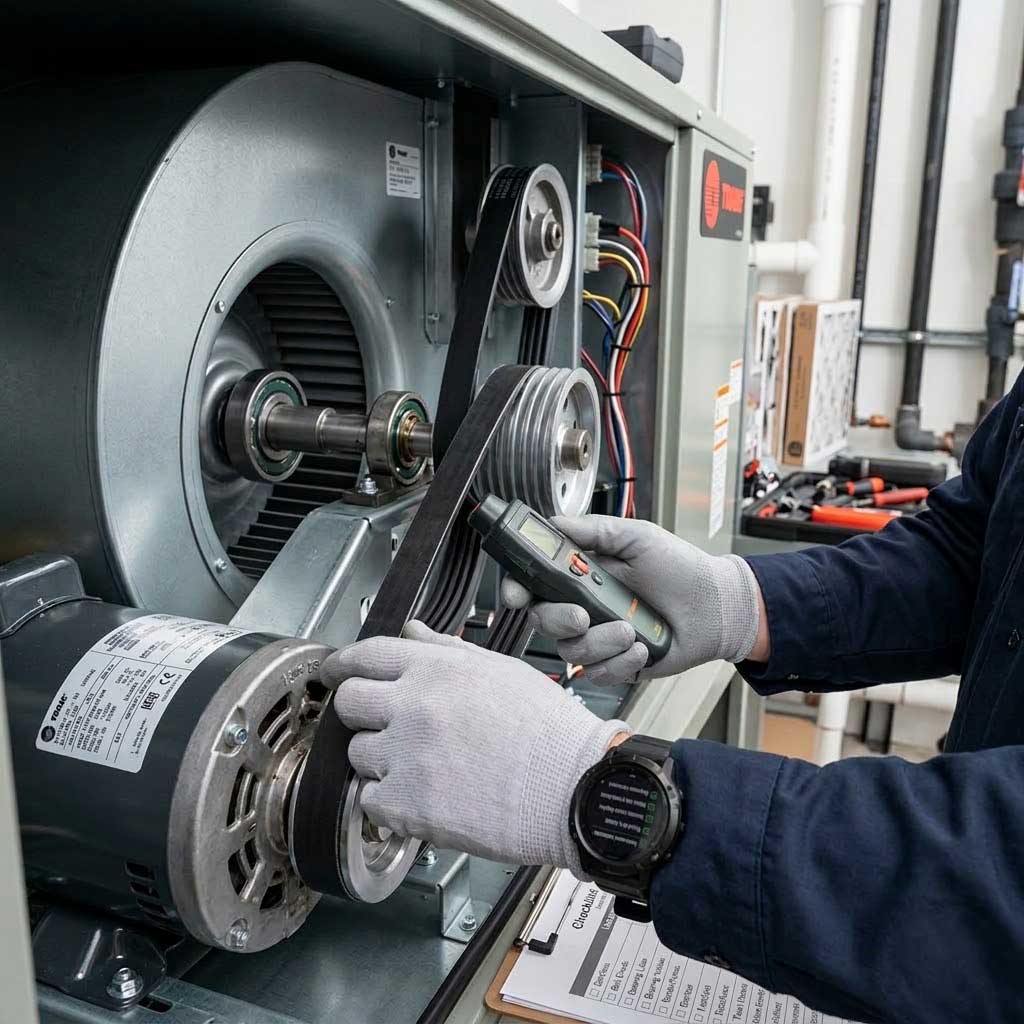
Fan belts that ran through an entire heating season may be stretched, cracked, or misaligned. Bearings in fan motors and pump assemblies should be checked for noise and lubricated as needed. Catching a worn belt or dry bearing now prevents a mid-July failure that shuts down cooling for an entire floor.
7. Review Your Service Agreement
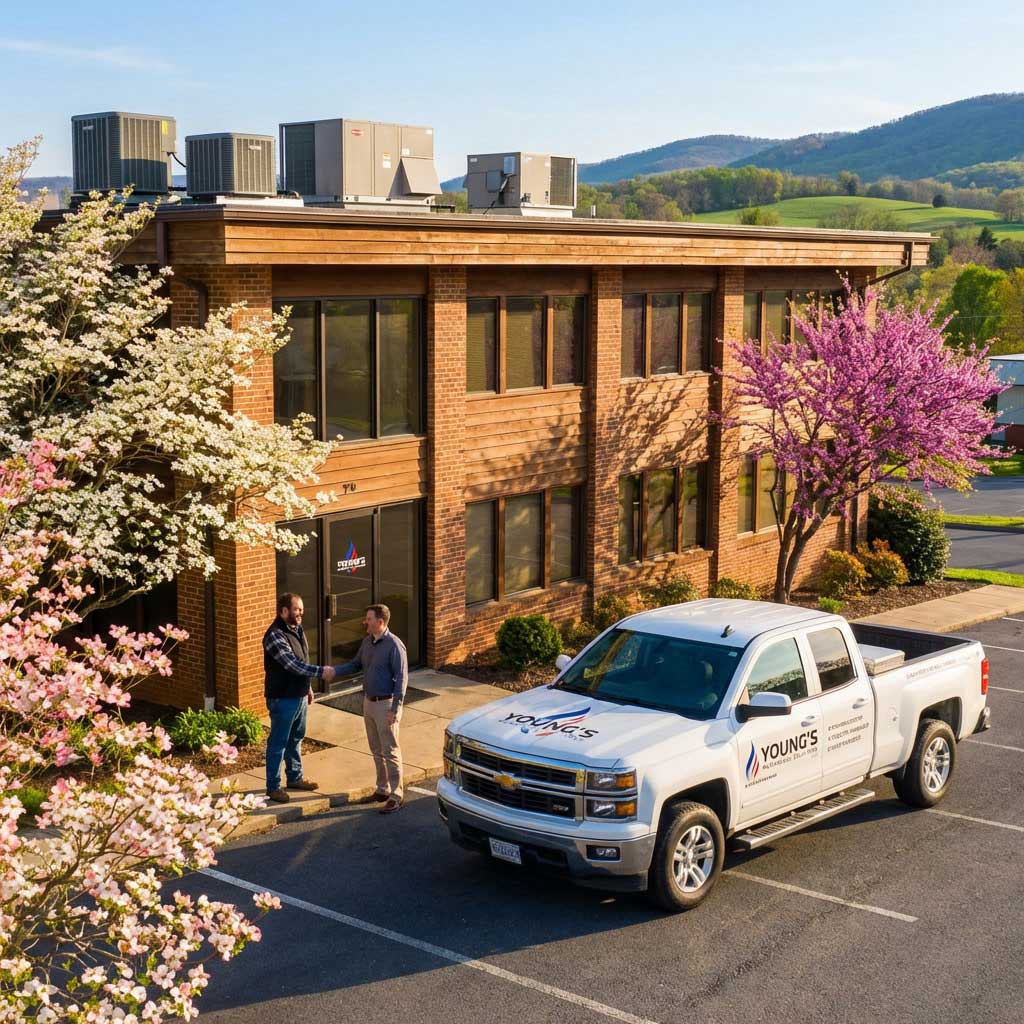
If your facility has a service agreement with Young’s Mechanical Solutions, most of these checklist items are already scheduled and handled proactively. Our technicians arrive before the cooling season begins, perform a comprehensive startup inspection, and document everything in your facility’s equipment history.
If you don’t have a service agreement in place, spring is the ideal time to start one. Proactive maintenance during the changeover season is far less expensive — and far less disruptive — than emergency repairs during peak cooling demand.
Don’t Wait for the First Hot Day
The Shenandoah Valley can swing from cool spring mornings to summer-like heat in a matter of days. Scheduling your spring HVAC startup now — while technicians are available and the workload is manageable — gives you the best chance of a smooth, trouble-free cooling season.
Young’s Mechanical Solutions provides commercial HVAC spring startup services and year-round service agreements for facilities across Harrisonburg, Staunton, Waynesboro, Lexington, and the surrounding region.
Ready to Talk?
Contact Young’s Mechanical Solutions to schedule a consultation or request a proposal.
Phone: 540-214-2745
Email: info@youngsmechanicalsolutions.com