The first cold morning of the season always seems to arrive without warning. Across the Shenandoah Valley, facility managers find out at the same moment whether their heating is ready — and if it isn’t, they’re competing for the same service appointments as every other building in the region. Late summer is the window to get ahead of that rush, and it’s the right time to schedule commercial HVAC maintenance before heating season begins.
Why late summer is the right window for commercial HVAC maintenance
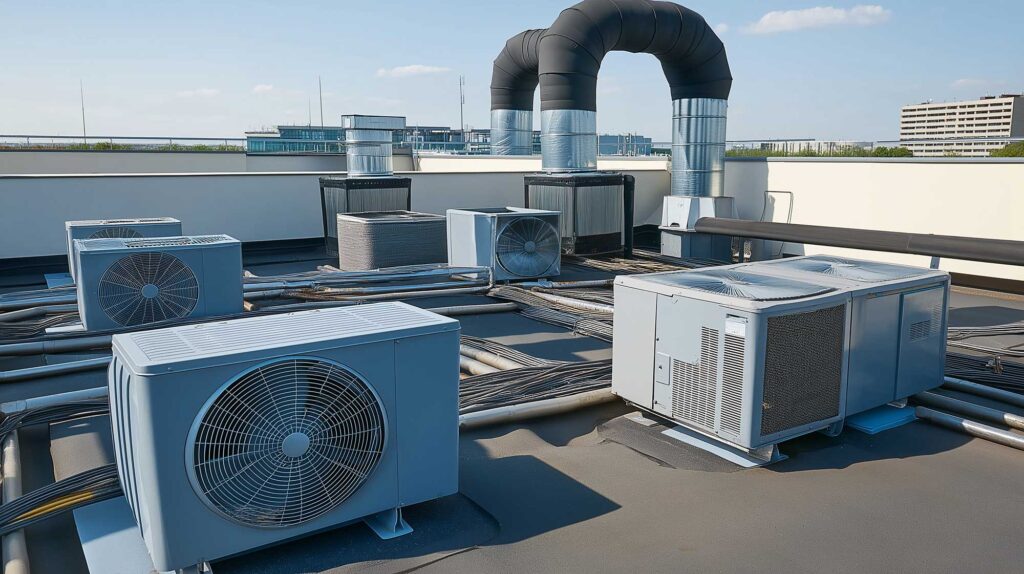
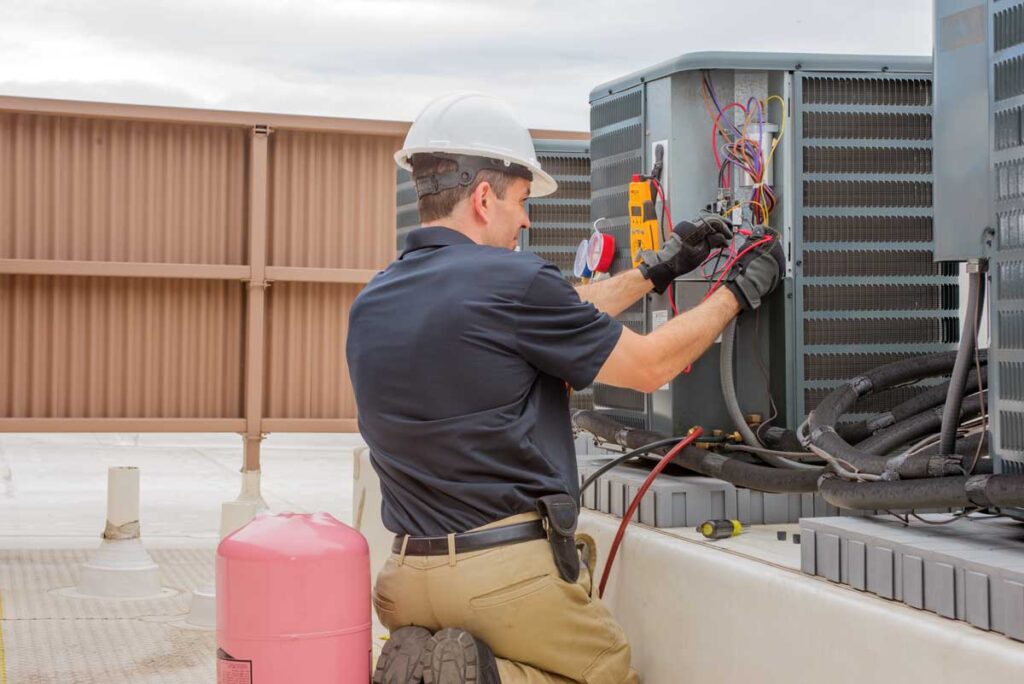
Most commercial buildings in our area rely on rooftop packaged units and mechanical systems that just finished carrying a full summer cooling load. That’s exactly why now is the time to look at them. Components are coming off months of continuous runtime, and any wear introduced over the summer is easiest to catch before the system has to switch over and heat the building.
Scheduling in late summer also means you’re booking ahead of demand. Once the first cold snap hits, service calls spike and lead times stretch. Getting on the calendar now keeps your facility ahead of failure instead of reacting to it.
What a pre-heating-season commercial HVAC check should cover
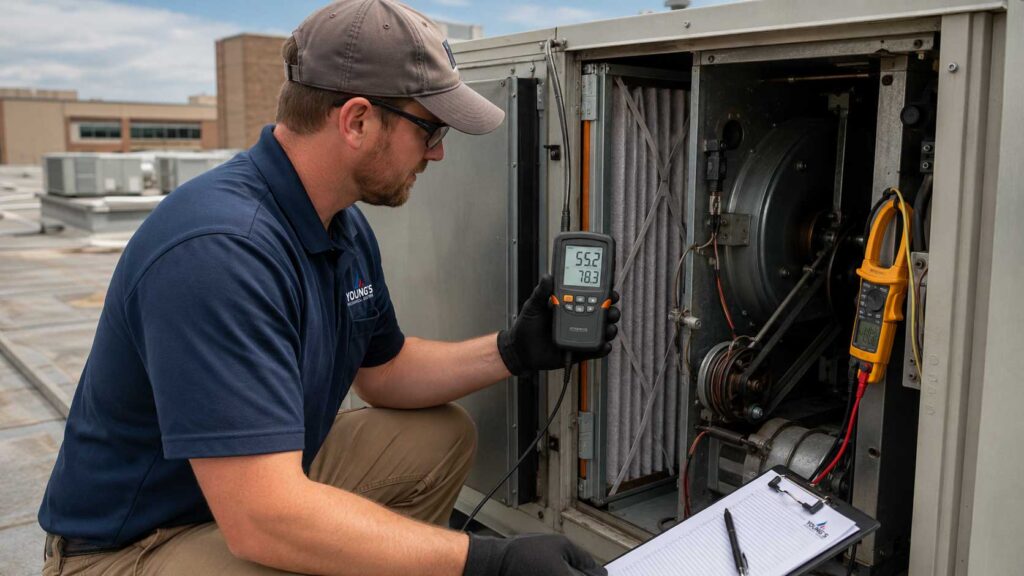
A thorough seasonal maintenance visit is about more than swapping a filter. For commercial systems heading into heating season, our technicians focus on the items most likely to cause downtime or drive up operating cost:
- Heat exchangers and burners — inspected for cracks, corrosion, and proper ignition before the system runs on heat.
- Rooftop unit changeover — verifying the unit transitions cleanly from cooling to heating mode.
- Belts, bearings, and motors — checked for summer wear so a failure doesn’t take a unit offline in January.
- Controls and thermostats — confirming schedules, setpoints, and sensors are calibrated for occupied and unoccupied hours.
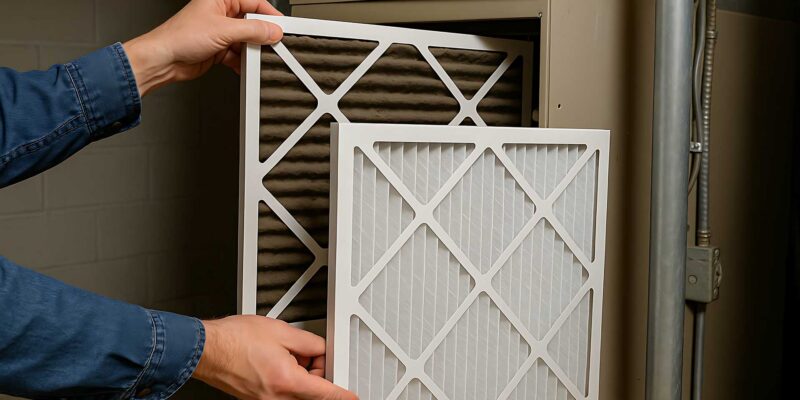
- Filters and airflow — replaced and measured to protect indoor air quality and system efficiency.
- Gas and electrical connections — tested for safety and reliable operation.
Every one of those checks ties back to a business outcome: fewer emergency calls, lower energy use, and a building that stays comfortable when the temperature drops.
The real cost of waiting until the first cold snap
When a rooftop unit fails on the first cold morning, the cost isn’t just the repair. It’s the tenant complaints, the emergency-rate service call, the scramble to find parts, and the productivity lost while the space is uncomfortable. A planned maintenance visit in late summer replaces an unpredictable emergency with a scheduled, budgeted appointment — and gives you a clear picture of what your equipment needs before it becomes urgent.
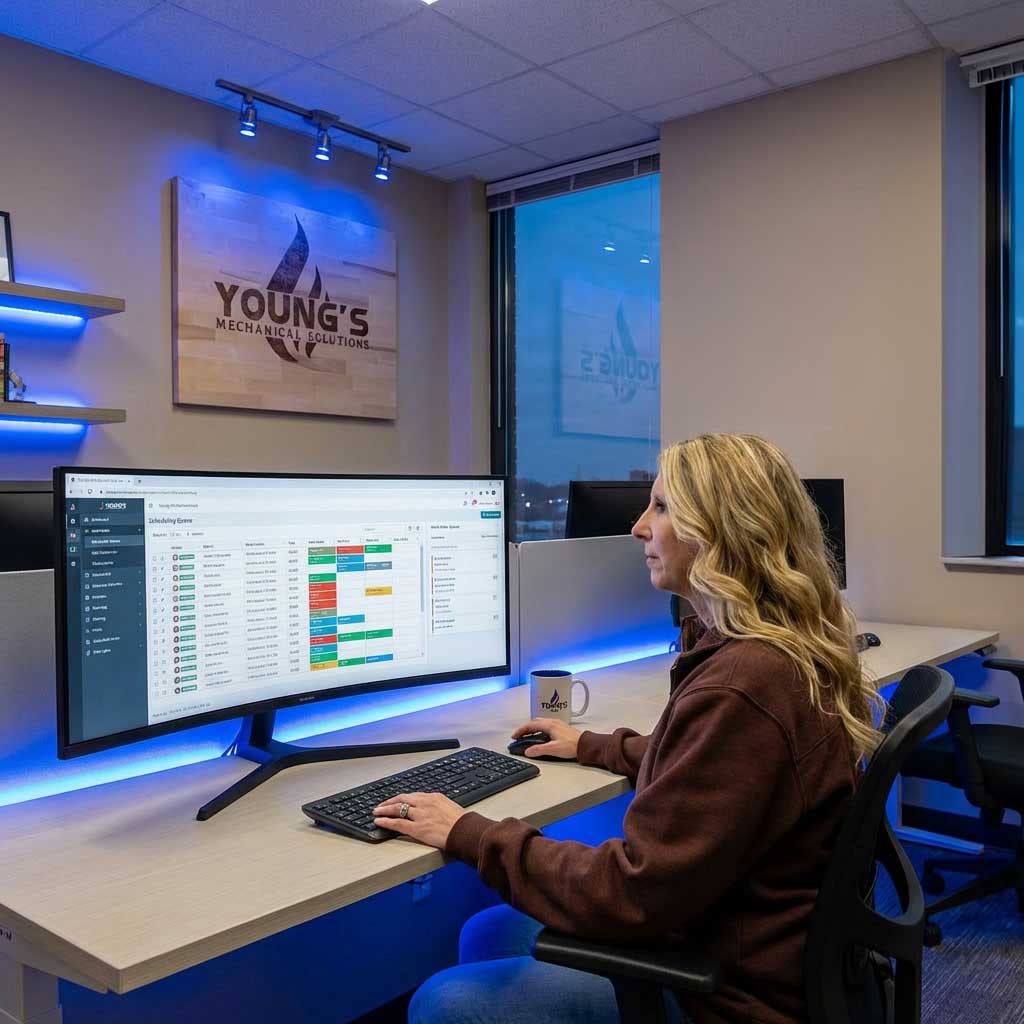
For facility managers juggling multiple buildings, that predictability matters. Our tech-driven service dispatch tracks repair history for each unit, so you have visibility into what’s been done and what’s coming due across your portfolio.
In-house crews mean faster scheduling
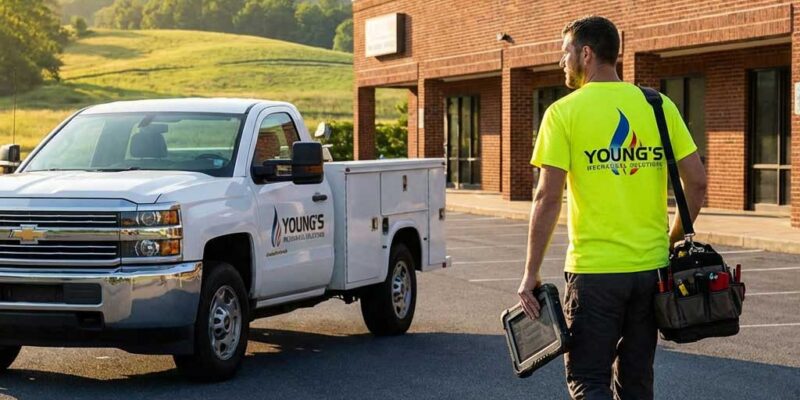
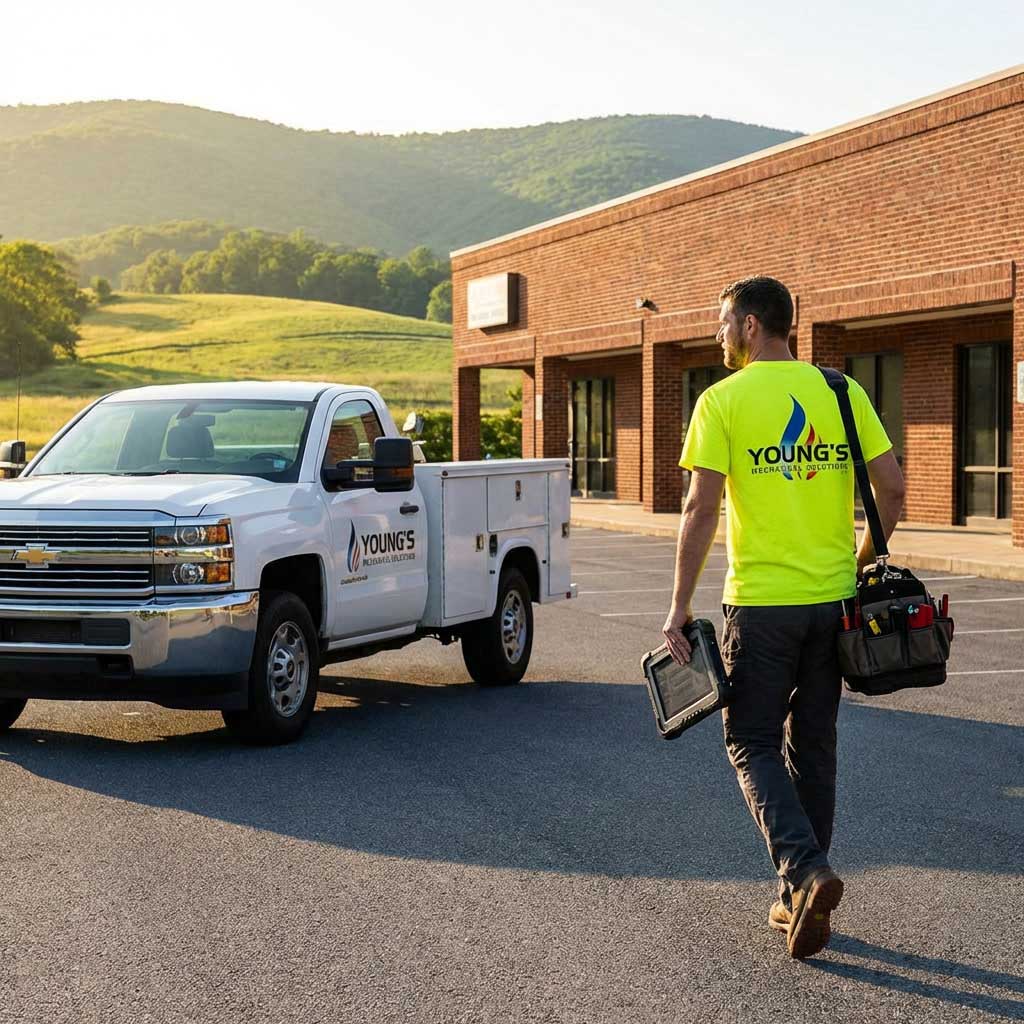
Because Young’s Mechanical is a commercial-only contractor with a full set of in-house crews — sheet metal, mechanical piping, plumbing, controls, and ductwork fabrication out of our Harrisonburg shop — we can respond quickly when a maintenance visit turns up something that needs attention. If a unit needs a repair or a part fabricated, we’re not waiting on an outside vendor to fit you in.
We’re licensed in both Virginia and West Virginia and serve roughly a one-hour radius of Harrisonburg, so facility managers across the Shenandoah Valley and into West Virginia can rely on one mechanical partner for the whole scope.
A simple late-summer checklist for facility managers
Before the season turns, it’s worth confirming a few things for each building you manage:
- Has each rooftop unit had a pre-heating-season inspection this year?
- Do you have a documented service history for your commercial HVAC equipment?
- Are any units already showing signs of trouble — short cycling, uneven temperatures, or rising energy bills?
- Is your maintenance handled reactively, or through a preventative service agreement?
If any of those answers give you pause, late summer is the time to act — while the schedule is open and the weather is still on your side.
Schedule your commercial HVAC maintenance now
Getting ahead of heating season protects your facility’s uptime and your operating budget. A late-summer commercial HVAC maintenance visit from an experienced team is one of the simplest ways to avoid a cold-weather emergency. Reach out to discuss a service agreement for your building, or contact our service team at 540-214-2745 to schedule a consultation to walk your facility.