For someone leaving trade school or thinking about a career change into the skilled trades, the most important question isn’t the first paycheck. It’s where the work leads in five, ten, and twenty years. At a commercial-only mechanical contractor like Young’s Mechanical Solutions, the path from a first-year apprentice to a lead mechanic is real, well-defined, and built on the kind of steady commercial work that keeps the trades worth doing. Here’s what that career arc actually looks like.
Why Commercial Mechanical Is a Career, Not Just a Job
The skilled trades have been undervalued for a generation, but that’s changing fast. Commercial buildings are getting more complex, mechanical systems are getting more sophisticated, and there’s a measurable shortage of people who actually know how to install, service, and troubleshoot them. The technicians who learn the work now are entering a field with rising demand and rising wages — and a level of job security that white-collar work increasingly can’t match.
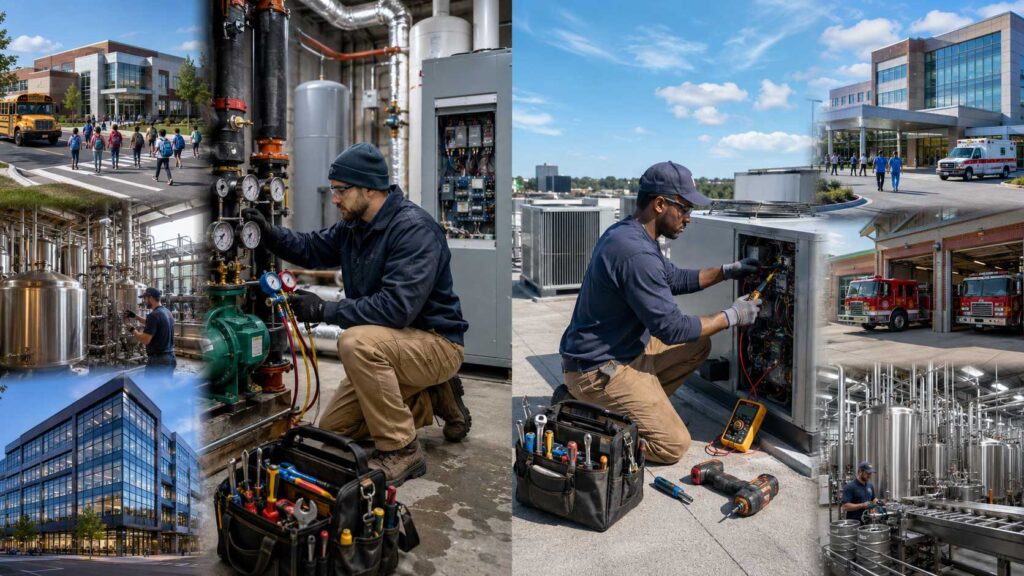
Commercial mechanical work specifically is a strong place to land because the work is varied, the equipment is interesting, and the buildings matter. We work on schools where students are trying to learn, breweries that have to keep producing, healthcare facilities where comfort affects patient care, fire stations that protect our community, and offices where people spend half their waking hours. There’s real satisfaction in keeping those systems running.
It’s also indoor work in winter and on most rooftops in summer — not roofing, not road construction, not jobs that beat you up year-round. The work is physical, but it’s the kind of physical that keeps you healthy rather than wearing you out.
Year One: Apprentice
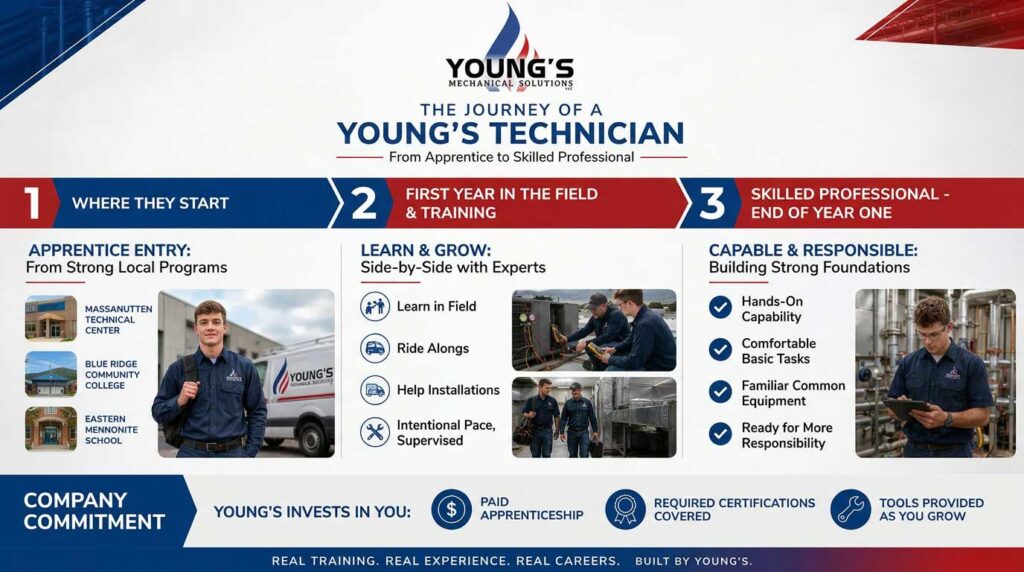
A new technician at YMS starts as an apprentice, typically straight out of trade school or a related program at a community college or a high school career and technical center. Schools like Massanutten Technical Center, Blue Ridge Community College, and Eastern Mennonite School’s career programs all turn out graduates we’re happy to bring on.
The first year is about learning the work in the field with a more experienced mechanic. Apprentices ride along on service calls, help on installs, learn the equipment, and build the muscle memory that turns book knowledge into hands-on capability. The pace is intentional — nobody is asking a first-year tech to lead a job alone.
By the end of year one, an apprentice should be comfortable with basic service tasks, familiar with common equipment, and ready to start carrying more of the load on bigger jobs. We pay during apprenticeship, we cover required certifications, and we provide the tools as the technician grows into them.
Years Two through Four: Journeyman
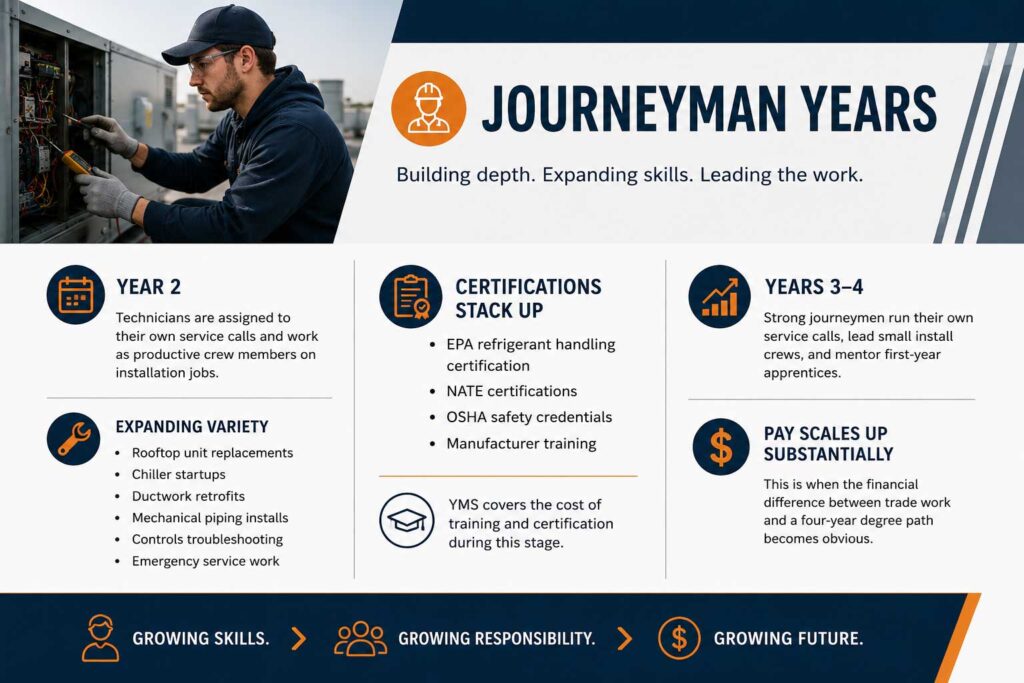
The journeyman years are where the real depth gets built. By year two, a technician is regularly assigned to their own service calls or working as a productive crew member on installation jobs. The variety of work expands — rooftop unit replacements, chiller startups, ductwork retrofits, mechanical piping installs, controls troubleshooting, and emergency service work.
This is also when certifications start stacking up. EPA refrigerant handling certification, NATE certifications, OSHA safety credentials, and any specialized manufacturer training all happen in this window. YMS covers the cost of training and certification for technicians moving through this stage.
By year three or four, a strong journeyman can run their own service calls, lead small install crews, and start mentoring the first-year apprentices coming behind them. Pay scales up substantially during this period — this is when the financial difference between trade work and a four-year degree path becomes obvious.
Year Five and Beyond: Lead Mechanic and Foreman
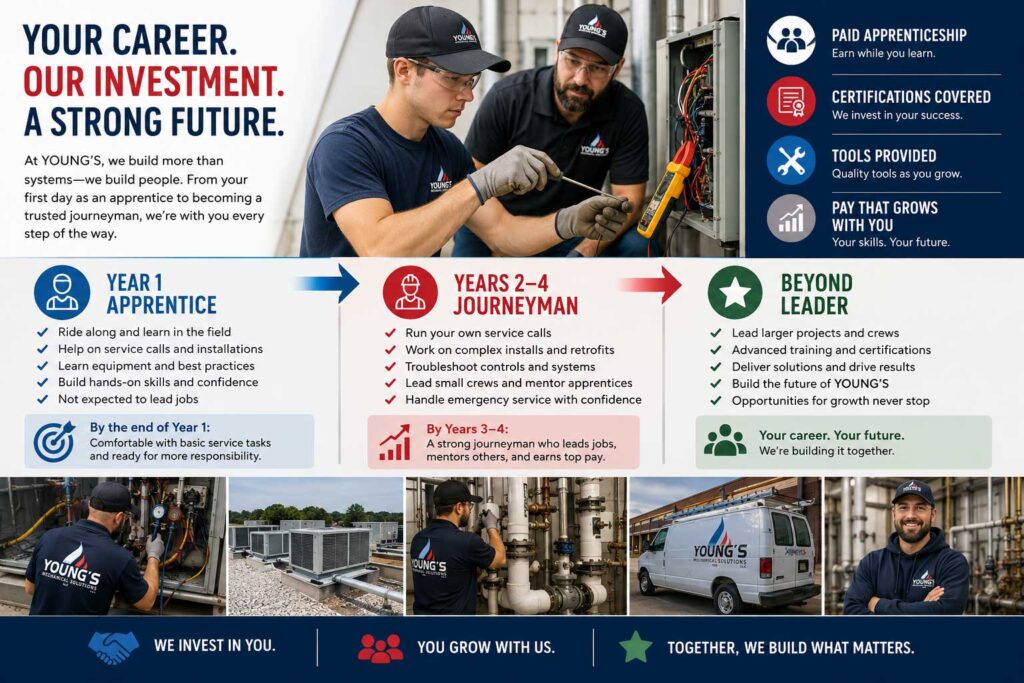
The next step is lead mechanic or crew foreman — the technicians who run jobs, mentor apprentices, and own the quality of the work that goes out the door. Lead mechanics at YMS are the people customers know by name, the ones who walk a job with the facility manager and explain what needs to happen and why. They’re also the technical resource other techs lean on when something unusual comes up.
For people who want to keep growing past lead mechanic, the path continues. Some grow into project management, running commercial install jobs from estimating through commissioning. Others move into design-build engineering, working with general contractors and developers on new construction scope. A few become service managers, running dispatch, scheduling, and the overall service operation. And the trade itself rewards those who stick with it: experienced lead mechanics in commercial work make good money, have stable employment, and are in high demand.
What We’re Looking For
The people who thrive in commercial mechanical work share a few traits. They’re curious about how things work — not just willing to follow a procedure, but actively wanting to understand why a system behaves the way it does. They show up consistently. They take pride in clean work. And they treat the customer with respect, even when something has gone wrong and the building owner is frustrated.
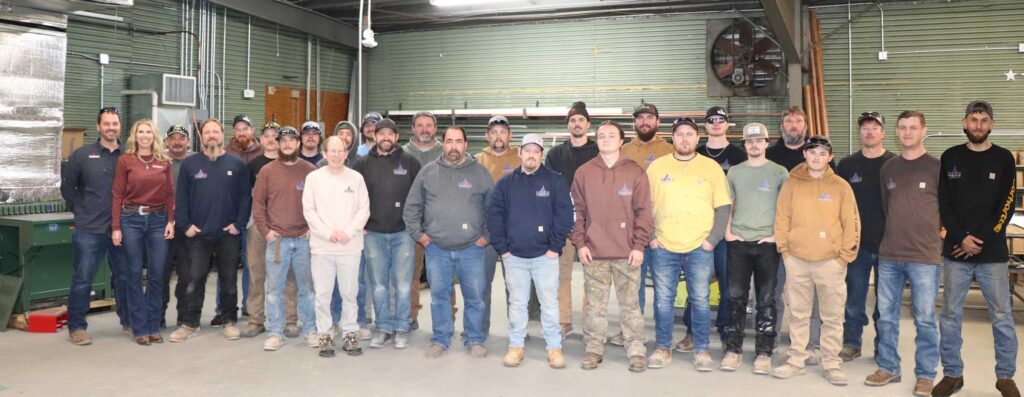
We’re a growing company in the Shenandoah Valley, and we’re actively hiring for sheet metal mechanics, plumbers, HVAC technicians, and apprentices. We’re commercial-only, we have in-house shops for sheet metal, mechanical piping, plumbing, and controls, and we’re licensed in both Virginia and West Virginia. That means our technicians get exposure to a wide variety of commercial work without being asked to chase residential service calls on the side.
If you’re finishing up a trade program, thinking about leaving a job in another field for something more stable, or already working in the trades and looking for a stronger company to grow with, we’d like to talk with you. Stop by our shop at 1043 S High St in Harrisonburg, give us a call at 540-214-2745, or reach out about a careers conversation. We’ll walk you through what the work looks like day to day and where it can take you.