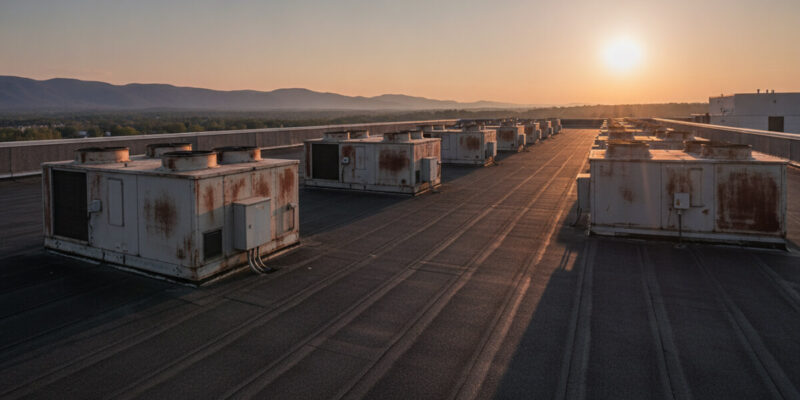
As budget planning season approaches, building owners across the Shenandoah Valley face a familiar tension: where to cut and where to invest. One of the most common line items to get trimmed — or eliminated entirely — is preventative maintenance for HVAC systems. It makes sense on a spreadsheet, but in practice, deferring that maintenance is one of the most expensive decisions a building owner can make.
The Hidden Costs of Putting Off HVAC Maintenance
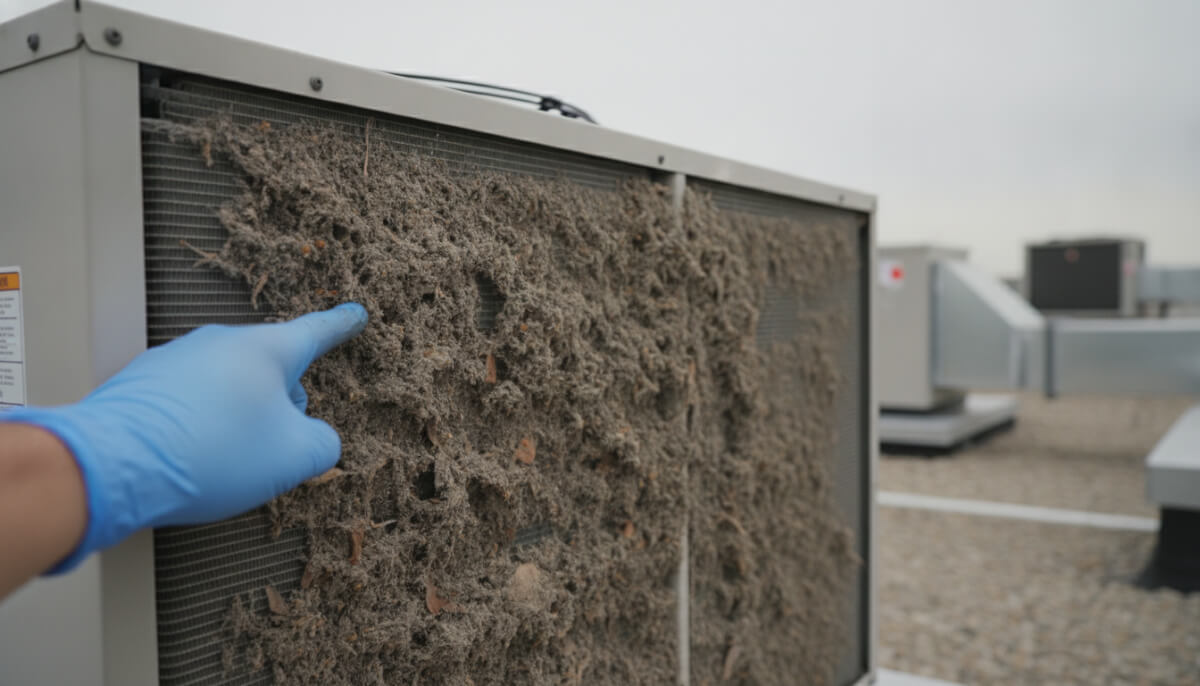
Deferred maintenance rarely shows up as a single dramatic failure. Instead, it erodes your building’s mechanical systems gradually — higher energy bills one quarter, a compressor that runs hotter than it should the next, and eventually a full system breakdown that forces emergency spending at the worst possible time.
Here’s what typically happens when commercial HVAC equipment goes without scheduled service:
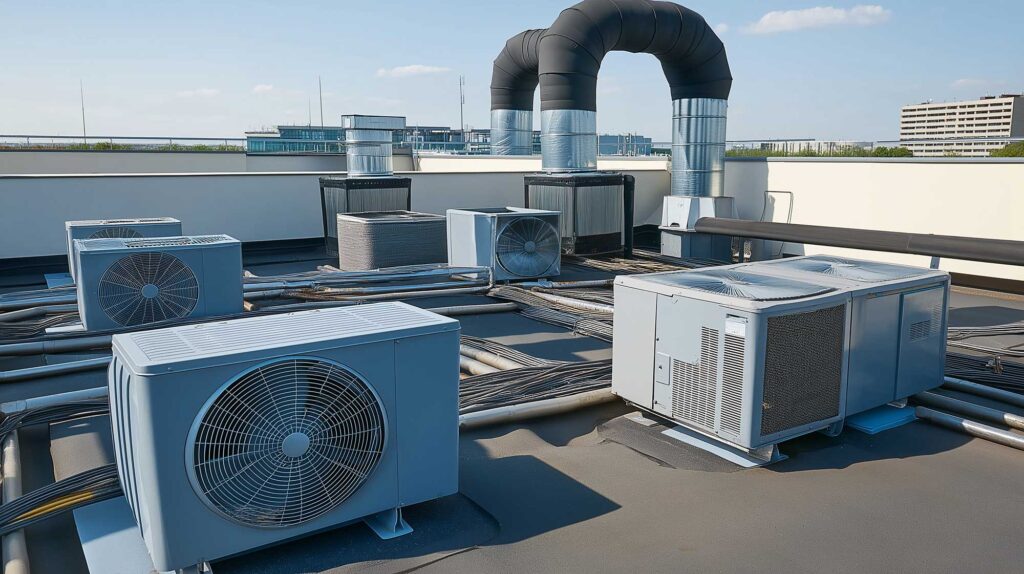
- Energy costs climb. Dirty coils, clogged filters, and misaligned belts force equipment to work harder. Even a thin layer of buildup on a condenser coil can increase energy consumption by 10 to 15 percent — a number that compounds across multiple rooftop units or air handlers.
- Equipment life shortens. Commercial HVAC systems are engineered for 15 to 25 years of service, but only if they receive regular attention. Skipping maintenance can cut that lifespan by a third, turning what should be a long-term asset into a premature capital expenditure.
- Emergency repairs multiply. A $200 belt replacement during a scheduled visit becomes a $3,000 blower motor failure when it’s ignored. Emergency service calls — especially during peak cooling or heating season — cost significantly more than planned work.
- Tenant comfort and retention suffer. Temperature complaints and air quality issues drive tenant dissatisfaction. In multi-tenant commercial buildings, that directly impacts occupancy rates and lease renewals.
The pattern is consistent: the money “saved” by skipping maintenance reappears as higher operating costs, unplanned repairs, and accelerated HVAC replacement timelines.
How Preventative Maintenance Protects Your Capital Investment
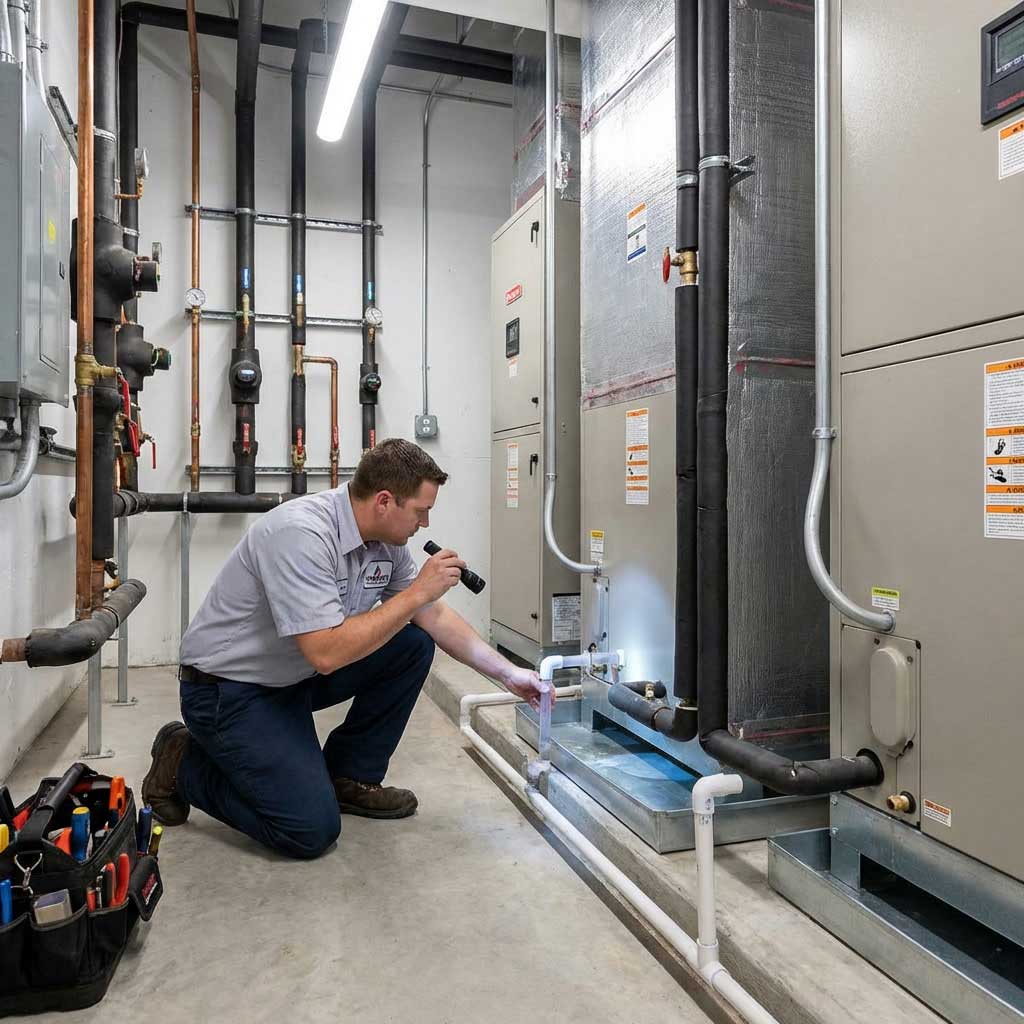
Preventative maintenance is not just changing filters on a schedule. A well-structured program covers the full scope of your mechanical systems and is designed to catch small problems before they become expensive ones.
At Young’s Mechanical Solutions, our service agreements for commercial buildings in Harrisonburg, VA, and across the Valley typically include:
- Seasonal inspections of all heating and cooling equipment
- Filter replacement and coil cleaning on a defined schedule
- Belt and bearing inspection with proactive replacement
- Refrigerant charge verification and leak checks
- Controls calibration and thermostat verification
- Electrical connection tightening and component testing
- Condensate drain clearing and pan treatment
- Detailed documentation of equipment condition and repair history
That last point — documentation — is more valuable than most building owners realize. A clear maintenance history gives you the data to make informed decisions about when to repair, when to retrofit, and when it’s time to budget for a full HVAC replacement. Without it, you’re making capital expenditure decisions based on guesswork.
The Shenandoah Valley Factor
Our region’s climate puts particular stress on commercial HVAC systems. Hot, humid summers push cooling equipment hard from May through September, while cold Valley winters demand reliable heating for occupied spaces. Seasonal temperature swings of 80 degrees or more mean your equipment cycles through significant thermal stress every year. Consistent preventative maintenance is what keeps systems performing reliably through both extremes.
Budgeting Smarter: Maintenance Dollars vs. Replacement Dollars
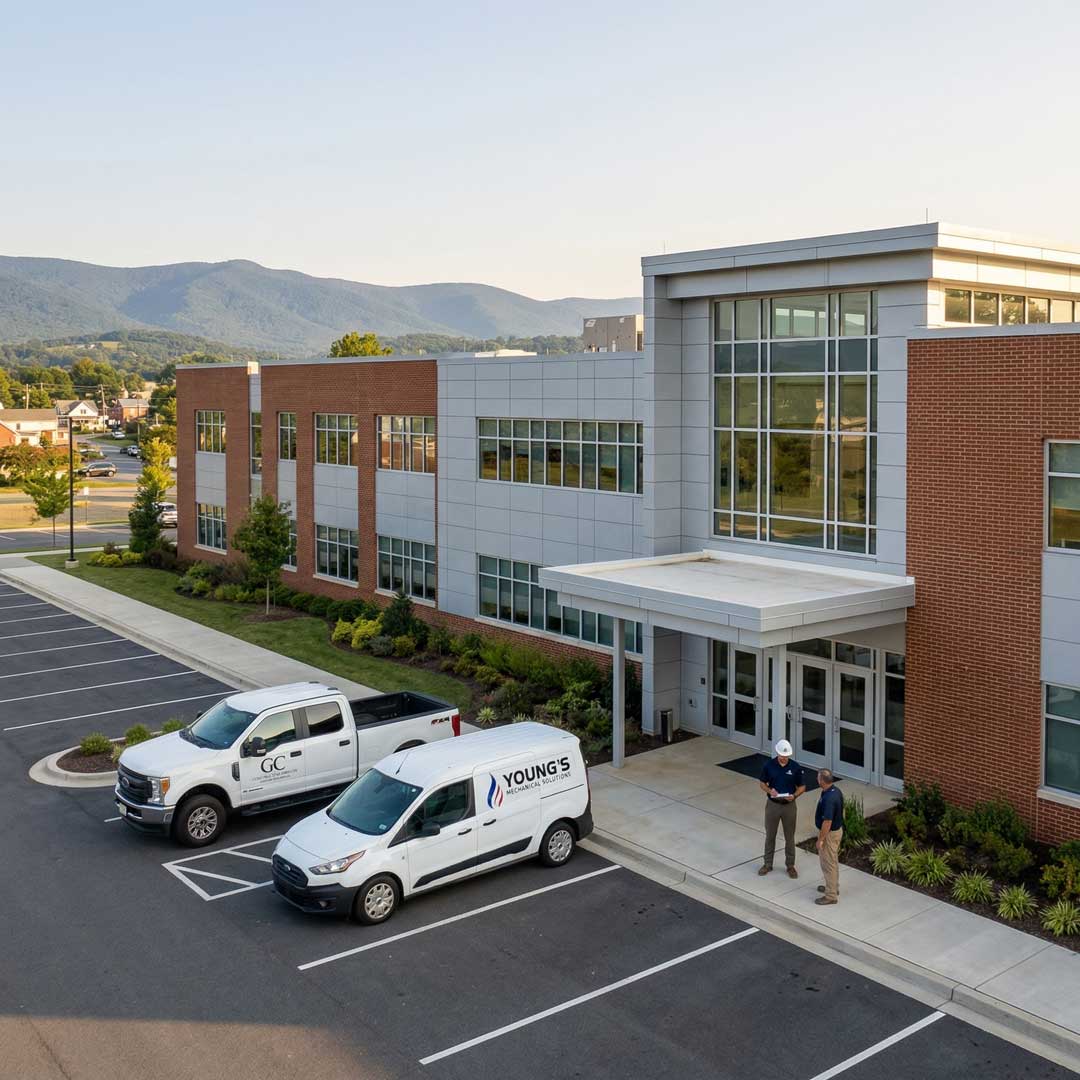
One of the most important conversations we have with building owners happens during budget planning — not during a breakdown. The question isn’t whether you can afford preventative maintenance. It’s whether you can afford the alternative.
Consider the math. A comprehensive service agreement for a mid-sized commercial building might run $3,000 to $8,000 per year, depending on the number and type of systems. A single rooftop unit replacement, by contrast, can easily cost $15,000 to $40,000 or more — and if deferred maintenance is the reason that replacement came five years early, the real cost is the difference between what you spent and what you could have spent over that same period.
When Maintenance Isn’t Enough
We’re honest with our clients: there comes a point where continued repair isn’t the right call. If a system is past its expected service life, repair costs are escalating year over year, or the equipment uses a refrigerant that’s being phased out, it’s time to plan for replacement rather than pour money into diminishing returns.
The key word is plan. When you have a preventative maintenance program in place with clear documentation, you see that transition coming. You can budget for capital expenditure over one or two cycles instead of scrambling to find six figures after a catastrophic failure in July.
What a Proactive Budget Cycle Looks Like
Building owners who get ahead of this curve typically follow a straightforward approach:
- Lock in a service agreement that covers all mechanical systems with scheduled visits and priority response.
- Review equipment condition reports from your service partner at least annually — these should include age, efficiency trends, and repair history for every major piece of equipment.
- Flag systems approaching end of life and begin budgeting for replacement 18 to 24 months in advance.
- Treat HVAC maintenance as an operating expense that protects capital assets — because that’s exactly what it is.
Why Building Owners in the Valley Trust Our Team
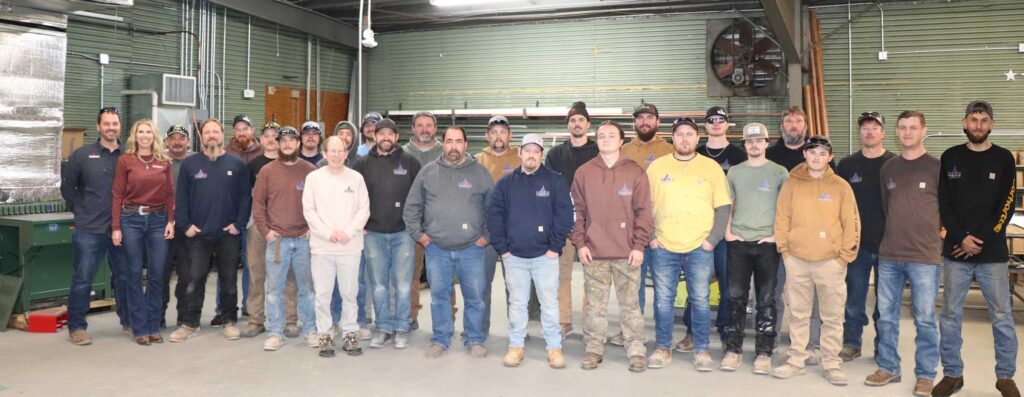
Young’s Mechanical Solutions was founded in 2019 with a singular focus on commercial mechanical work. We’re a commercial-only contractor, and that focus is intentional. Every technician on our team is trained specifically for commercial systems — rooftop units, chillers, boilers, VRF systems, building automation controls, and everything in between.
Our in-house capabilities — including sheet metal fabrication, mechanical piping, controls, and startup — mean we can handle everything from routine filter changes to full system design-build replacements without subcontracting the critical work. We’re licensed in both Virginia and West Virginia, and our service team knows the buildings in this region because we’ve been installing and maintaining them from the start.
When you partner with us on a service agreement, you get a team that understands your building’s mechanical history, responds quickly when something goes wrong, and gives you the information you need to make smart budget decisions about your HVAC systems.
If you’re heading into your next budget cycle and want to understand where your building’s mechanical systems stand, we’re here to help. Reach out to discuss a service agreement for your building, or contact our service team at 540-214-2745 to schedule a facility walkthrough. Investing in preventative maintenance now is the clearest path to lower operating costs and fewer surprises in the years ahead.