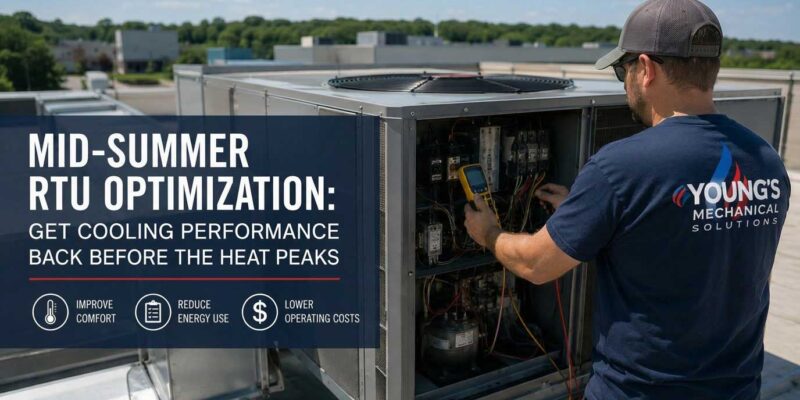
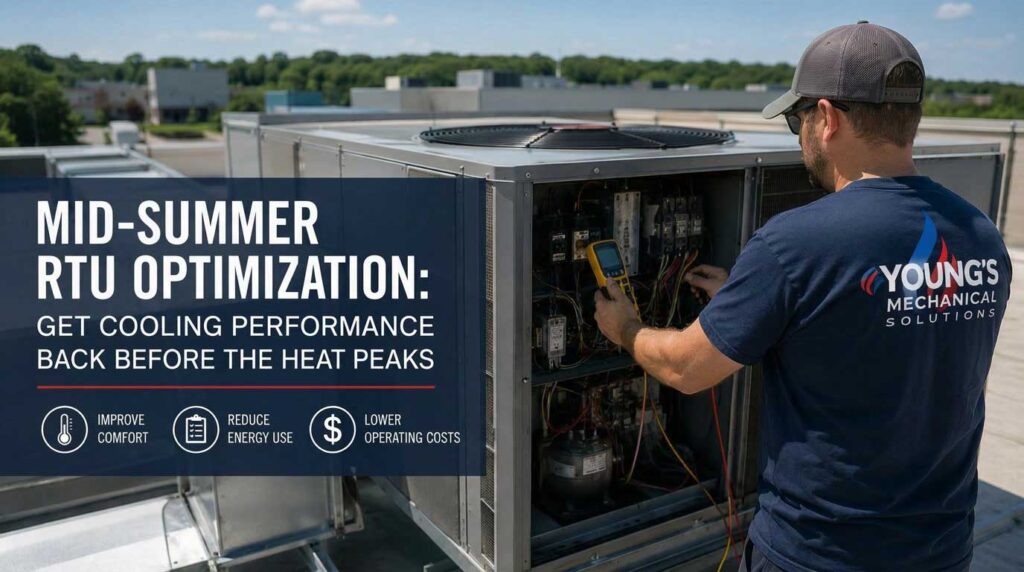
When outdoor temperatures push past ninety and stay there, every weakness in a commercial cooling system gets exposed. Rooftop packaged units that ran cleanly in May start short-cycling in July. Spaces that held setpoint all spring drift two or three degrees by mid-afternoon. For facility teams, summer is when the difference between a tuned RTU fleet and a neglected one shows up on every comfort complaint and every electric bill. The good news: most of the performance loss can be reclaimed with a focused mid-season optimization pass.
Why Mid-Summer Pushes RTUs Harder Than Spec
Commercial RTUs are sized for a design day — a specific combination of outdoor temperature, humidity, and internal load. The problem is that real-world summers in the Shenandoah Valley regularly exceed those design assumptions, and equipment that’s drifted out of tune simply can’t keep up. Three things compound in peak season:
- Discharge pressures climb. As outdoor temperatures rise, the condenser has to reject heat into a hotter atmosphere. Any deficiency in airflow across the condenser coil — dirty fins, weak fan motor, debris around the unit — pushes head pressure higher and forces the compressor to work harder.
- Latent loads stack up. Summer humidity in central Virginia routinely runs above design dew point. RTUs that were tuned for a 65°F dew point start short-cycling or running with insufficient dehumidification when the actual dew point climbs above 70°F.
- Runtime grows. Units that cycled three or four times an hour in spring may run nearly continuously in July. That exposes any weakness in belts, bearings, contactor relays, or refrigerant circuits.
The result for facility managers is predictable: spaces that hold setpoint in mild weather start drifting under peak load, complaint volume rises, and emergency service calls cluster in the worst week of the summer. A mid-season check is the most direct way to interrupt that pattern.
The Variables That Determine Peak-Load RTU Performance
For most commercial buildings, peak-load RTU performance comes down to a handful of variables. Knowing which ones are drifting on your equipment shortens the path to a fix.
Airflow
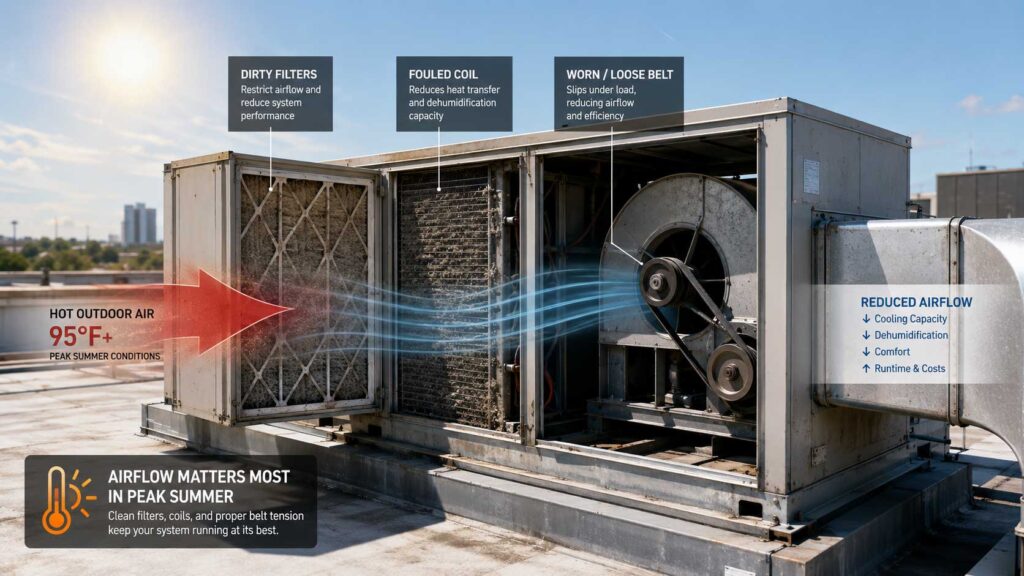
Filter loading is the single most common cause of mid-summer performance loss. A filter that was fresh at spring startup can be 50 percent loaded by July, dropping supply air volume noticeably. Add in fouled evaporator coils and slipping belts on belt-drive units, and total airflow can fall fifteen to twenty percent below design without any alarm being triggered. Less airflow means less cooling capacity and less dehumidification — exactly what you don’t want at peak load.
Refrigerant Charge and Heat Exchange
RTUs lose small amounts of refrigerant over time even without a detectable leak. Undercharged systems run with low suction pressure, reduced capacity, and elevated discharge temperatures. Overcharged systems — often the result of an earlier service call that added refrigerant without verifying charge — flood the compressor and shorten its life. A mid-season pressure and temperature check against manufacturer spec catches both.
Condenser Condition
The condenser coil is exposed to everything — pollen, cottonwood, parking-lot dust, leaves. By midsummer, coils that started the season clean are often partially blocked. A condenser that can’t reject heat efficiently pushes discharge pressure up, kilowatt draw up, and capacity down. A coil cleaning at the right time in the season often recovers ten to fifteen percent of efficiency on its own.
Controls and Setpoints
RTU controls drift for predictable reasons. Tenant complaints early in the season prompt setpoint changes that never get reverted. Economizer dampers stick. Thermostat sensors fall out of calibration. Building management system setpoints that were optimized for spring no longer match the summer load profile. A mid-season controls verification often finds two or three of these in any given building.
A Mid-Season RTU Optimization Punch List
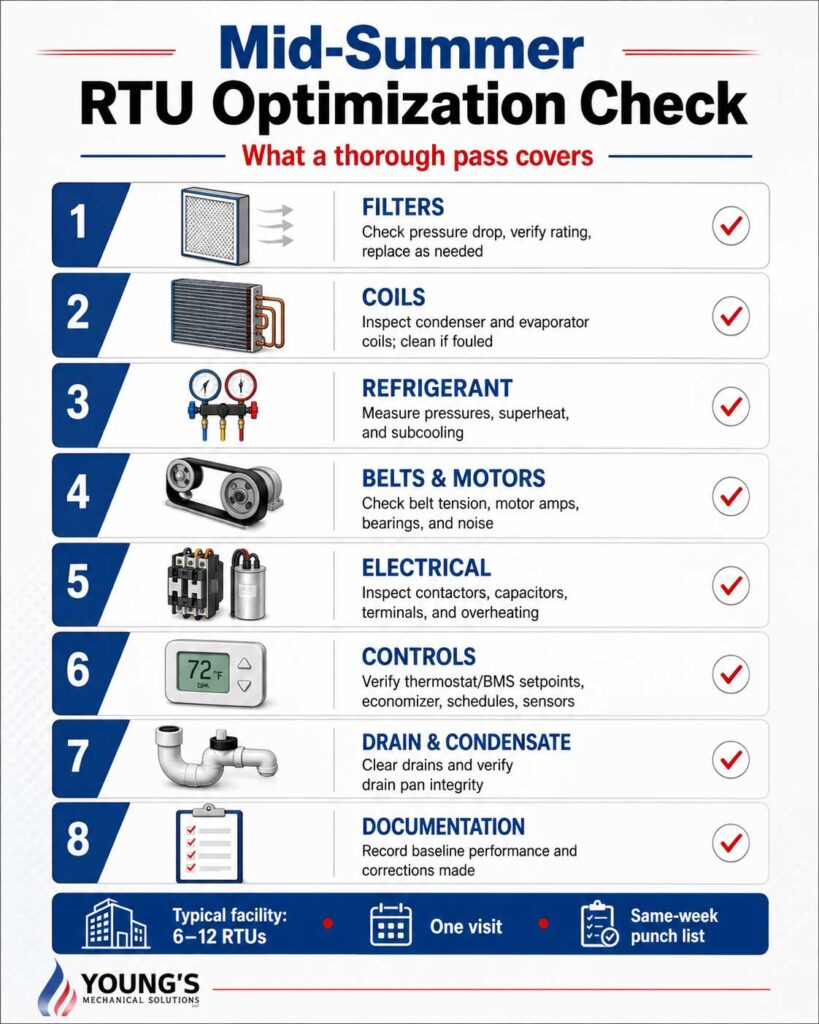
For most commercial buildings, a mid-summer RTU optimization check takes a few hours per unit and produces a documented list of corrections. Here’s what a thorough pass covers:
- Filter inspection and replacement. Measure pressure drop across each filter, verify rating, replace as needed. For high-particulate environments, recommend a step up in MERV.
- Coil cleaning verification. Inspect condenser coil for blockage and clean as needed. Verify evaporator coil is unfouled.
- Refrigerant pressure and temperature check. Measure suction and discharge pressures, superheat, and subcooling against manufacturer specifications. Document any drift.
- Belt and motor inspection. For belt-drive units, check tension and condition. For all units, verify motor amp draw against nameplate. Note any worn bearings or unusual noise.
- Electrical verification. Inspect contactors for pitting, verify capacitor microfarad readings, tighten loose terminals, and check for any signs of overheating at connections.
- Controls calibration. Verify thermostat or BMS setpoints against current building use. Confirm economizer operation, schedule, and setpoints. Recalibrate sensors that have drifted.
- Drain pan and condensate check. Clear condensate drains, verify drain pan integrity. Blocked condensate is a frequent cause of mid-summer water damage callbacks.
- Documentation. Record baseline performance and any corrections made, so the work is traceable when the next season starts.
For a typical office, school, or retail facility with six to twelve rooftop units, this kind of check fits cleanly into a single visit and produces a punch list that the facility team can act on the same week.
How Young’s Mechanical Solutions Supports Facility Teams Through Peak Season
Our service team performs mid-season RTU optimization checks across commercial buildings in the Shenandoah Valley and into West Virginia. Because we focus exclusively on commercial mechanical work, the technicians who show up to your rooftop spend their time on equipment they see every week — not residential split systems they touch occasionally.
Two things tend to matter most for the facility managers we work with. First, our tech-driven service dispatch keeps repair history with the equipment, so when a technician returns for follow-up work, they arrive already knowing what was done last season and what was flagged for monitoring. Second, our in-house crews mean we’re not handing your building off to a rotating chain of subcontractors. The team that walks your rooftop in June is the same team available for emergency response in August.
For buildings already on a service agreement, mid-season optimization fits into the documented maintenance cycle. For buildings managing RTU performance reactively, this is a good window to put a structured program in place — before the next heat wave hits.
If your RTU fleet has been collecting comfort complaints, or if it has been more than a cooling season since the last documented performance check, this is the window to get ahead of peak demand. Contact our service team at 540-214-2745, or reach out to discuss a service agreement for your building. We’ll walk your facility, document what’s drifted, and get your equipment back in tune for the rest of the summer.