A facility manager’s guide to the service process — from scheduling to follow-up
Introduction
When your commercial HVAC system needs attention — whether it’s a scheduled maintenance visit or an unexpected issue — knowing what to expect from the service process can make a real difference. It helps you plan around downtime, communicate with building occupants, and make informed decisions about your mechanical systems.
At Young’s Mechanical Solutions, we’ve built our service division around one principle: clear communication and efficient execution from the moment you call to the moment we close out the work order. Here’s what that process looks like, step by step.
Step 1: Scheduling and Dispatch
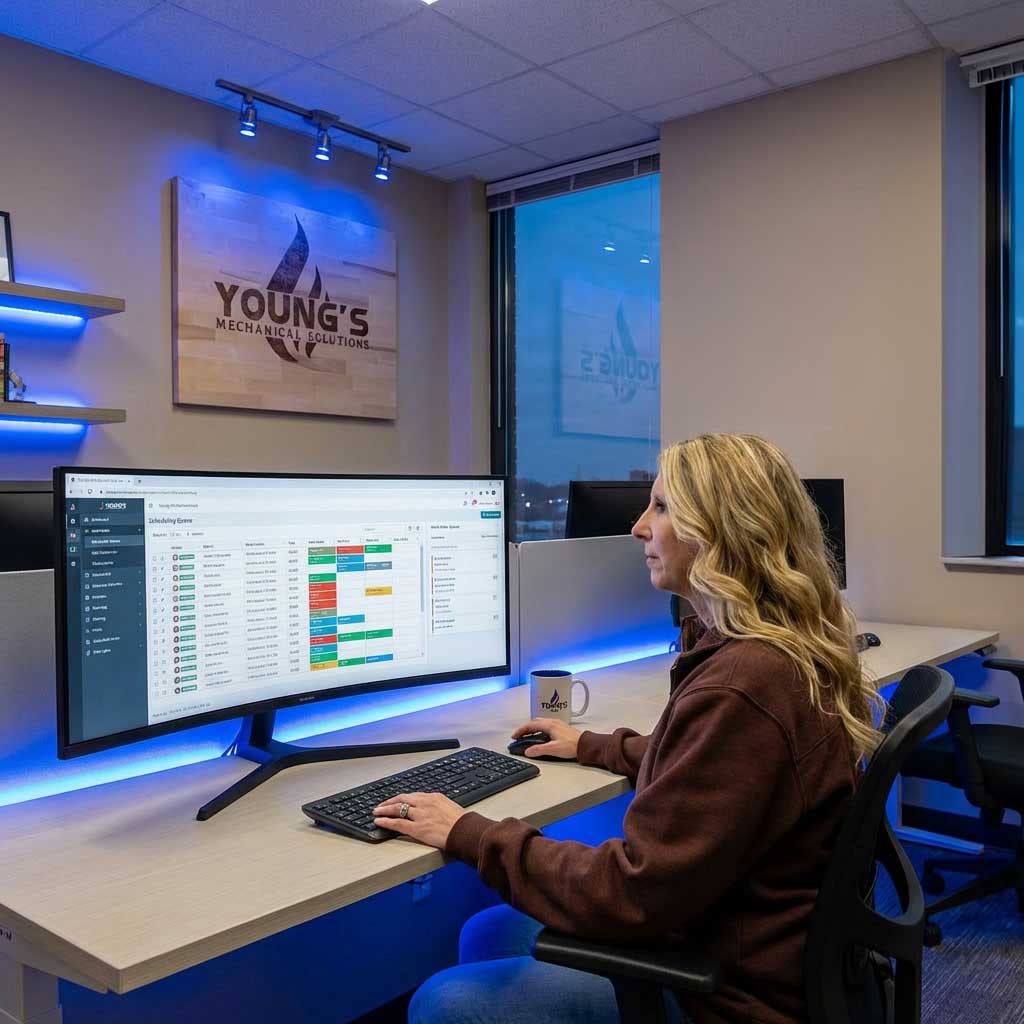
Every service call starts with our technology-driven scheduling system. When you contact our team, your facility’s information — including equipment history, past repairs, and any open service agreements — is already in our system. This means we can assign the right technician with the right skill set and prioritize your call based on urgency and equipment type.
For facilities with active service agreements, scheduling is even faster. Your equipment is already cataloged, your building’s access requirements are on file, and our dispatchers can confirm a service window quickly — often the same day for urgent issues.
Step 2: Arrival and Assessment
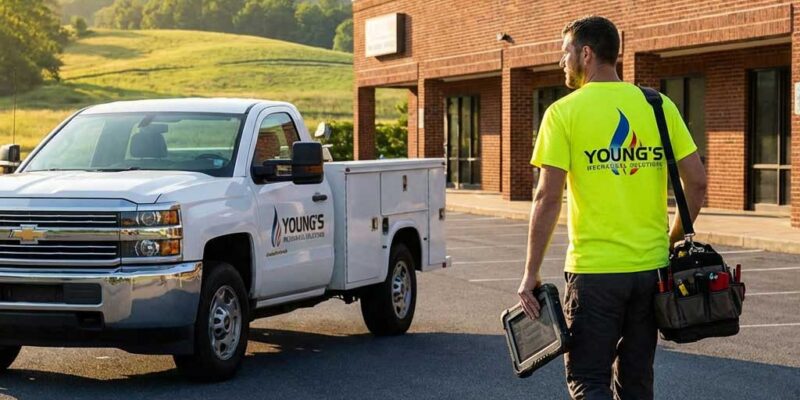
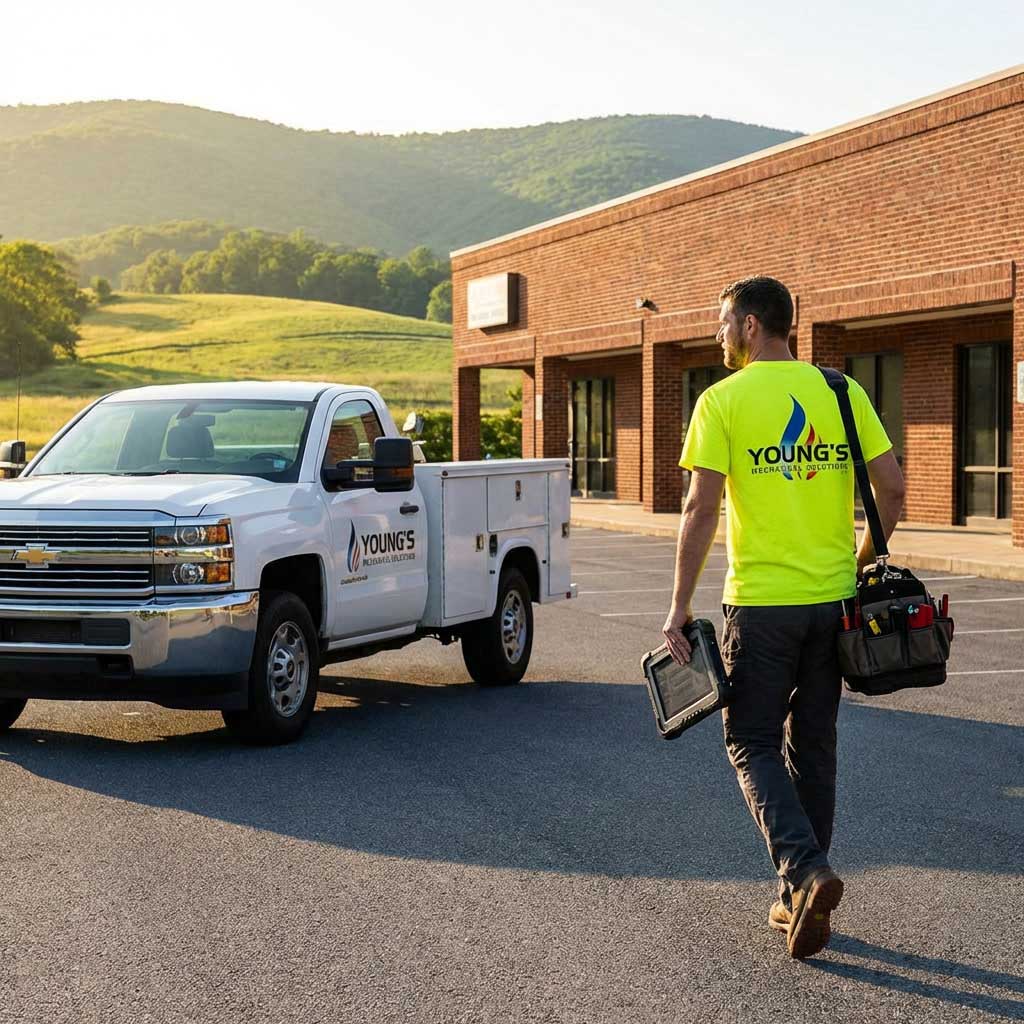
When your assigned technician arrives, the first step is always a thorough assessment. Our technicians don’t jump straight to repairs — they start by reviewing the equipment’s service history on their tablet, speaking with on-site staff about the symptoms they’ve observed, and performing a systematic inspection.
This matters because commercial HVAC issues rarely have a single cause. A comfort complaint in one zone might stem from a controls issue, an airflow imbalance, or a failing component upstream. Our technicians are experienced with all major equipment brands and trained to diagnose root causes, not just symptoms.
Step 3: Diagnosis and Recommendation
Once the assessment is complete, your technician will explain what they’ve found in straightforward terms. No unnecessary jargon, no pressure. You’ll receive a clear explanation of the issue, what’s needed to resolve it, and — if applicable — options for addressing the problem at different cost levels.
For straightforward repairs, many issues can be resolved during the initial visit. For more complex situations — a compressor replacement, refrigerant system repair, or controls upgrade — we’ll provide a detailed scope and timeline before any additional work begins.
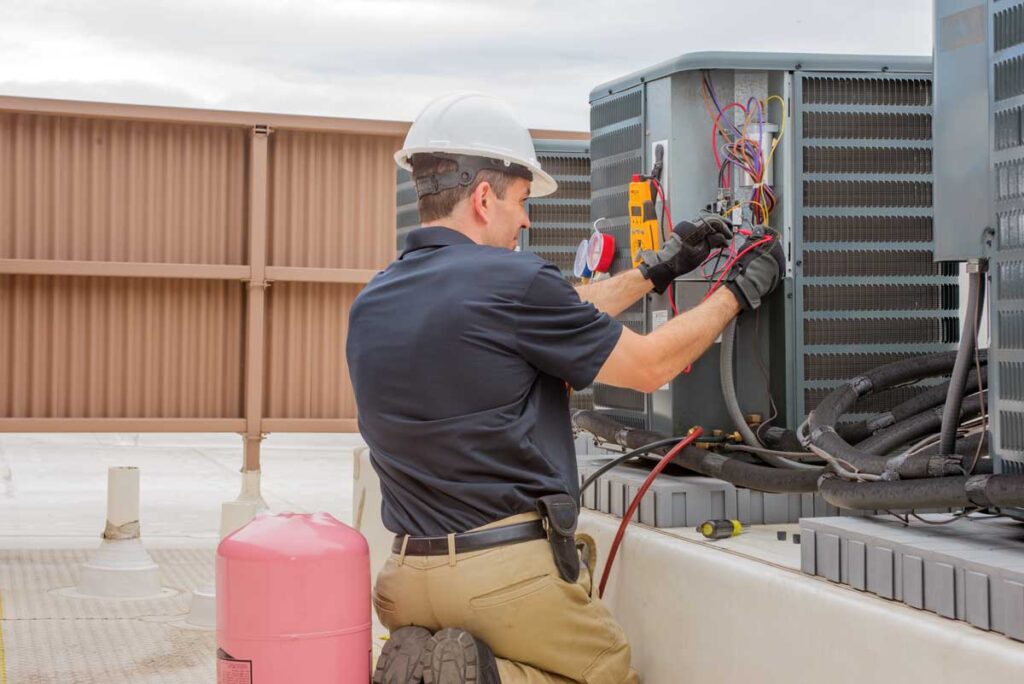
Step 4: Repair and Documentation
Every repair we perform is documented in your facility’s equipment history. This isn’t just for our records — it’s for yours. Over time, this repair history becomes a valuable asset that helps you and your team make smarter decisions about when to repair, when to replace, and where your maintenance budget is best spent.
Our system tracks component life cycles, recurring issues, and total maintenance spend by unit. For facility managers who oversee multiple buildings or complex systems, this kind of data turns reactive maintenance into informed planning.
Step 5: Follow-Up and Ongoing Support
The service call doesn’t end when the technician leaves. For service agreement clients, every completed visit feeds into your facility’s long-term maintenance plan. We’ll flag any equipment that’s approaching end-of-life, recommend preventative measures for the upcoming season, and ensure your system is optimized before the next heating or cooling cycle puts it to the test.
Even for one-time service calls, we provide follow-up documentation and remain available for questions. Our goal is a long-term relationship, not a one-time transaction.

Why the Process Matters
A good service call isn’t just about fixing what’s broken. It’s about building a clear picture of your facility’s mechanical health so you can plan ahead, avoid surprises, and keep your operating costs under control.
Young’s Mechanical Solutions brings experienced technicians, technology-driven service tracking, and a commitment to clear communication to every service visit across the Shenandoah Valley — from Harrisonburg to Staunton to the West Virginia border.
Ready to Talk?
Contact Young’s Mechanical Solutions to schedule a consultation or request a proposal.
Phone: 540-214-2745
Email: info@youngsmechanicalsolutions.com