The Real Cost of Deferred HVAC Maintenance: Why Preventative Maintenance Should Lead Your Next Budget Cycle

As budget planning season approaches, building owners across the Shenandoah Valley face a familiar tension: where to cut and where to invest. One of the most common line items to get trimmed — or eliminated entirely — is preventative maintenance for HVAC systems. It makes sense on a spreadsheet, but in practice, deferring that maintenance is one of the most expensive decisions a building owner can make.

The Hidden Costs of Putting Off HVAC Maintenance
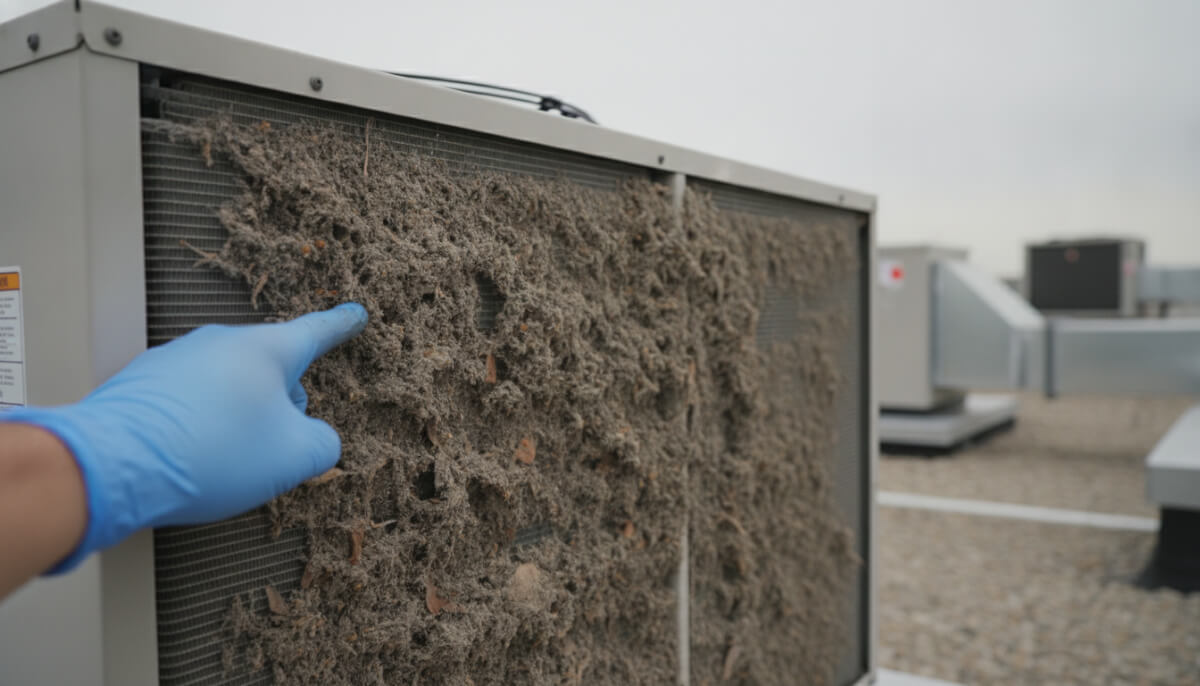
Close-up of a dirty condenser coil on a commercial HVAC unit showing the buildup that increases energy costs when maintenance is deferred

Deferred maintenance rarely shows up as a single dramatic failure. Instead, it erodes your building’s mechanical systems gradually — higher energy bills one quarter, a compressor that runs hotter than it should the next, and eventually a full system breakdown that forces emergency spending at the worst possible time.

Here’s what typically happens when commercial HVAC equipment goes without scheduled service:

  • Energy costs climb. Dirty coils, clogged filters, and misaligned belts force equipment to work harder. Even a thin layer of buildup on a condenser coil can increase energy consumption by 10 to 15 percent — a number that compounds across multiple rooftop units or air handlers.
  • Equipment life shortens. Commercial HVAC systems are engineered for 15 to 25 years of service, but only if they receive regular attention. Skipping maintenance can cut that lifespan by a third, turning what should be a long-term asset into a premature capital expenditure.
  • Emergency repairs multiply. A $200 belt replacement during a scheduled visit becomes a $3,000 blower motor failure when it’s ignored. Emergency service calls — especially during peak cooling or heating season — cost significantly more than planned work.
  • Tenant comfort and retention suffer. Temperature complaints and air quality issues drive tenant dissatisfaction. In multi-tenant commercial buildings, that directly impacts occupancy rates and lease renewals.

The pattern is consistent: the money “saved” by skipping maintenance reappears as higher operating costs, unplanned repairs, and accelerated HVAC replacement timelines.

How Preventative Maintenance Protects Your Capital Investment
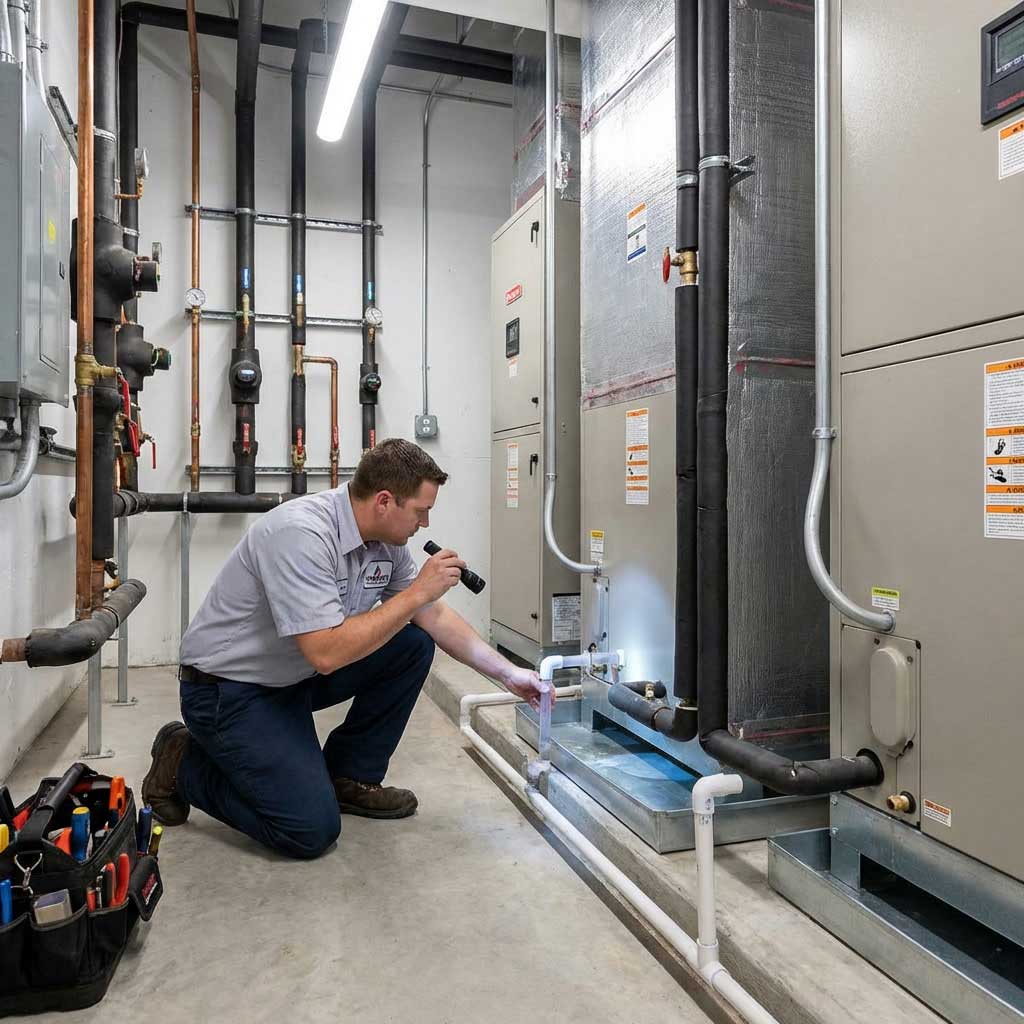
Preventative maintenance is not just changing filters on a schedule. A well-structured program covers the full scope of your mechanical systems and is designed to catch small problems before they become expensive ones.

At Young’s Mechanical Solutions, our service agreements for commercial buildings in Harrisonburg, VA, and across the Valley typically include:

  • Seasonal inspections of all heating and cooling equipment
  • Filter replacement and coil cleaning on a defined schedule
  • Belt and bearing inspection with proactive replacement
  • Refrigerant charge verification and leak checks
  • Controls calibration and thermostat verification
  • Electrical connection tightening and component testing
  • Condensate drain clearing and pan treatment
  • Detailed documentation of equipment condition and repair history

That last point — documentation — is more valuable than most building owners realize. A clear maintenance history gives you the data to make informed decisions about when to repair, when to retrofit, and when it’s time to budget for a full HVAC replacement. Without it, you’re making capital expenditure decisions based on guesswork.

The Shenandoah Valley Factor

Our region’s climate puts particular stress on commercial HVAC systems. Hot, humid summers push cooling equipment hard from May through September, while cold Valley winters demand reliable heating for occupied spaces. Seasonal temperature swings of 80 degrees or more mean your equipment cycles through significant thermal stress every year. Consistent preventative maintenance is what keeps systems performing reliably through both extremes.

Budgeting Smarter: Maintenance Dollars vs. Replacement Dollars
One of the most important conversations we have with building owners happens during budget planning — not during a breakdown. The question isn’t whether you can afford preventative maintenance. It’s whether you can afford the alternative.

Consider the math. A comprehensive service agreement for a mid-sized commercial building might run $3,000 to $8,000 per year, depending on the number and type of systems. A single rooftop unit replacement, by contrast, can easily cost $15,000 to $40,000 or more — and if deferred maintenance is the reason that replacement came five years early, the real cost is the difference between what you spent and what you could have spent over that same period.

When Maintenance Isn’t Enough

We’re honest with our clients: there comes a point where continued repair isn’t the right call. If a system is past its expected service life, repair costs are escalating year over year, or the equipment uses a refrigerant that’s being phased out, it’s time to plan for replacement rather than pour money into diminishing returns.

The key word is plan. When you have a preventative maintenance program in place with clear documentation, you see that transition coming. You can budget for capital expenditure over one or two cycles instead of scrambling to find six figures after a catastrophic failure in July.

What a Proactive Budget Cycle Looks Like

Building owners who get ahead of this curve typically follow a straightforward approach:

  • Lock in a service agreement that covers all mechanical systems with scheduled visits and priority response.
  • Review equipment condition reports from your service partner at least annually — these should include age, efficiency trends, and repair history for every major piece of equipment.
  • Flag systems approaching end of life and begin budgeting for replacement 18 to 24 months in advance.
  • Treat HVAC maintenance as an operating expense that protects capital assets — because that’s exactly what it is.

Why Building Owners in the Valley Trust Our Team

Young’s Mechanical Solutions was founded in 2019 with a singular focus on commercial mechanical work. We’re a commercial-only contractor, and that focus is intentional. Every technician on our team is trained specifically for commercial systems — rooftop units, chillers, boilers, VRF systems, building automation controls, and everything in between.

Our in-house capabilities — including sheet metal fabrication, mechanical piping, controls, and startup — mean we can handle everything from routine filter changes to full system design-build replacements without subcontracting the critical work. We’re licensed in both Virginia and West Virginia, and our service team knows the buildings in this region because we’ve been installing and maintaining them from the start.

When you partner with us on a service agreement, you get a team that understands your building’s mechanical history, responds quickly when something goes wrong, and gives you the information you need to make smart budget decisions about your HVAC systems.

If you’re heading into your next budget cycle and want to understand where your building’s mechanical systems stand, we’re here to help. Reach out to discuss a service agreement for your building, or contact our service team at 540-214-2745 to schedule a facility walkthrough. Investing in preventative maintenance now is the clearest path to lower operating costs and fewer surprises in the years ahead.
National Intern Day: Building Careers in Commercial Mechanical Contracting

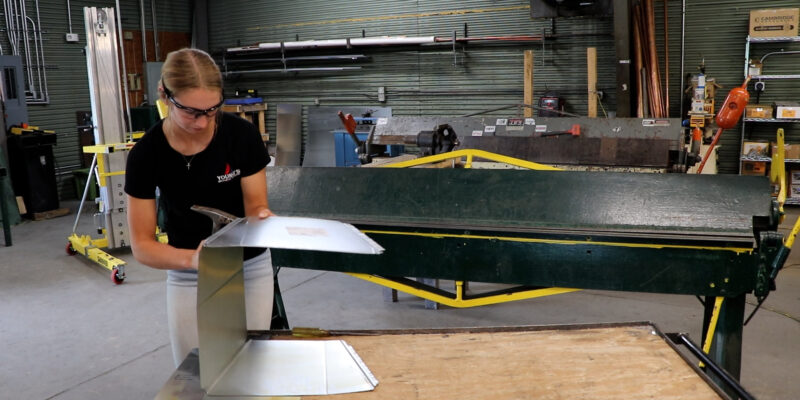
Every summer, Ana interns at our Harrisonburg shop. A few months later, experience is gained in cutting straight duct, running transitions, and working on a commercial job site. That is what National Intern Day, in July, is really about — the point where a career in the trades actually starts.

At Young’s Mechanical Solutions, we think the best way to grow a commercial mechanical company is to build the next generation of it ourselves.

Meet Ana: Three Summers, Three Sides of the Business

Ana Young is the daughter of our founders, Jake and Darla Young, and she has been around this business since it started. As a teenager, she rode along on service calls when the company was just getting off the ground.

Now she is finishing an accounting degree at West Virginia Wesleyan, and she has spent every summer since rotating through a different part of the company.

  • First summer: running service calls in the field
  • Second summer: fabrication work in the sheet metal shop
  • This summer: interning with Darla on the financial and administrative side — accounts payable and receivable, payroll, and job cost coding

Her time in the shop started with slips and drives. Under skilled mentors, she moved up to straight duct, transitions, and elbows. She also helped install our automated plasma cutter and saw firsthand how much faster and cleaner production became with less material waste.

With one year of college left, Anna is planning on a career with the family business — and she has already seen it from the truck, the shop floor, and the office.

Internships and Apprenticeships Are Different Doors to the Same Trade

An internship is a look inside. It is a season to try the work, meet the crews, and find out whether commercial mechanical fits you before you commit to it.

An apprenticeship is the path itself — paid, hands-on training alongside experienced technicians, working toward a licensed trade with real earning power and no student debt attached to it.

Both matter, because commercial mechanical work is not something you learn from a manual. You learn it standing next to someone who has done it for twenty years.

Why We Invest in It

The skilled trades face a genuine labor shortage across Virginia and West Virginia. Experienced sheet metal mechanics, pipefitters, plumbers, and controls technicians are retiring faster than they are being replaced.

We would rather train the next crew than compete for one. Because we run in-house sheet metal, piping, plumbing, controls, and ductwork fabrication crews, an intern or apprentice here can see the whole scope of commercial mechanical work — not one narrow slice of it.

Thinking About the Trades?

If you are a student, a recent graduate, or someone weighing a career change, commercial mechanical is worth a serious look. The work is skilled, the demand is steady, and the ceiling is higher than most people expect.

To ask about internship or apprenticeship opportunities with Young’s Mechanical Solutions, contact our team at 540-214-2745 or stop by our shop at 1043 S High St, Harrisonburg, VA.

To every intern and apprentice putting in the work this summer — happy National Intern Day.

From Trade School to Lead Mechanic: What a Career Path Looks Like at a Growing Valley Mechanical Contractor

For someone leaving trade school or thinking about a career change into the skilled trades, the most important question isn’t the first paycheck. It’s where the work leads in five, ten, and twenty years. At a commercial-only mechanical contractor like Young’s Mechanical Solutions, the path from a first-year apprentice to a lead mechanic is real, well-defined, and built on the kind of steady commercial work that keeps the trades worth doing. Here’s what that career arc actually looks like.

Why Commercial Mechanical Is a Career, Not Just a Job

The skilled trades have been undervalued for a generation, but that’s changing fast. Commercial buildings are getting more complex, mechanical systems are getting more sophisticated, and there’s a measurable shortage of people who actually know how to install, service, and troubleshoot them. The technicians who learn the work now are entering a field with rising demand and rising wages — and a level of job security that white-collar work increasingly can’t match.

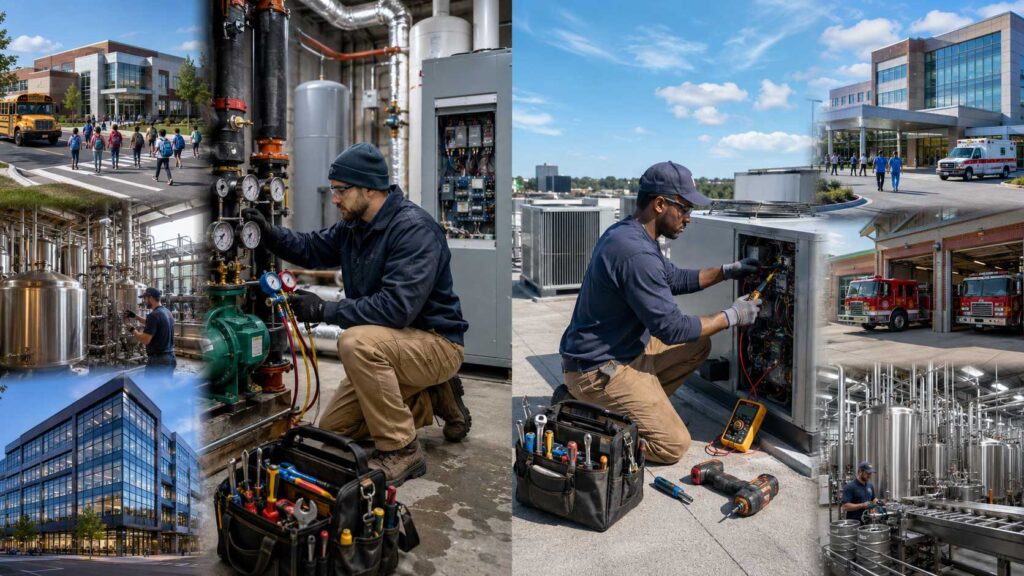
Commercial mechanical work specifically is a strong place to land because the work is varied, the equipment is interesting, and the buildings matter. We work on schools where students are trying to learn, breweries that have to keep producing, healthcare facilities where comfort affects patient care, fire stations that protect our community, and offices where people spend half their waking hours. There’s real satisfaction in keeping those systems running.

It’s also indoor work in winter and on most rooftops in summer — not roofing, not road construction, not jobs that beat you up year-round. The work is physical, but it’s the kind of physical that keeps you healthy rather than wearing you out.

Year One: Apprentice

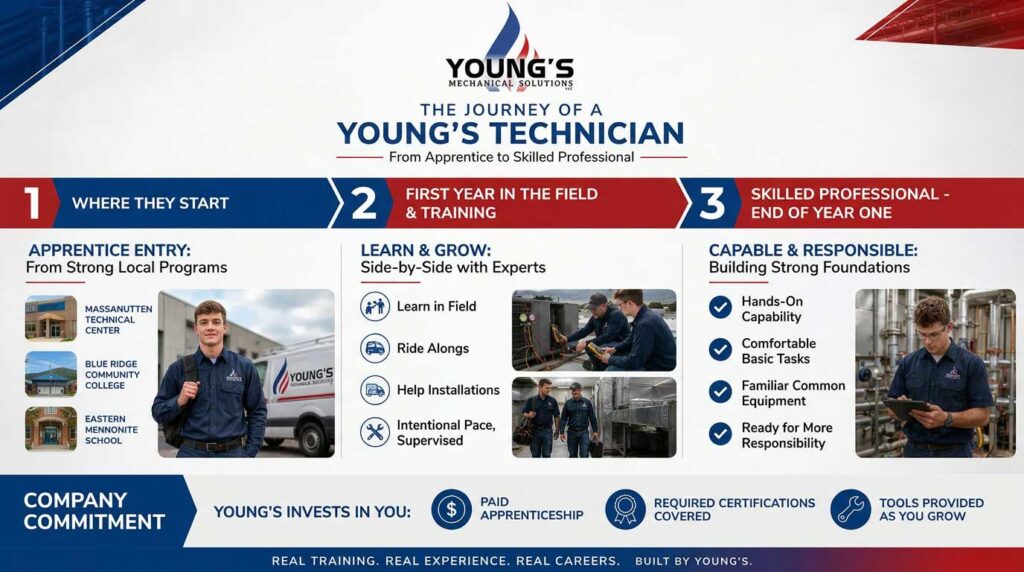
A new technician at YMS starts as an apprentice, typically straight out of trade school or a related program at a community college or a high school career and technical center. Schools like Massanutten Technical Center, Blue Ridge Community College, and Eastern Mennonite School’s career programs all turn out graduates we’re happy to bring on.

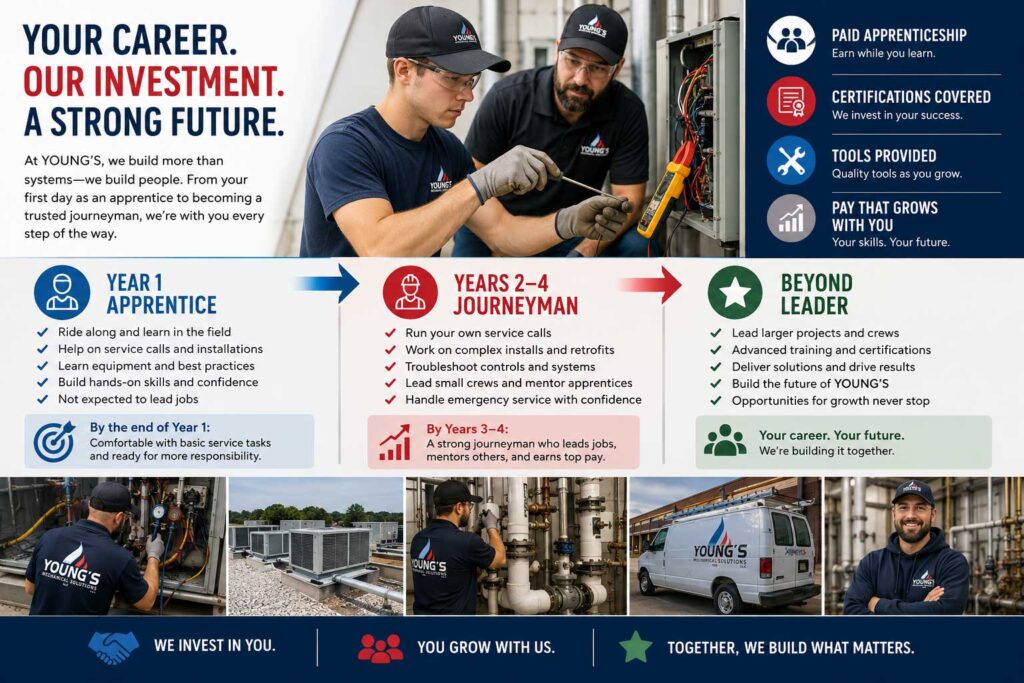
The first year is about learning the work in the field with a more experienced mechanic. Apprentices ride along on service calls, help on installs, learn the equipment, and build the muscle memory that turns book knowledge into hands-on capability. The pace is intentional — nobody is asking a first-year tech to lead a job alone.

By the end of year one, an apprentice should be comfortable with basic service tasks, familiar with common equipment, and ready to start carrying more of the load on bigger jobs. We pay during apprenticeship, we cover required certifications, and we provide the tools as the technician grows into them.

Years Two through Four: Journeyman

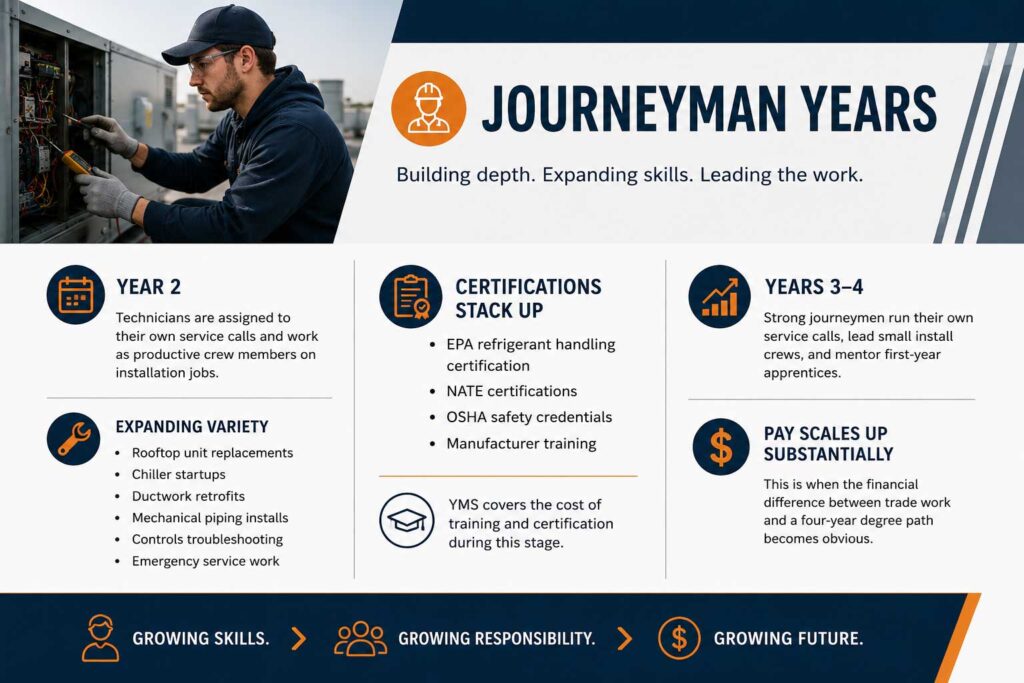
The journeyman years are where the real depth gets built. By year two, a technician is regularly assigned to their own service calls or working as a productive crew member on installation jobs. The variety of work expands — rooftop unit replacements, chiller startups, ductwork retrofits, mechanical piping installs, controls troubleshooting, and emergency service work.

This is also when certifications start stacking up. EPA refrigerant handling certification, NATE certifications, OSHA safety credentials, and any specialized manufacturer training all happen in this window. YMS covers the cost of training and certification for technicians moving through this stage.

By year three or four, a strong journeyman can run their own service calls, lead small install crews, and start mentoring the first-year apprentices coming behind them. Pay scales up substantially during this period — this is when the financial difference between trade work and a four-year degree path becomes obvious.

Year Five and Beyond: Lead Mechanic and Foreman

The next step is lead mechanic or crew foreman — the technicians who run jobs, mentor apprentices, and own the quality of the work that goes out the door. Lead mechanics at YMS are the people customers know by name, the ones who walk a job with the facility manager and explain what needs to happen and why. They’re also the technical resource other techs lean on when something unusual comes up.

For people who want to keep growing past lead mechanic, the path continues. Some grow into project management, running commercial install jobs from estimating through commissioning. Others move into design-build engineering, working with general contractors and developers on new construction scope. A few become service managers, running dispatch, scheduling, and the overall service operation. And the trade itself rewards those who stick with it: experienced lead mechanics in commercial work make good money, have stable employment, and are in high demand.

What We’re Looking For

The people who thrive in commercial mechanical work share a few traits. They’re curious about how things work — not just willing to follow a procedure, but actively wanting to understand why a system behaves the way it does. They show up consistently. They take pride in clean work. And they treat the customer with respect, even when something has gone wrong and the building owner is frustrated.

We’re a growing company in the Shenandoah Valley, and we’re actively hiring for sheet metal mechanics, plumbers, HVAC technicians, and apprentices. We’re commercial-only, we have in-house shops for sheet metal, mechanical piping, plumbing, and controls, and we’re licensed in both Virginia and West Virginia. That means our technicians get exposure to a wide variety of commercial work without being asked to chase residential service calls on the side.

If you’re finishing up a trade program, thinking about leaving a job in another field for something more stable, or already working in the trades and looking for a stronger company to grow with, we’d like to talk with you. Stop by our shop at 1043 S High St in Harrisonburg, give us a call at 540-214-2745, or reach out about a careers conversation. We’ll walk you through what the work looks like day to day and where it can take you.

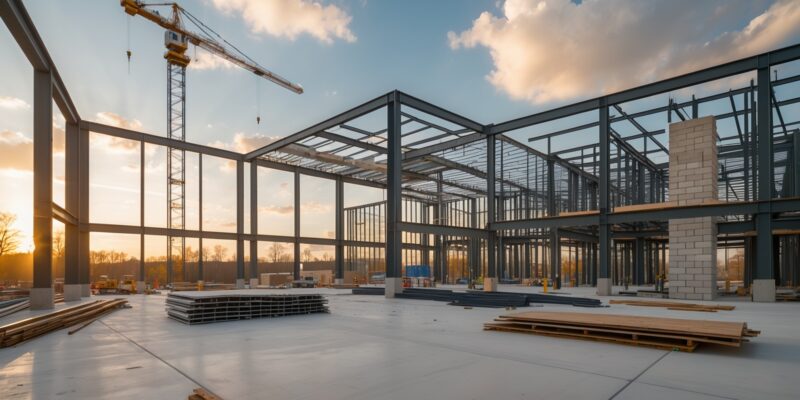
Commercial construction site at structural phase ready for mechanical rough-in

Why June Is the Right Time for GCs to Lock In Mechanical Subcontractors for Fall Construction

For general contractors planning fall ground-up commercial projects, the decisions made in June set the rhythm of the entire job. Mechanical lead times, sheet metal fabrication slots, project manager availability — these all get scheduled out two and three months in advance during early summer, and the GCs who wait until August to choose a mechanical sub are the ones explaining schedule slips in November. Locking in a design-build partner now is one of the highest-leverage moves available to a GC running a fall ground-up.

Why June Sets the Trajectory for Fall Ground-Up Schedules

Commercial mechanical work has a long tail of upstream commitments that nobody sees at the framing stage. By the time the slab is poured and steel goes up, the mechanical sub is already deep into procurement and shop fabrication. If those steps weren’t booked early, the schedule starts compressing.

Three constraints drive the early commitment:

  • Equipment lead times. Rooftop units, air-handling equipment, chillers, boilers, and any specialty mechanical equipment routinely run six to fourteen weeks from PO. A mechanical sub that commits in June can have equipment landing on site as steel tops out. A sub that commits in August is fighting for slots and explaining slips.
  • Fabrication capacity. Subs with in-house ductwork shops — like ours — allocate fab capacity by the calendar quarter. Once a quarter fills up, the next available window is months out. Early commitment is what reserves shop time.
  • Field crew loading. Foremen and crew leads get committed to projects in sequence. The best people get assigned to the projects that committed first. GCs that delay sub selection get whoever is left.

None of these constraints are visible from outside a mechanical shop. But every one of them is being managed right now — in June, looking out at fall mobilization windows.

What “Locking In” a Mechanical Sub Actually Buys You

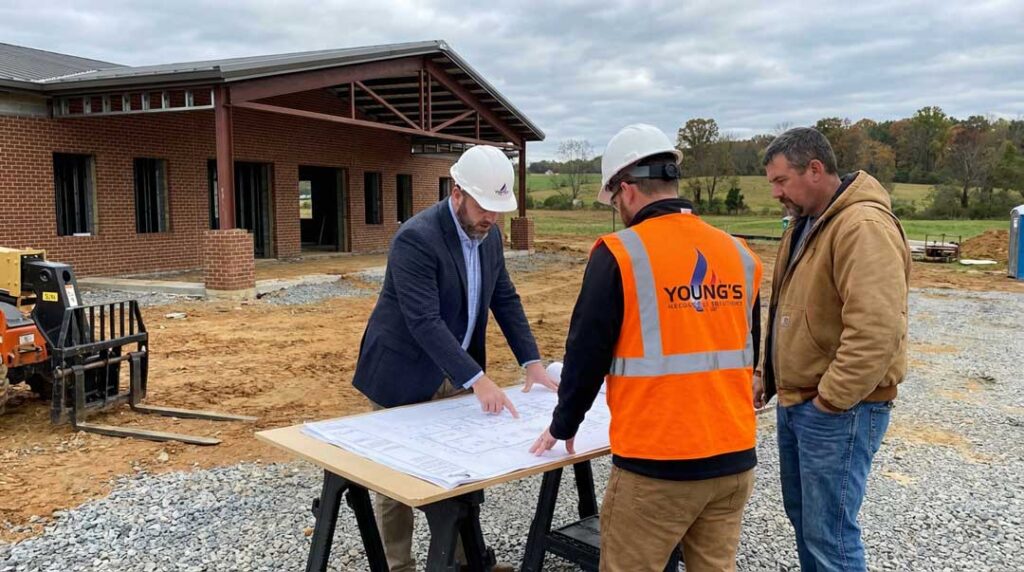
Mechanical project drawings and schedule on construction project office desk

Locking in a sub isn’t just about signing a contract. It’s about pulling that sub into the project early enough to influence the parts of the job that go best when they’re coordinated — not the parts that get reactive once drawings are issued for construction.

Design-Build Input Before the Drawings Lock

The biggest savings happen when the mechanical sub is engaged before the architect issues final mechanical scope. Early design-build input catches sequencing problems, identifies value-engineering opportunities, and confirms that equipment choices match what’s actually available in the build window. Once drawings are issued for permit, those conversations get expensive.

Procurement Aligned with the Schedule

An early-committed sub aligns equipment procurement with the actual construction sequence. That means major equipment lands on site at the right time — not stacked in a laydown yard for weeks, and not delaying mechanical rough-in because it’s still en route.

Coordinated Trade Sequencing

Mechanical, plumbing, and electrical trades have to thread through the same overhead space. A mechanical sub that’s been on the job since pre-construction can negotiate that coordination with the other trades during weekly meetings rather than during a Friday-afternoon scramble. The result is fewer rework cycles and a cleaner punch list.

Predictable Change-Order Behavior

Subs that committed early and have skin in the schedule treat change orders differently than subs who showed up late. They understand the GC’s commitments downstream, they know the project history, and they tend to find solutions instead of opportunities. That’s worth more than the lowest hard-bid number.

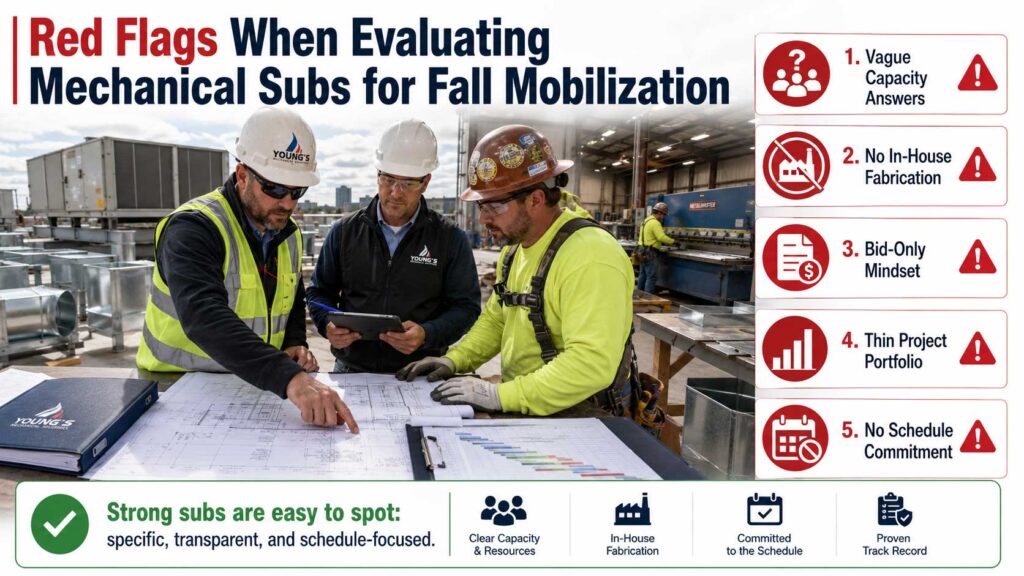
Red Flags When Evaluating Mechanical Subs for Fall Mobilization

For GCs evaluating mechanical subs right now, here’s what tends to separate the partners you want for a fall ground-up from the ones that will create schedule risk:

  • Vague answers about current capacity. A sub that can’t tell you which other commercial projects they’re committed to in Q4 is a sub that doesn’t know whether they can deliver yours. Ask specifically about shop fabrication slots and field crew availability for your mobilization window.
  • No in-house fabrication. Subs that route all ductwork through third-party fab shops are exposed to those shops’ lead times and scheduling pressures. In-house fab means the sub controls the schedule on the largest mechanical assemblies.
  • Reluctance on design-build input. If the only thing a sub wants to do is bid drawings, you’re missing the value of early engagement. Strong mechanical partners want to be in the room while drawings are being shaped.
  • Thin documentation of past projects. A mechanical sub running consistent commercial work has a portfolio of completed projects with references. Subs that can only point to small or aging projects may not have the bandwidth for a multi-trade ground-up.
  • Inability to commit on schedule milestones. A sub that won’t agree to specific mobilization, rough-in, and trim dates is a sub leaving the schedule risk with you.

The good news is that the strong subs are usually easy to spot in a single conversation. They ask about your other trades, they reference past projects with specifics, and they’re forthcoming about where their capacity stands for the back half of the year.

How Young’s Mechanical Solutions Partners with GCs on Fall Ground-Ups

Our team works with general contractors across the Shenandoah Valley and into West Virginia on commercial ground-up projects ranging from medical office buildings to schools, breweries, fire stations, and tenant fit-outs. Because we’re commercial-only and run in-house crews for sheet metal, mechanical piping, plumbing, and controls, GCs get one accountable mechanical partner instead of a chain of trade-specific subs to coordinate.

For fall mobilization windows specifically, our team is doing three things right now: confirming Q4 shop fabrication slots for committed projects, walking active commercial design-build opportunities with GCs in the planning stage, and aligning equipment procurement with mobilization dates. The earlier we’re in those conversations, the more we can influence the final scope to fit the budget and the schedule.


Our in-house ductwork fabrication shop in Harrisonburg gives GCs a real advantage on fast-track work. Pre-fabricated duct sections arrive at the jobsite already labeled and ready to hang, which compresses field install time and reduces the trade coordination headaches that come with on-site fab. Combined with the rest of our in-house crews, we can keep tight commercial construction schedules without waiting on outside vendors at any step of the build.

If you’re planning a commercial ground-up with fall mobilization and you haven’t locked in a mechanical partner yet, this is the window to have that conversation. Request a proposal for your next commercial project, or contact our team at 540-214-2745 to walk through the scope and your schedule. We’ll tell you straight whether we can hit your mobilization date — and if we can, we’ll commit to it.

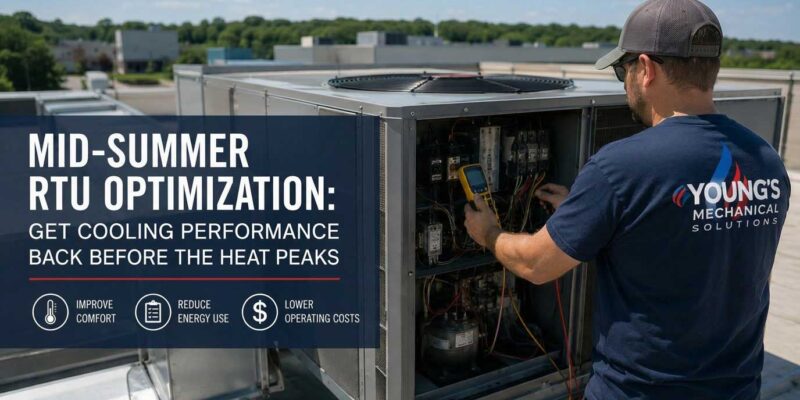
Summer Cooling Load Management: How Facility Teams Can Optimize RTU Performance During Peak Demand

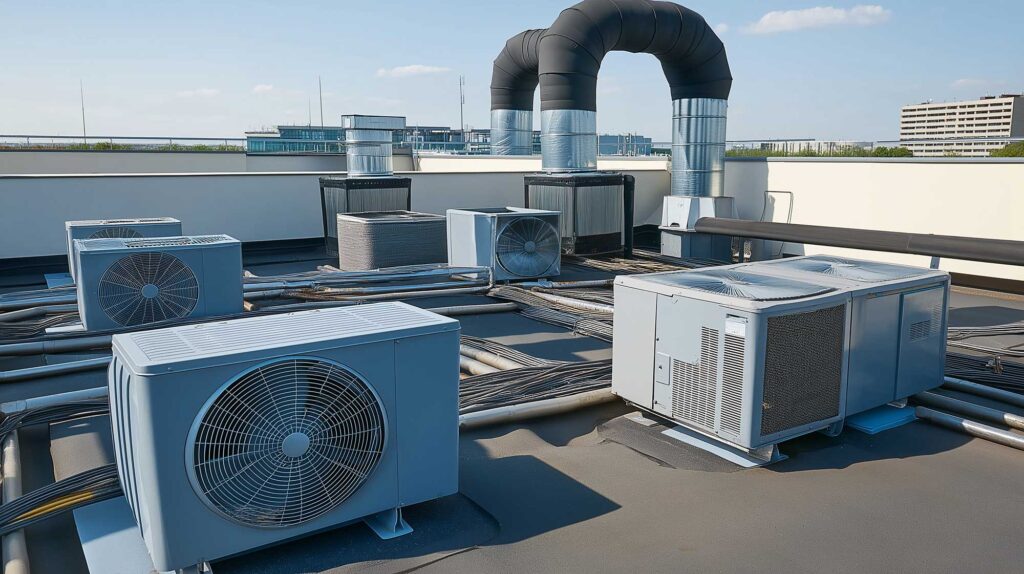
When outdoor temperatures push past ninety and stay there, every weakness in a commercial cooling system gets exposed. Rooftop packaged units that ran cleanly in May start short-cycling in July. Spaces that held setpoint all spring drift two or three degrees by mid-afternoon. For facility teams, summer is when the difference between a tuned RTU fleet and a neglected one shows up on every comfort complaint and every electric bill. The good news: most of the performance loss can be reclaimed with a focused mid-season optimization pass.

Why Mid-Summer Pushes RTUs Harder Than Spec

Commercial RTUs are sized for a design day — a specific combination of outdoor temperature, humidity, and internal load. The problem is that real-world summers in the Shenandoah Valley regularly exceed those design assumptions, and equipment that’s drifted out of tune simply can’t keep up. Three things compound in peak season:

  • Discharge pressures climb. As outdoor temperatures rise, the condenser has to reject heat into a hotter atmosphere. Any deficiency in airflow across the condenser coil — dirty fins, weak fan motor, debris around the unit — pushes head pressure higher and forces the compressor to work harder.
  • Latent loads stack up. Summer humidity in central Virginia routinely runs above design dew point. RTUs that were tuned for a 65°F dew point start short-cycling or running with insufficient dehumidification when the actual dew point climbs above 70°F.
  • Runtime grows. Units that cycled three or four times an hour in spring may run nearly continuously in July. That exposes any weakness in belts, bearings, contactor relays, or refrigerant circuits.

The result for facility managers is predictable: spaces that hold setpoint in mild weather start drifting under peak load, complaint volume rises, and emergency service calls cluster in the worst week of the summer. A mid-season check is the most direct way to interrupt that pattern.

The Variables That Determine Peak-Load RTU Performance

For most commercial buildings, peak-load RTU performance comes down to a handful of variables. Knowing which ones are drifting on your equipment shortens the path to a fix.

Airflow

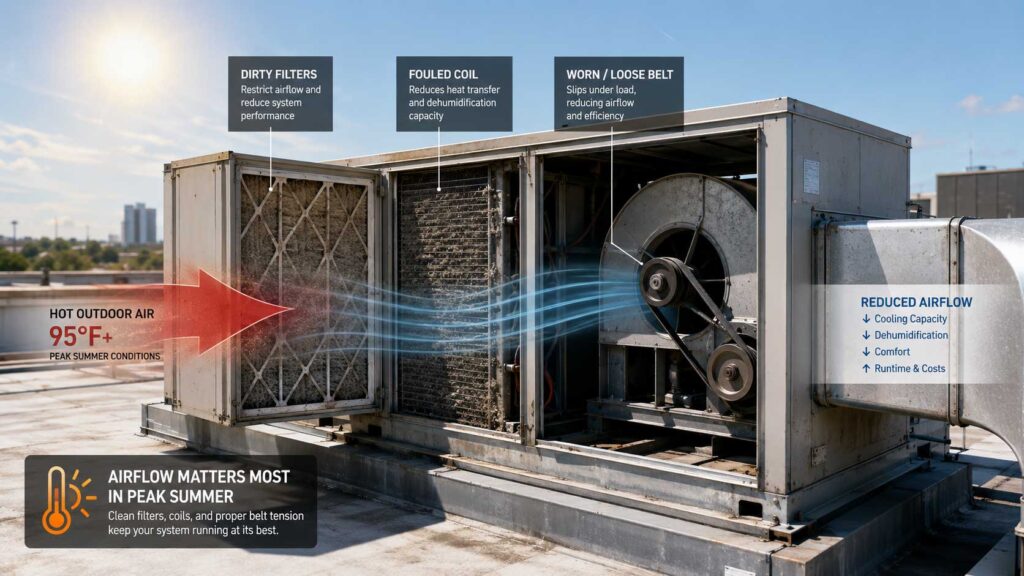
Filter loading is the single most common cause of mid-summer performance loss. A filter that was fresh at spring startup can be 50 percent loaded by July, dropping supply air volume noticeably. Add in fouled evaporator coils and slipping belts on belt-drive units, and total airflow can fall fifteen to twenty percent below design without any alarm being triggered. Less airflow means less cooling capacity and less dehumidification — exactly what you don’t want at peak load.

Refrigerant Charge and Heat Exchange

RTUs lose small amounts of refrigerant over time even without a detectable leak. Undercharged systems run with low suction pressure, reduced capacity, and elevated discharge temperatures. Overcharged systems — often the result of an earlier service call that added refrigerant without verifying charge — flood the compressor and shorten its life. A mid-season pressure and temperature check against manufacturer spec catches both.

Condenser Condition

The condenser coil is exposed to everything — pollen, cottonwood, parking-lot dust, leaves. By midsummer, coils that started the season clean are often partially blocked. A condenser that can’t reject heat efficiently pushes discharge pressure up, kilowatt draw up, and capacity down. A coil cleaning at the right time in the season often recovers ten to fifteen percent of efficiency on its own.

Controls and Setpoints

RTU controls drift for predictable reasons. Tenant complaints early in the season prompt setpoint changes that never get reverted. Economizer dampers stick. Thermostat sensors fall out of calibration. Building management system setpoints that were optimized for spring no longer match the summer load profile. A mid-season controls verification often finds two or three of these in any given building.

A Mid-Season RTU Optimization Punch List

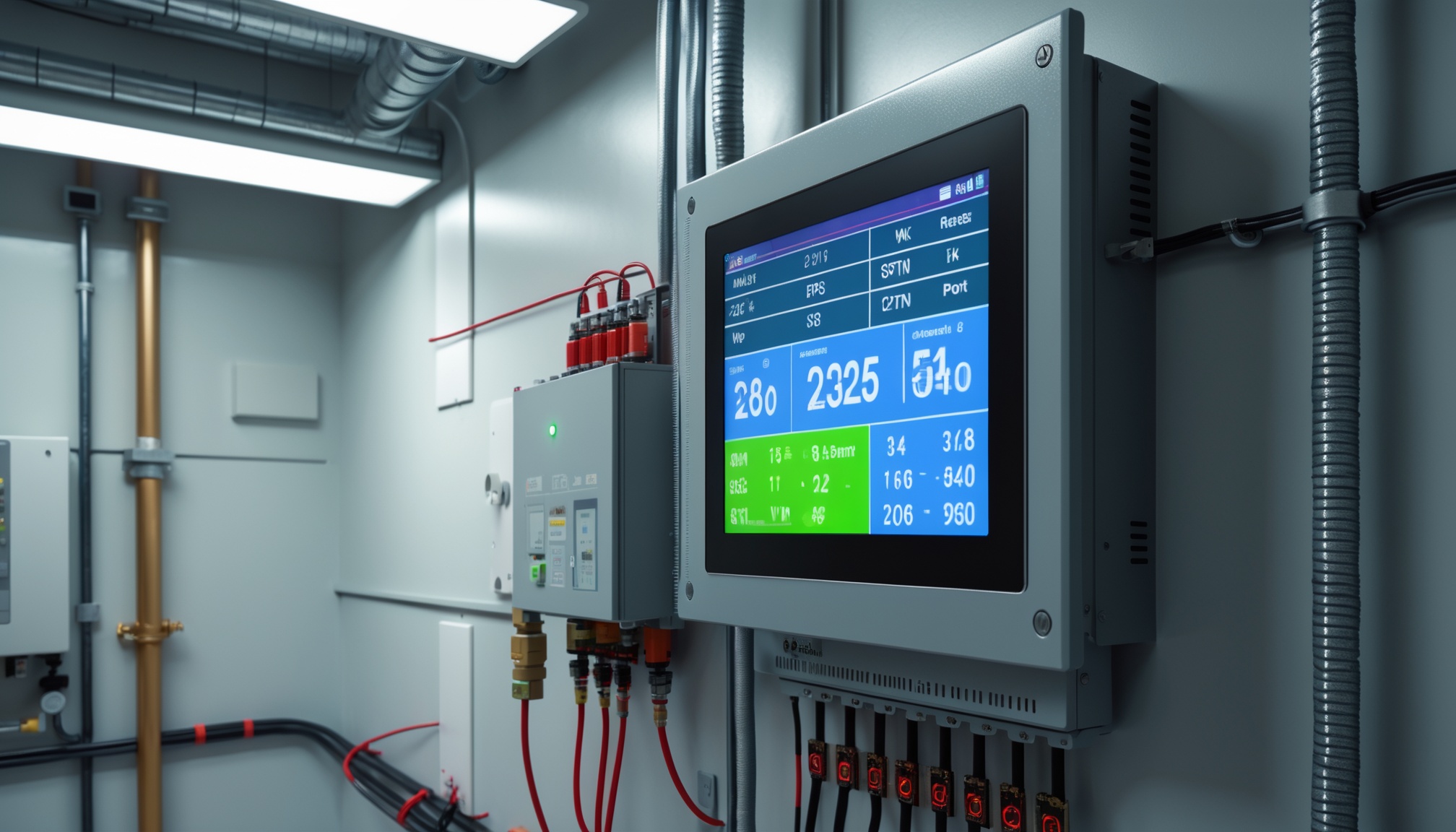
Building management system control panel showing RTU status in commercial mechanical room

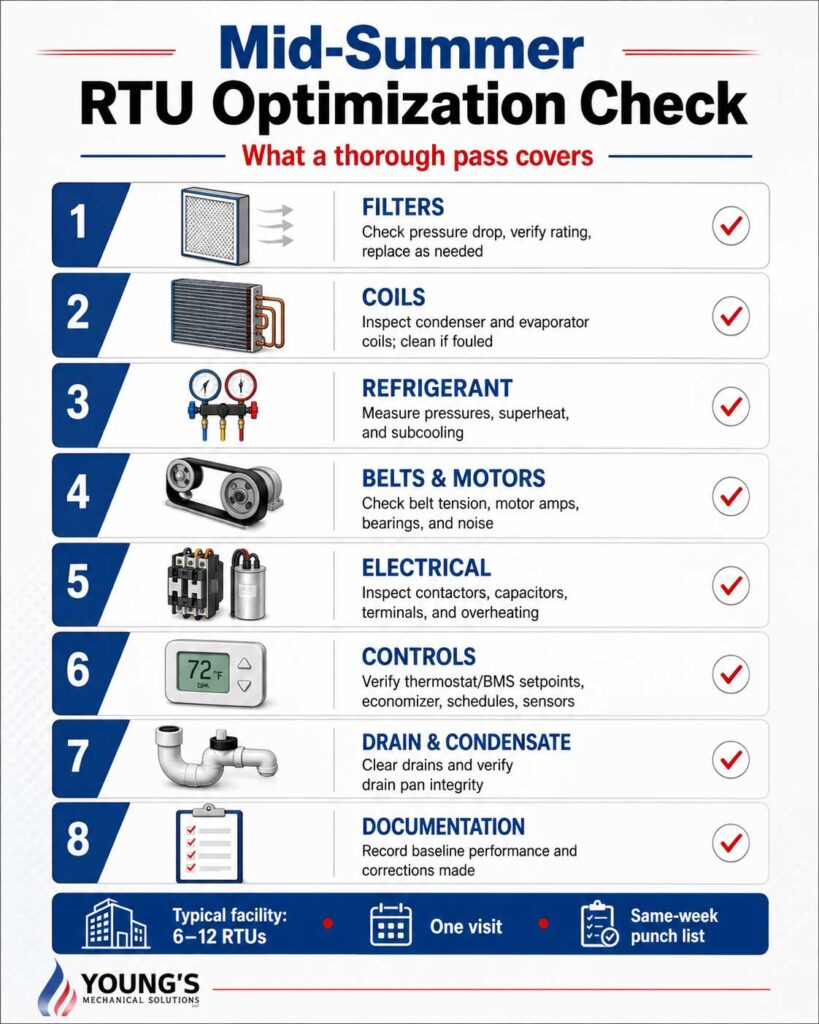
For most commercial buildings, a mid-summer RTU optimization check takes a few hours per unit and produces a documented list of corrections. Here’s what a thorough pass covers:

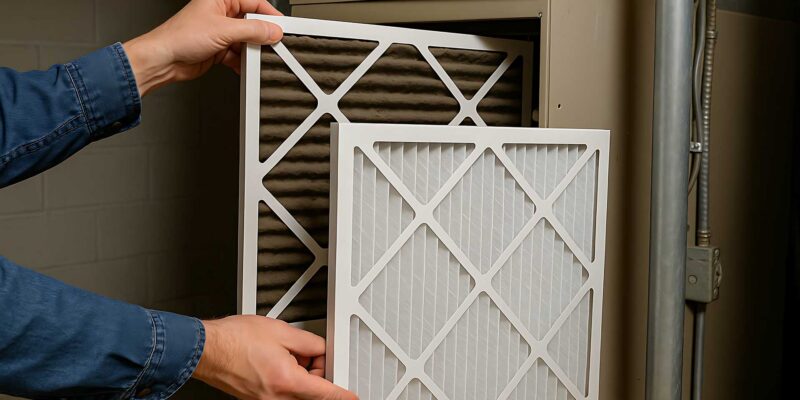
  • Filter inspection and replacement. Measure pressure drop across each filter, verify rating, replace as needed. For high-particulate environments, recommend a step up in MERV.
  • Coil cleaning verification. Inspect condenser coil for blockage and clean as needed. Verify evaporator coil is unfouled.
  • Refrigerant pressure and temperature check. Measure suction and discharge pressures, superheat, and subcooling against manufacturer specifications. Document any drift.
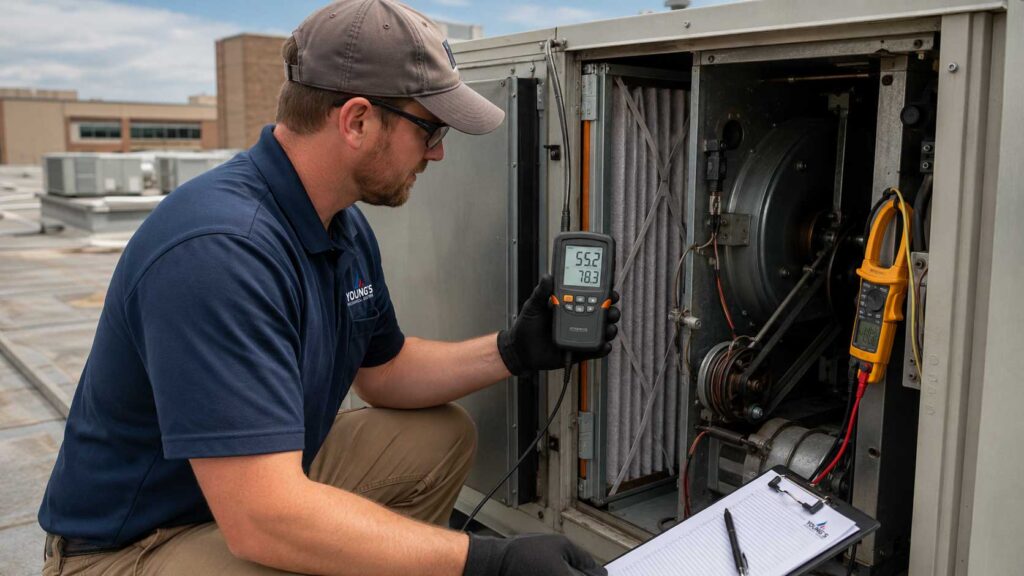
  • Belt and motor inspection. For belt-drive units, check tension and condition. For all units, verify motor amp draw against nameplate. Note any worn bearings or unusual noise.
  • Electrical verification. Inspect contactors for pitting, verify capacitor microfarad readings, tighten loose terminals, and check for any signs of overheating at connections.
  • Controls calibration. Verify thermostat or BMS setpoints against current building use. Confirm economizer operation, schedule, and setpoints. Recalibrate sensors that have drifted.
  • Drain pan and condensate check. Clear condensate drains, verify drain pan integrity. Blocked condensate is a frequent cause of mid-summer water damage callbacks.
  • Documentation. Record baseline performance and any corrections made, so the work is traceable when the next season starts.

For a typical office, school, or retail facility with six to twelve rooftop units, this kind of check fits cleanly into a single visit and produces a punch list that the facility team can act on the same week.

How Young’s Mechanical Solutions Supports Facility Teams Through Peak Season

Our service team performs mid-season RTU optimization checks across commercial buildings in the Shenandoah Valley and into West Virginia. Because we focus exclusively on commercial mechanical work, the technicians who show up to your rooftop spend their time on equipment they see every week — not residential split systems they touch occasionally.

Two things tend to matter most for the facility managers we work with. First, our tech-driven service dispatch keeps repair history with the equipment, so when a technician returns for follow-up work, they arrive already knowing what was done last season and what was flagged for monitoring. Second, our in-house crews mean we’re not handing your building off to a rotating chain of subcontractors. The team that walks your rooftop in June is the same team available for emergency response in August.

For buildings already on a service agreement, mid-season optimization fits into the documented maintenance cycle. For buildings managing RTU performance reactively, this is a good window to put a structured program in place — before the next heat wave hits.

If your RTU fleet has been collecting comfort complaints, or if it has been more than a cooling season since the last documented performance check, this is the window to get ahead of peak demand. Contact our service team at 540-214-2745, or reach out to discuss a service agreement for your building. We’ll walk your facility, document what’s drifted, and get your equipment back in tune for the rest of the summer.

Mid-Season IAQ Checks: Preventing Humidity and Ventilation Issues in Offices, Schools, and Retail

By the time a building’s indoor air quality has noticeably deteriorated, the facility manager is already getting calls. Stuffy classrooms, humid back-of-house corridors, retail spaces that feel clammy by mid-afternoon — these complaints rarely appear on the first hot day of summer. They build up gradually through the season, until something shifts and the whole system stops keeping up. A mid-season indoor air quality check is the most practical way to catch those problems before they turn into complaints, callbacks, or compliance issues.

Why Mid-Season Is When IAQ Problems Surface in Commercial Buildings

Spring startup tests the HVAC system under mild conditions. Equipment cycles, controls respond, and most issues stay hidden because the cooling load is well within capacity. It’s when outdoor temperatures and dew points climb in late June and July that small problems compound — and indoor air quality is usually the first thing to slip.

Three things tend to happen between Memorial Day and the first week of August:

  • Filters load up faster than expected. Pollen counts in the Shenandoah Valley peak in spring, but particulate loading continues through summer. Filters that were fresh at startup can be 40–60% loaded by mid-season, restricting airflow and reducing fresh-air delivery.
  • Outdoor humidity exceeds design assumptions. Many commercial HVAC systems are designed for a specific outdoor dew point. When humidity stays high for stretches at a time — common in the Valley in July and August — the system has to work harder to dehumidify, and any weak link in the chain shows up.
  • Occupancy patterns shift. Schools change to summer schedules, offices run with different staff rotations, retail traffic spikes. The CO2 and moisture loads the system was tuned for in May may not match what’s happening in July.

None of these are catastrophic. But left uncorrected, they translate to comfort complaints, occupant productivity drops, and in regulated environments — healthcare, food service, schools — potential code or operational issues.

The Three Variables That Drive Mid-Summer IAQ Complaints


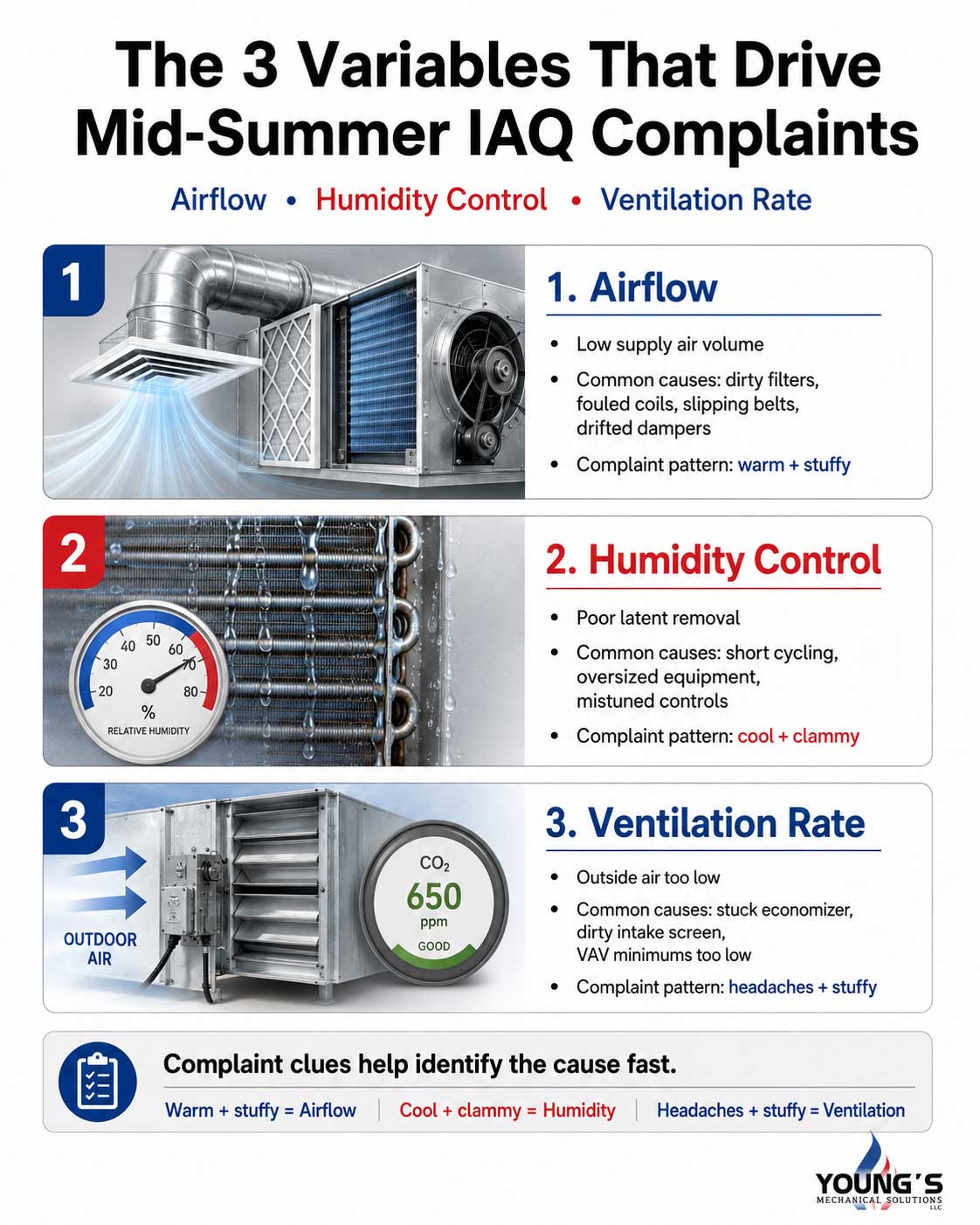
For most commercial buildings, mid-season IAQ problems trace back to one of three things: airflow, humidity control, or ventilation rate. Knowing which one is the culprit dramatically shortens the path to a fix.

Airflow

When supply air volume drops, conditioned air doesn’t reach every zone the way it was designed to. Some spaces overcool while others go warm and stuffy. The most common causes are filter loading, fouled coils, slipping belts on belt-drive units, and dampers that have drifted out of position. Spaces that have been remodeled or reconfigured since the original balance are particularly vulnerable, because the original airflow design no longer matches the current floor plan.

Humidity Control

Commercial HVAC equipment dehumidifies as a function of cooling. When systems are oversized, short-cycle in mild weather, or run with mis-tuned controls, latent removal suffers. Building occupants feel humidity even when the thermostat says the temperature is correct. Common contributors include cooling coils that are bypassed at part load, reheat strategies that are out of calibration, and zones where the supply air dew point doesn’t match the latent load.

Ventilation Rate

Outside-air delivery is the variable most often overlooked at mid-season. Economizer dampers can stick. Outdoor-air intake screens load up with debris. Variable-air-volume systems can reduce ventilation below code-required minimums when zone calls drop. The result is rising CO2, accumulating VOCs, and a building that feels “closed up” even though the HVAC is running.

For facility managers tracking comfort complaints by zone, the pattern of complaints often points directly at which of these three is the issue. Stuffy + warm typically means airflow. Cool + clammy typically means humidity control. Headaches and stuffy without temperature complaint usually means ventilation rate.

A Mid-Season IAQ Check: What Our Service Team Actually Looks At

A practical mid-season IAQ inspection is fast, structured, and focused on the variables that change between startup and peak load. For most commercial buildings, the check takes a few hours and produces a documented punch list of corrections.

The areas we cover:

  • Filter inspection and replacement. We measure pressure drop across each filter bank, verify filter rating against current building use, and replace as needed. For buildings with higher-than-baseline particulate loading, we may recommend a step up in MERV rating.
  • Coil and condensate inspection. Fouled cooling coils degrade both capacity and dehumidification. Blocked condensate drains create moisture problems on their own. We verify both.
  • Outside-air verification. We confirm that economizer dampers are moving freely, outside-air intake is unobstructed, and minimum-position settings match design ventilation requirements. For VAV systems, we check that minimum airflow setpoints are still being met.
  • Humidity and dew point measurement. We log space humidity in representative zones and compare it to outdoor conditions and supply-air dew point. Where systems are running with reheat or bypass strategies, we verify they’re calibrated for current conditions.
  • Controls calibration. Sensors drift over time. We verify temperature, humidity, and CO2 sensor readings against calibrated instruments and recalibrate where needed.
  • Zone walk-through. Where the building has documented complaints, we walk the affected zones and measure airflow, temperature, and humidity directly. The data goes into the documented IAQ record for the building.

The result is a clear, prioritized list of corrections — some of which can be made the same day, some that need scheduled follow-up. For buildings on a service agreement, the check fits into the existing maintenance cycle and is documented in the equipment history.

Where Mid-Season IAQ Issues Show Up First

Some commercial spaces are more sensitive to mid-season drift than others. If you manage any of the following, this is the window to act before complaints arrive:

  • Schools running summer programs. Reduced occupancy can mean reduced ventilation, but air quality still has to meet code for the students and staff who are present. Mid-summer is also when scheduled deep cleaning and shutdowns happen — a good window for system service.
  • Healthcare facilities. Code-driven air-change rates and humidity specs leave little margin. Drift that would be unnoticeable in an office is a documented compliance issue here.
  • Multi-tenant offices and retail. Comfort drives lease satisfaction and tenant retention. Stuffy or humid spaces generate complaints that consume facility-team time and damage tenant relationships.
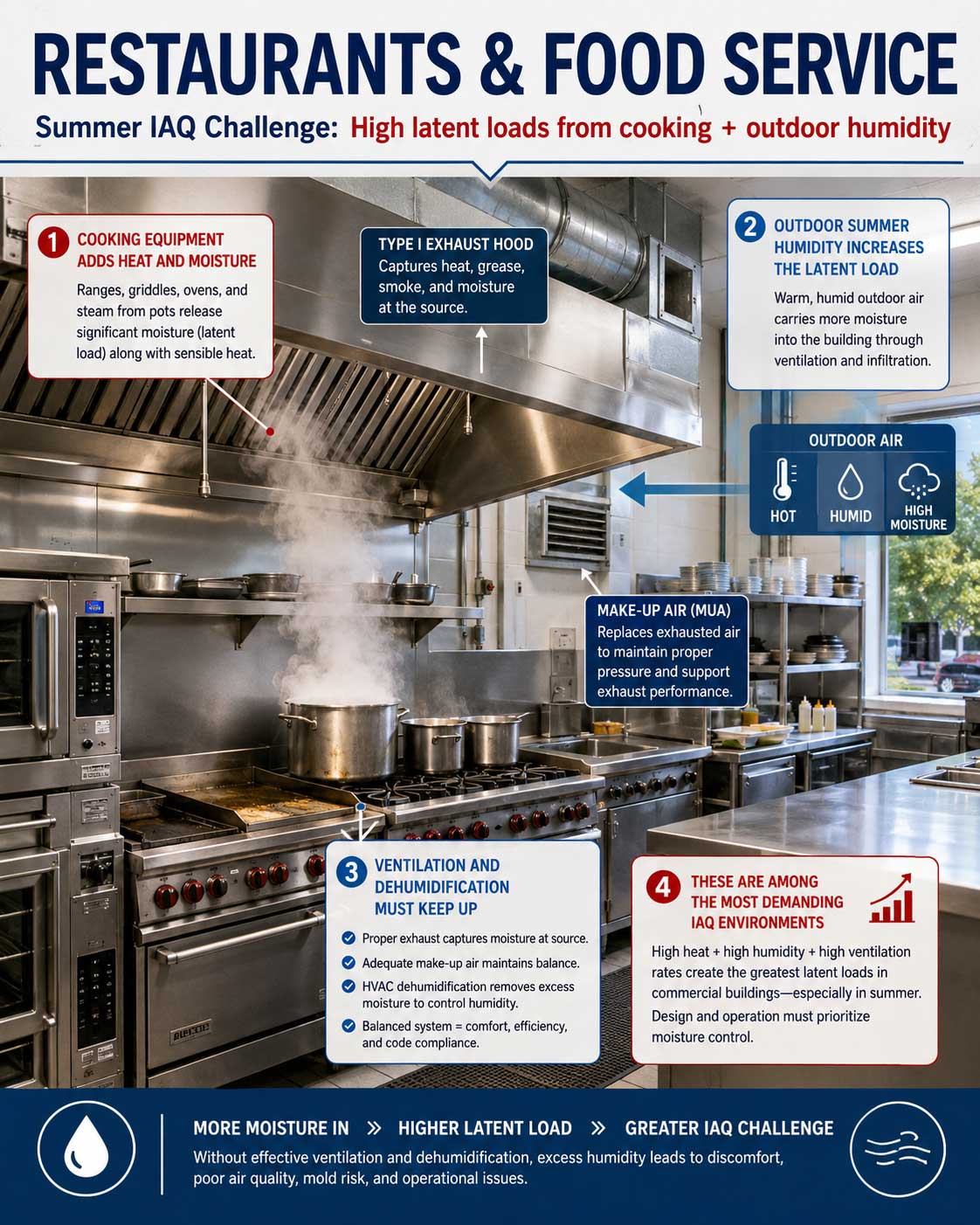
  • Restaurants and food service. High latent loads from cooking equipment combined with summer outdoor humidity make these the most demanding IAQ environments in any commercial portfolio.
  • Manufacturing and warehouse spaces. Where dew points matter for product quality or process control, humidity drift can affect operations directly, not just comfort.

Building a Reliable IAQ Program Through Service Agreements

One-off IAQ checks fix problems in the moment. A service agreement turns IAQ into an ongoing program. For most facility managers, that’s the difference between reacting to complaints and getting ahead of them.

Our service agreements include scheduled IAQ checks aligned with the cooling and heating seasons, documented equipment performance over time, and continuity of technicians who know your building. When a complaint comes in mid-July, we already have a record of how the system was operating in May and June — which usually shortens diagnosis dramatically.

For buildings in the Shenandoah Valley and West Virginia, that local presence matters. Our service team is dispatched from Harrisonburg, and our in-house crews mean we’re not handing your building off to a rotating chain of subcontractors. The technician who walks your facility this month is part of the same team that’s available when something goes wrong in August.

If your building has been collecting comfort or humidity complaints, or if it has been more than a season since the last documented IAQ check, this is the window to get ahead of the worst part of the summer. Contact our service team at 540-214-2745, or reach out to discuss a service agreement for your building. We will walk your facility, identify what’s drifted, and put a plan in place to keep your indoor air quality where it needs to be.

Spring Maintenance for Commercial Kitchen HVAC: Preventing Mid-Summer Breakdowns

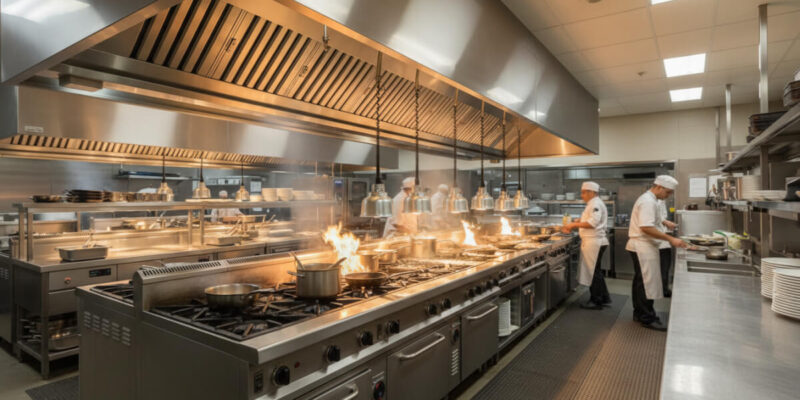
Commercial kitchens push mechanical systems harder than almost any other building environment. Between fryers, charbroilers, steamers, and ovens running at full capacity, the heat and grease load on your exhaust and make-up air systems is relentless — and it only intensifies once outdoor temperatures climb into the nineties. Spring is the critical window to service your commercial kitchen HVAC before mid-summer demand exposes every deferred issue at once.

Why Commercial Kitchen HVAC Demands More Than Standard Maintenance

A typical office HVAC system handles temperature and humidity. A commercial kitchen ventilation system handles all of that plus massive internal heat gains, airborne grease, moisture from steam equipment, and strict fire and health code requirements. These factors make kitchen exhaust systems one of the most maintenance-intensive mechanical categories in any commercial facility.

Grease is the primary differentiator. It coats fan blades, accumulates inside ductwork, clogs filters, and eventually restricts airflow. When airflow drops, kitchen temperatures rise, cooking equipment works harder, and the risk of a grease-related fire increases. At the same time, the make-up air unit — the system responsible for replacing the air your exhaust hood pulls out — has to keep pace. If it can’t, you get negative pressure in the kitchen: doors that are hard to open, inconsistent hood capture, and uncomfortable conditions for staff.

Code compliance adds another layer. NFPA 96, the standard governing commercial cooking ventilation, requires regular inspection and cleaning of exhaust systems. Health departments in Virginia and West Virginia expect functional ventilation as part of routine inspections. Falling behind on maintenance doesn’t just create comfort problems — it creates compliance exposure.

A Spring Maintenance Checklist for Kitchen Exhaust and Make-Up Air Systems

If your restaurant, university dining hall, hospital cafeteria, or institutional kitchen hasn’t had its ventilation system serviced since fall, spring is the time. Here’s what a thorough commercial kitchen ventilation inspection should cover.

Exhaust Fan Inspection

Rooftop exhaust fans are the workhorses of any kitchen ventilation system. Spring service should include checking belt tension and condition, inspecting bearings for wear or noise, verifying motor amp draw against nameplate ratings, and cleaning grease buildup from fan blades and housings. A fan running with a worn belt or grease-loaded blades loses significant airflow capacity — exactly the kind of problem that won’t show up until July, when the kitchen is already struggling.

Ductwork and Hood Inspection

Even with regular hood cleaning by a fire-suppression contractor, grease can accumulate in horizontal duct runs and at transitions. A mechanical inspection looks at duct integrity, access panel seals, and any signs of corrosion or separation at joints. We also verify that fire dampers and suppression system tie-ins are functioning correctly.

Make-Up Air Unit Service

The make-up air unit (MAU) is often overlooked because it doesn’t sit directly above the cooking line. But it’s just as critical. Spring service should include replacing or cleaning filters, inspecting heating and cooling coils for damage or fouling, checking damper operation and actuators, and verifying that the unit is interlocked properly with the exhaust fan — meaning it starts and stops in coordination. A malfunctioning MAU creates pressure imbalances that reduce exhaust hood performance and drive up energy costs.

Controls and Balancing

Kitchen ventilation isn’t just about moving air — it’s about moving the right amount of air. Demand-controlled kitchen ventilation (DCKV) systems use sensors to ramp fans up and down based on cooking activity, saving significant energy. If your facility has DCKV, spring is the time to calibrate sensors, test variable frequency drives (VFDs), and verify that the system is responding correctly. Even facilities without DCKV benefit from an airflow balance check to make sure exhaust and supply volumes are within design specifications.

The Real Cost of Skipping Spring Service

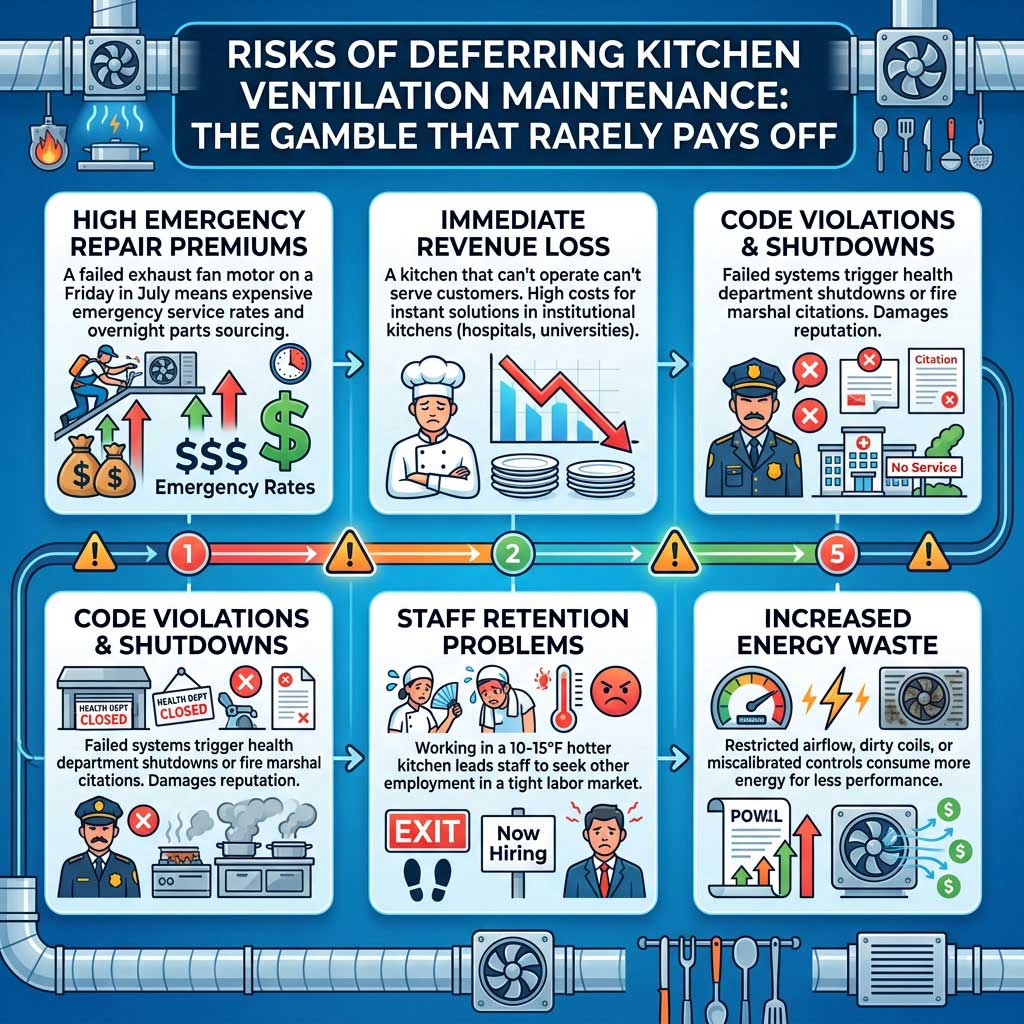
Deferring kitchen ventilation maintenance until something breaks is a gamble that rarely pays off. Here’s what facility managers typically face when systems fail in mid-summer:

  • Emergency repair premiums. A rooftop exhaust fan motor failure on a Friday afternoon in July means emergency service rates and potential overnight parts sourcing. The same motor replaced during a planned spring visit costs a fraction of the emergency bill.
  • Revenue loss. A restaurant that can’t operate its kitchen is a restaurant that can’t serve customers. Institutional kitchens supporting hospitals or universities can’t simply close — they need immediate solutions, which limits options and increases cost.
  • Code violations. A failed exhaust system isn’t just uncomfortable. It can trigger a health department shutdown or a fire marshal citation. Neither outcome is good for your operation or your reputation.
  • Staff retention problems. Kitchen staff working in a space that’s ten to fifteen degrees hotter than it should be will look for other employment. In a tight labor market, that’s a real operational cost.
  • Energy waste. Systems running with restricted airflow, dirty coils, or miscalibrated controls consume more energy for less performance. That inefficiency compounds over an entire cooling season.

How Young’s Mechanical Solutions Supports Commercial Kitchen Ventilation


Our team works with restaurants, institutional dining facilities, breweries, and commercial kitchens across the Shenandoah Valley and West Virginia. We understand the restaurant mechanical environment — the urgency, the code requirements, and the fact that downtime directly impacts your operation.

What sets us apart is our in-house capability. Our sheet metal shop fabricates custom ductwork, transitions, and components right here in Harrisonburg, VA. When a kitchen exhaust system needs a replacement section, a modified hood connection, or a new make-up air duct run, we don’t wait on a third-party fabricator. That means faster turnaround on both planned maintenance and emergency repairs.

We also offer service agreements tailored to commercial kitchen environments. Rather than reacting to breakdowns, a service agreement puts your exhaust systems, make-up air units, and kitchen HVAC on a scheduled maintenance cycle. Our technicians document system condition at every visit, giving you a clear maintenance history for code compliance and budgeting purposes.

For facilities that need more than maintenance, our design-build team can evaluate whether your current ventilation system matches your kitchen’s actual cooking load. Menus change, equipment gets upgraded, and kitchens expand — but the ventilation system doesn’t always keep up. We can design and install upgrades that bring your system back into balance.

Spring is the right time to get ahead of summer. If your commercial kitchen HVAC hasn’t been inspected this year, contact our service team at 540-214-2745 to schedule a maintenance visit. We’ll walk your facility, assess your exhaust and make-up air systems, and make sure your kitchen is ready for the months ahead.

Why Preventative Maintenance Agreements Save Money for Commercial Facilities

For most commercial facilities, the HVAC system only gets real attention when something fails — and by then the repair is urgent, expensive, and disruptive to the people using the building. A commercial HVAC preventative maintenance agreement flips that equation, trading emergency scrambles for a planned schedule that keeps your building comfortable and your operating costs predictable. Here is how a structured maintenance program protects both your equipment and your budget.

The Real Cost of Reactive Repairs

Running equipment until it breaks feels like a way to save money. In practice, it is usually the most expensive path a facility can take.

When a rooftop unit or chiller goes down without warning, you are paying premium rates for emergency service, often after hours, while tenants or staff sit in an uncomfortable space. Small issues that a technician would have caught early — a failing capacitor, a clogged condensate line, a refrigerant charge slipping out of spec — turn into compressor failures and full replacements.

For a facility manager, the hidden cost is just as real: lost productivity, comfort complaints, and the scramble to find an available contractor during a heat wave when everyone else is calling too.

What a Preventative Maintenance Agreement Actually Covers

A good agreement is not a vague promise to “check on things.” It is a defined scope of work performed on a set schedule, sized to your equipment and how hard it works.

For most commercial buildings, that includes:

  • Seasonal inspections of heating and cooling equipment before peak demand hits
  • Filter changes, coil cleaning, and airflow checks to protect efficiency and indoor air quality
  • Belt, motor, and electrical connection inspections to catch wear before it causes a failure
  • Refrigerant and pressure checks to keep systems running within spec
  • Documentation of equipment condition so you can plan repairs and replacements on your timeline, not the equipment’s

The goal is simple: find and fix the small problems on a planned visit, so they never become emergency calls.

How Scheduled Maintenance Lowers Your Operating Costs

Preventative maintenance pays for itself in a few clear ways, and they compound over the life of the building.

Lower energy bills. Clean coils, fresh filters, and properly charged systems move air and transfer heat the way they were designed to. Equipment that has drifted out of tune works harder and draws more power to deliver the same comfort.

Longer equipment life. Commercial HVAC equipment is a major capital investment. Routine service keeps it running closer to its rated lifespan, pushing expensive replacements further down the road and making cap-ex planning more predictable.

Fewer emergency repairs. Planned visits catch the failures you would otherwise pay premium emergency rates to fix — usually at the worst possible time.

For building owners and developers, that adds up to lower total cost of ownership and a more reliable asset.

A Local Mechanical Partner That Knows Your Building

The value of a maintenance agreement grows when the same team services your equipment year after year and keeps a record of what they find.

At Young’s Mechanical Solutions, our service work is built on technology-driven dispatch with repair history tracking, so our technicians arrive already knowing your building’s equipment and its past issues. As a commercial-only contractor based in Harrisonburg, we serve facilities across the Shenandoah Valley and into West Virginia, with in-house crews for HVAC, mechanical piping, plumbing, and controls. That means one accountable partner for your building — not a rotating chain of subcontractors.

Service is where our company started, and it remains the foundation of how we work with facility managers and owners.

Putting a Plan in Place

If your facility is still running on reactive repairs, a simple first step is to have your equipment assessed and a maintenance scope built around how your building actually operates. From there, a predictable schedule replaces the guesswork.

To discuss a service agreement for your building, contact our service team at 540-214-2745, or reach out to schedule a consultation to walk your facility. We will help you put a plan in place that protects your equipment and your budget.

Sheet Metal Mechanic

Sheet Metal Mechanic

Full-Time | Monday–Thursday | Pay Based on Experience

About Us
Young’s Mechanical Solutions is a commercial HVAC and plumbing contractor proudly serving clients throughout the Shenandoah Valley and surrounding areas in Virginia and West Virginia. Founded by Jake and Darla Young, our company is rooted in craftsmanship, customer service, and a commitment to providing professional, cost-effective solutions for commercial projects. We are currently seeking a Sheet Metal Mechanic to join our construction team.

Position Summary
As a Sheet Metal Mechanic, you will fabricate, install, and maintain HVAC duct systems and related sheet metal components for commercial buildings. You’ll work closely with project managers, foremen, and installation crews to ensure projects are completed on time and with the highest level of quality. Ideal candidates will have experience reading mechanical drawings and take pride in clean, accurate, and efficient work.

What You’ll Do

  • Fabricate, assemble, and install ductwork and sheet metal components for HVAC systems
  • Interpret mechanical blueprints, drawings, and specifications
  • Use a variety of hand and power tools, shears, brakes, and welding equipment
  • Ensure work is performed according to industry codes and company standards
  • Collaborate with other team members to solve field challenges
  • Maintain a safe and organized job site and workshop environment
  • Transport materials to and from the fabrication shop and job sites

What We’re Looking For

  • 2+ years of experience in commercial sheet metal work preferred
  • Strong understanding of duct fabrication and HVAC systems
  • Ability to read and interpret mechanical plans and specifications
  • Valid driver’s license and reliable transportation
  • Strong work ethic and attention to detail
  • Ability to lift 50+ lbs and work at heights or in tight spaces as needed
  • Familiarity with safety standards and OSHA regulations

Why Work With Us

  • Competitive pay based on experience
  • 401K matching plan
  • Health Insurance
  • Full-time, year-round work
  • Paid holidays and time off
  • Opportunities for advancement and cross-training in HVAC trades
  • Supportive, team-oriented company culture
  • Work on high-quality commercial projects that make a difference

Hours
Monday–Thursday: 7:00 a.m. – 4:00 p.m.
Friday: 7:00 a.m. – 2:00 p.m.

📍 Based out of 1043 S High St, Harrisonburg, VA 22801 – Serving a 1-hour radius

Apply Today!
If you’re a dependable and detail-oriented sheet metal professional, we’d love to hear from you. Call (540) 214-2745 or email us to learn more and apply.


Apply Online!

Employment Application

Apply to join the team at Young's Mechanical

Step 1 of 3

Your Personal Information

Your Name
Your Email Address
Address
When is the best time for us to reach you via telephone?

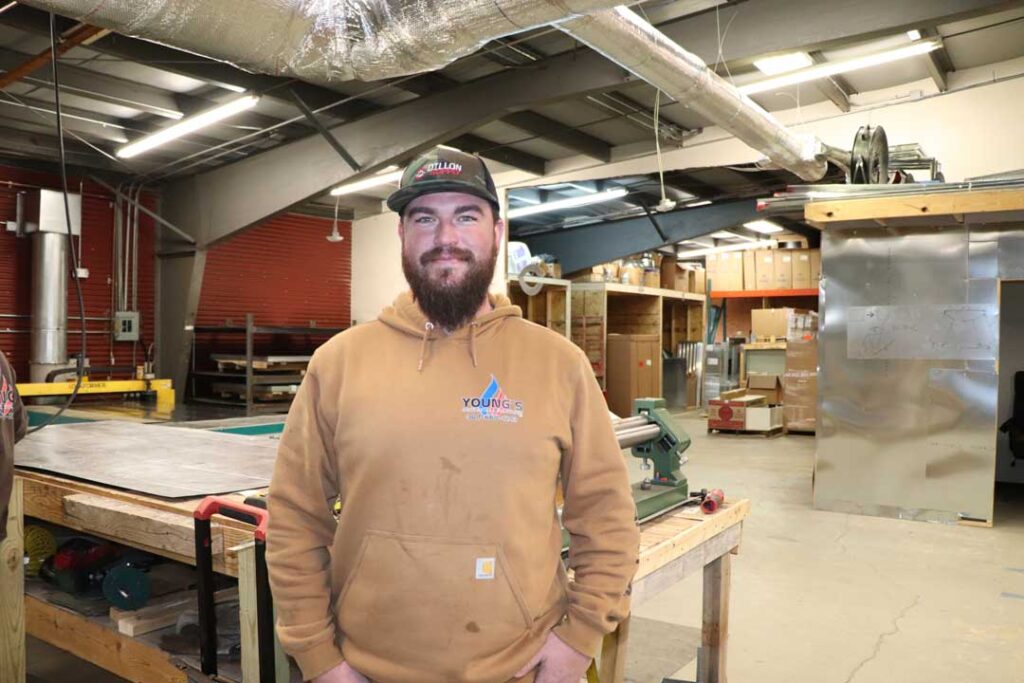
Employee Spotlight – Dane Boller

At Young’s Mechanical Solutions, we are proud to highlight Dane, whose commitment and enthusiasm truly embody our family-oriented culture.  One of Dane’s favorite aspects of working with us is the genuine family environment that fosters collaboration and support among colleagues.  This camaraderie makes every day feel rewarding and encourages everyone to thrive.

Dane has made remarkable contributions during his time here, with his greatest achievement being the successful boiler change-out at Martha Jefferson House.  This challenging project showcased his technical skills and dedication, and it positively impacted the facility’s efficiency and comfort.

Outside of work, Dane cherishes his time spent outdoors.  While he enjoys a variety of activities, golfing holds a special place in his heart.  Whether perfecting his swing on the greens or soaking in the beauty of nature, he finds immense joy in these moments.  Additionally, he values quality time with his family, creating lasting memories and strengthening those bonds.

We are grateful to have Dane as part of our team, and we look forward to seeing his continued growth and success at Young’s Mechanical Solutions!!